


We should emphasise upon the fact that planning right solutions requires knowing first the real causes of our failure to recover the NPL. Hence, lenders'
reporting to central bank on securities
of each loan ought to be designed
with an analytical framework
writes
Haradhan Sarker
As reported by Bangladesh Bank, our banking loans and advances are at least 99 per cent secured. But loan default has been escalating at an unusually high speed. What is the mystery? Discourse on this issue is also enormous. There is hardly any focus upon utility and effectiveness of loan securities from the perspective of intensifying recovery drive. What is the rationale behind taking security while loan default is on the rise ? Can we say that securities are worthless? We have laws to fight defaulters. Are the laws weak?
Banks take securities for loans, and the mechanism to encash them to recover the defaulted loan should get serious attention towards resolving the NPL problem. If non-security reasons dominate, they should be brought to light. We observe no proper and factual reporting on the causes of security encashment problems and ineffectiveness or inadequacies of any security held.
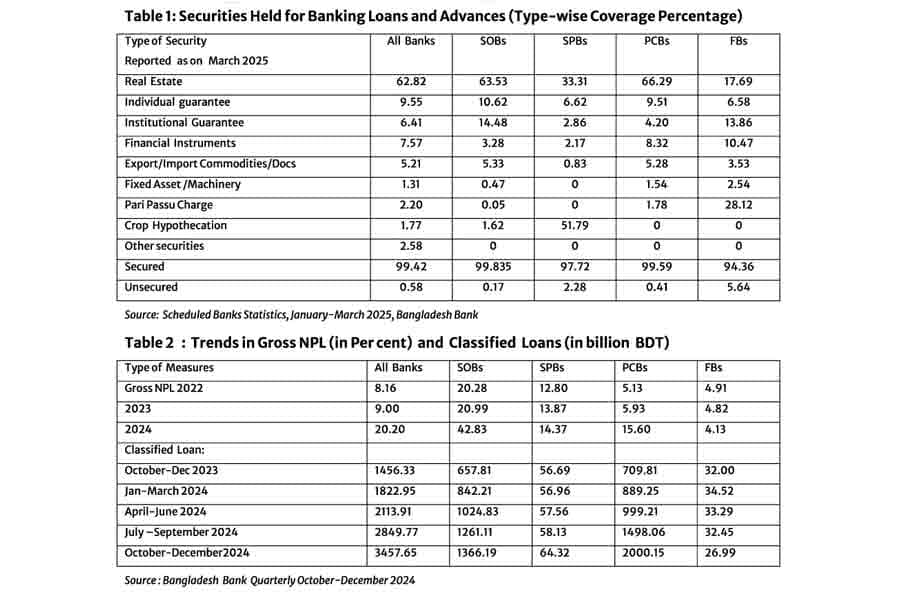
Table 1 clearly indicates that on an average , the banking sector has unsecured loans and advances to the extent of even less than 1 per cent. Secured loans are more than 99 per cent. The least amount of unsecured loans is extended by State Owned Banks (SOBs). FBS ( Foreign Banks) disbursed the highest amount of unsecured loans (5.64 per cent) but their recovery performance is the best among peer banks. Now it is very essential to look at recovery or NPL or ROA of the said banks.
Table 2 indicates that up to 2023, non-performing loans and advances were within control but had gone beyond controllability from 2024. SOBs in particular show the most alarming proportion of NPL in 2024. In just 1 year's time gap ( 2023 to 2024), classified loan surged to about 250 per cent. Comparatively, NPL is the lowest for FBs. The recovery condition of loans and advances (Table 2) mismatches with the data shown in Table 1. It is to be noted that by the end of March this year, bad loans in the banking sector soared to a record Tk 420,335 crore. Of this, Tk 300,028 crore was tied to ten banks, according to the latest data from Bangladesh Bank (The Daily Star 18-6-2025).
The most serious problem about data is that we get superficial idea of recovery of agricultural credit, microcredit and credit to CMSME sectors but even a rough idea on recovery of other loans is unavailable in reporting. Data transparency problem exists there.
In these days of digital technology, we should have free access to comprehensive data on loans and advances, particularly on recovery, recovery percentage (loan wise), overdues, time-based disbursement , but here lies shortcoming. Credit figures to CMSME are also partial and vague. Well-designed and integrated data system may reveal many weaknesses. We fail to get recovery percentage in accurate format. Now, the month of August is going to be over, but we are yet to get data up to June, 2025 through Bangladesh Bank Quarterly, and Scheduled Banks Statistics. Unusual delay in getting data and taking decisions based on those data and information rather complicates the scenario further.
We must look for the hurdles to encashing securities for realisation of defaulted loans. The key question is : why NPL is mounting while more than 99 per cent of loans and advances are secured? In this regard , there may be some queries (not an exhaustive list) as under :
1.Was there any wrong or fabrication or manipulation in individual bank's reporting of loans and advances based on several categories of securities held ?
- Was there any difference in the strength of different types of securities?
3.Was there any lapse on the part of lenders in assessing the worth of each security?
- Was there any compliance problem of guarantee-based security ?
- Was there any problem or resistance or objection or litigation by borrowers to sale of goods/assets kept as securities?
6.Had there been any lapse on the part of lending bank in case of processing and documentation of adequate securities for loans and advances ?
- Was there any undue intervention (political or governmental) in sanction and disbursement of loans?
- Was there any fraud or forgery in offering securities and documentation and so on ?
- Did the quality of securities deserve the highest degree of weightage?
10.Was there any attempt to refine the list of hitherto known and used securities?
If answer is 'yes' to any or more queries above, recovery of lent money would be beset with problems and NPL would emerge. Everybody would understand the probable scenario. But the important point is whether the reporting bank is instructed to submit loan-wise security together with the above queries-answers and practical worth of each security? If not, security-based classification of loans and advances becomes meaningless.
We know that after the fall of Hasina regime in August 05, 2024, there was a huge loan default (for example, two groups Beximco and S. Alam together had defaulted amount of about Tk. 35,000 crore ).We are not aware of the adequacy of the value of their securities. Are these types of politically motivated and assisted mischievous borrowers many in number? They make the securities totally insecure.
It is learnt from banking practitioners that when bank fails to realise default loan, they try to sell the security on auction basis. When auction is in process, the concerned borrower complains about lower price of their securities in auction method and afterwards, goes to file a case against the concerned manager. Cases go on for years. Thus, the existing legal processes seem to be very weak and ineffective.
It may be concluded with a note that present focus aims not to directly look for remedies for NPL, rather to pinpoint our own (as lenders and as regulators) incapacity, irresponsibility, negligence, yielding to undue pressures, with a view to enhancing the effectiveness of securities taken or to be taken. We should emphasise upon the fact that planning right solutions requires knowing first the real causes of our failure to recover the NPL. Hence, lenders' reporting to central bank on securities of each loan ought to be designed with an analytical framework.
Haradhan Sarker, PhD, is ex-Financial Analyst, Sonali Bank & retired Professor of Management. sarkerh1958@gmail.com