
The ready-made garment (RMG) industry of Bangladesh is beset with a host of labour rights-related problems, ranging from low wages and long working hours to restrictions on forming unions, job insecurity, and so on. But the U.S. Trade Representative's Office (USTR) has recently moved to penalise Bangladesh over an issue that appears to have little to do with the RMG industry. Citing the failure to enforce laws prohibiting goods made with "forced labor," the USTR has proposed imposing a new 10 to 12.5 per cent tariff on Bangladesh, and 59 other countries.
The proposed tariff could hardly come at a worse time for Bangladesh. The country's export sector is already grappling with global economic uncertainties, weakening demand in key markets, and mounting competitive pressures. Against this backdrop, the USTR's decision threatens to further undermine the competitiveness of Bangladeshi products in the US market. Economists warn that invoking forced labour provisions without clear evidence of systematic forced labour practices could impose significant economic costs while doing little to address the broader labour rights challenges facing the RMG sector.
According to estimates by the Centre for Policy Dialogue (CPD), Bangladeshi exports to the United States could face a cumulative tariff burden of around 44 per cent, comprising a 15 per cent general tariff, an additional 19 per cent reciprocal duty, and the newly proposed 10 per cent tariff linked to alleged forced labour concerns.
The International Labour Organization (ILO) defines forced labour as "All work or service which is exacted from any person under the menace of any penalty and for which the said person has not offered himself voluntarily." In other words, while poor working conditions, low wages, or long hours are serious labour rights concerns, those do not constitute forced labour. Rather, forced labour occurs when workers are deprived of the freedom to make a voluntary and informed choice about their employment because of coercion, intimidation, or other forms of undue pressure.
It is worth recalling that Bangladesh's garment industry has successfully addressed labour-related concerns raised by the United States in the past. The issue of child labour in the RMG sector came to the forefront following the introduction of the Child Labor Deterrence Act of 1993 by US Senator Tom Harkin. In response, the Bangladesh government, in collaboration with the ILO and local NGOs such as BRAC and Gono Shahajjo Sangstha, launched a comprehensive rehabilitation programme for child workers. Under the "earn and learn" scheme, children withdrawn from factories were enrolled in NGO-run schools while receiving financial support. Rather than simply removing children from workplaces, the initiative focused on their rehabilitation and education. The programme is widely regarded as a success, leading to the elimination of child labour from the export-oriented garment sector and demonstrating that labour rights challenges can be addressed through cooperation and targeted interventions rather than punitive measures alone.
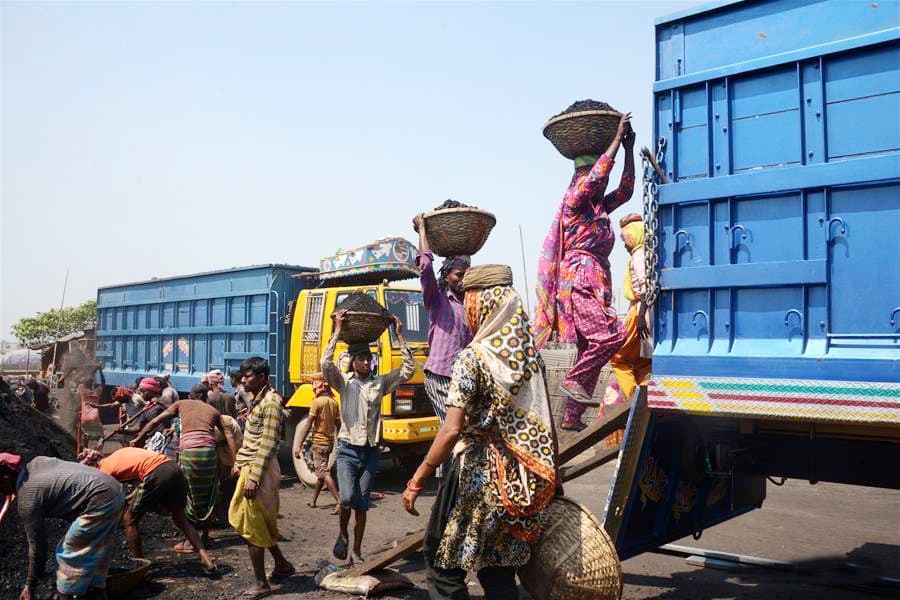
Child labour, however, still exist in sectors such as brick kilns and the informal economy. Its persistence is driven largely by poverty, inadequate social protection, and household economic hardship rather than systematic forced labour as defined by international conventions. According to Bangladesh Bureau of Statistics estimates, millions of children remain engaged in informal economic activities to support themselves and their families. Addressing such realities requires a nuanced understanding of the socioeconomic conditions that drive child labour. Viewing these challenges solely through the lens of labour law enforcement risks oversimplifying a complex problem and may ultimately hinder effective solutions.
Therefore, if the US's objective is genuinely to strengthen labour standards and eliminate exploitative practices, then technical assistance, capacity-building programmes, and targeted support for vulnerable workers would likely prove more effective than punitive trade measures. Effective labour reform is best achieved through cooperation, not through measures that may ultimately punish the very workers they are intended to protect.
aktohin@gmail.com