


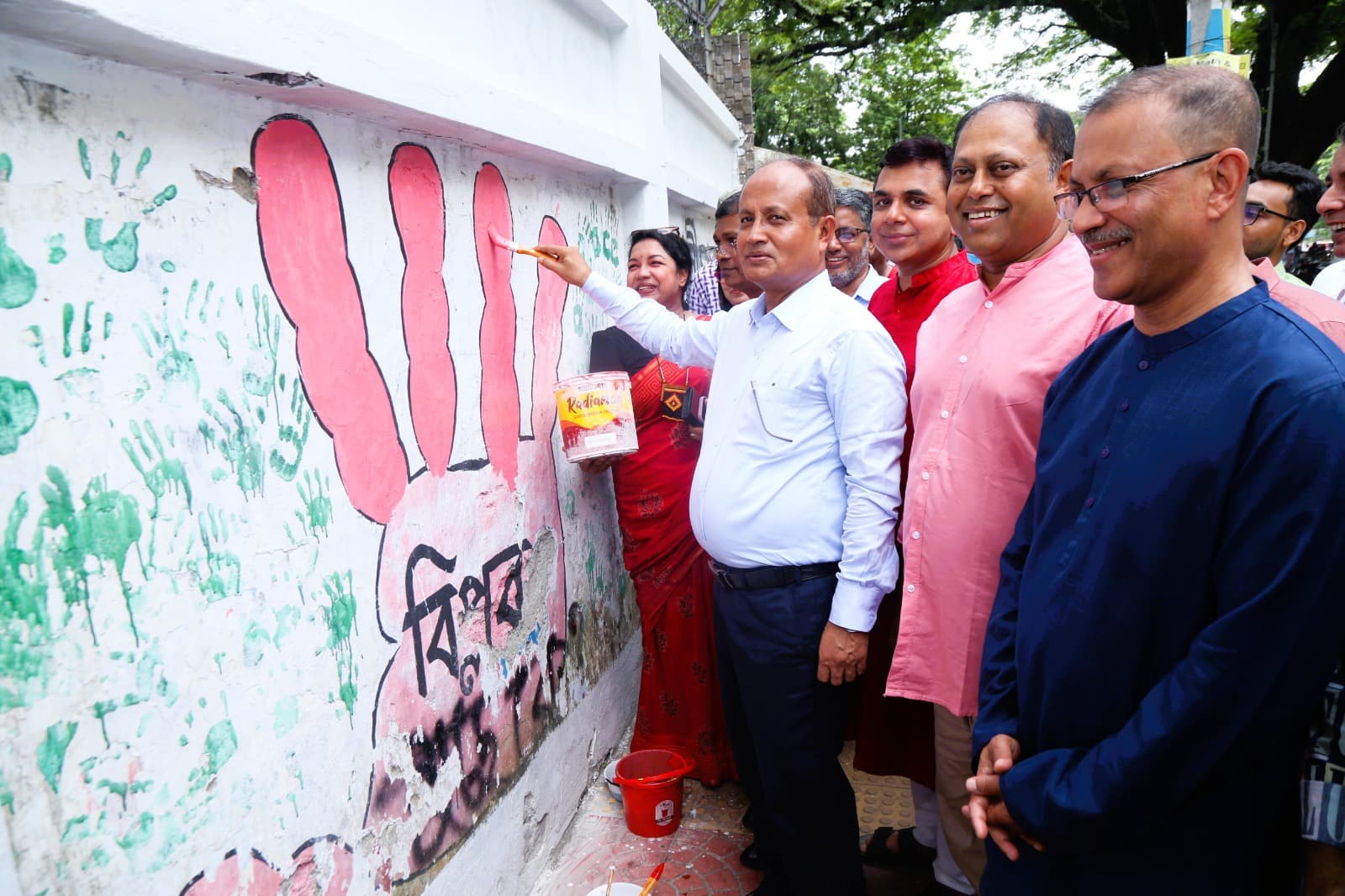
The University of Dhaka (DU) has launched a repainting and restoration campaign to preserve the July graffiti painted on walls across the campus as symbols of the July 2024 mass uprising.
The programme was inaugurated on Saturday morning by DU Vice-Chancellor Prof. Dr. ABM Obaidul Islam at the main gate of the Vice-Chancellor's residence.
Among those present at the inauguration were Pro-Vice Chancellor (Academic) Prof. Dr. Abdus Salam, Pro-Vice Chancellor (Administration) Prof. Dr. Mohammad Almojaddeddi Alfesani, Treasurer Prof. Dr. M. Jahangir Alam Chowdhury, Dean of the Faculty of Fine Arts Prof. Dr. Md. Azharul Islam Sheikh, Proctor Md. Israfill Prang, Director of the Arbory Culture Centre Prof. Dr. Mohammad Jasim Uddin, along with teachers and students.
According to the university authorities, the restoration work will continue from August 1 to 3, covering the route from the Vice-Chancellor's residence to Rokeya Hall. Registered students and artists are taking part in the initiative, which aims to preserve the graffiti while maintaining their original artistic features, spirit and historical significance.
Speaking at the programme, Vice-Chancellor Prof. Obaidul Islam said the July graffiti stand as reminders of what he described as the repression carried out by the ousted fascist government. He said the preservation initiative seeks to keep alive public memory of the oppression and suffering experienced during that period.
Recalling the events of July and August 2024, he said young people and ordinary citizens had taken to the streets in protest against what he termed the injustices and repression of the then government.
He alleged that the authorities responded with violent attacks in an attempt to silence public voices, prompting people from all political affiliations and walks of life to join the movement.
He added that former Prime Minister Sheikh Hasina fled the country in the face of the mass uprising after, according to him, more than a thousand innocent people had lost their lives. He said patriotic students expressed their resistance through graffiti depicting repression, violence and injustice, and that these artworks have since become a living part of the nation's history.
The vice-chancellor said future generations would continue to remember those "bloodstained days" through the preserved graffiti and uphold the anti-fascist spirit of July for years to come.