


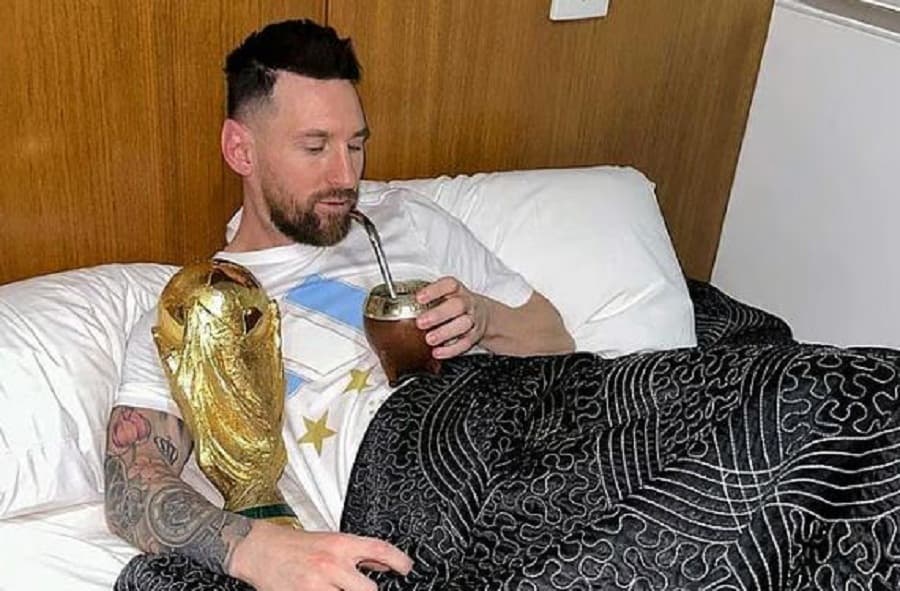
There's a photograph that outlived the World Cup final itself. Messi, still in his captain's blazer, lying back on a training-ground bed with the trophy tucked against his side, and in his other hand, a gourd of mate, the silver straw catching the light. He took the picture himself, at the AFA training centre in Ezeiza, December 2022, and put it out through his own Instagram. That detail did more to explain Argentine football culture than any tactical breakdown could.
Mate isn't a drink, unlike Coca-Cola or coffee. It comes from steeping dried yerba mate leaves in hot water, and the plant carries a reputation for medicinal properties older than any football association.
What made it a story during the last World Cup wasn't the taste most outsiders find it bitter, almost smoky, but the logistics. The squad flew to Qatar with 240 kilograms of the leaves in their luggage. You don't pack a quarter ton of anything as decoration.
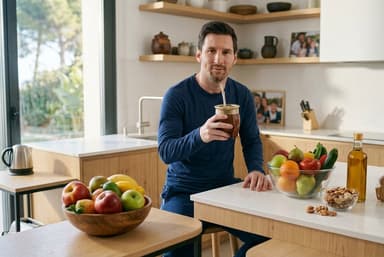
Messi's morning ritual has a specific rhythm. On match days, he sits with Rodrigo De Paul for what teammates call a mate session, a habit that's spread outward to Emiliano Martínez, Alexis Mac Allister, others.
It isn't private; cameras constantly catch it, but it functions more like prayer than caffeine intake. The gourd gets passed, refilled, passed again. Nobody drinks alone.
Mate obsessives argue more than casual fans would expect about brand. The consensus is Canarias, a Uruguayan label, specifically their Serena blend, yerba cut with linden flower, mint, lemon balm, passionflower, softer than the straight leaf most Argentines grow up on.
He's since lent his name to a Stanley line, steel cups and a thermos built around a pour spout precise enough that mate drinkers online treat it as a genuine design achievement rather than merchandise.
Easy to miss, watching from Dhaka, is how ordinary the drink is meant to be back home. Estimates from Argentina's National Yerba Mate Institute put it in roughly ninety per cent of households, closer to rice or tea than anything a footballer needs marketing for.
Messi didn't discover mate for the cameras. He just never stopped doing what his grandmother probably did before ten in the morning in Rosario.
How it's actually made
The process resists shortcuts, which is probably why it survived this long. Start with a gourd, a hollowed calabash traditionally.
However, steel versions have taken over for anyone unwilling to cure a natural shell first.
Curing takes a few days: wet yerba packed inside, left to sit so the fibres seal and stop leaching a bitter edge into every cup afterwards. Skip it, and the first few mates taste like wet cardboard.
Fill the gourd about two-thirds with dry yerba loose-leaf, never bagged. Then the part locals actually argue over: tilt the gourd nearly sideways, palm over the opening, shake gently upside down first.
This settles the fine powder at the top rather than the bottom, so the bombilla, the metal straw with a filter tip, doesn't clog in the first two sips.
Water temperature matters more than people expect.
Hot, somewhere around 70 to 80 degrees celcius, never boiling; boiling scorches the leaf. Pour a small amount first, just enough to wet it; let it sit a minute.
Insert the bombilla at an angle against the gourd's side, not straight down the centre, so the leaves bank to one side and the filter doesn't bury itself in sediment.
After that it's just refilling, over and over. A single serving can be topped up dozens of times across a morning, the entire logic behind hauling a quarter ton to Qatar rather than buying fresh abroad.
Whoever holds the thermos pours for everyone else before themselves, then finishes and passes the gourd back to the next person.
Nobody rinses it between turns. Not an oversight — the whole point of one gourd instead of everyone holding their own.
Ronaldo, oddly, has become something of an ambassador for the drink in Europe despite playing nothing like the Río de la Plata style Messi represents.
Cafés as far off as Kansas City now build entire brands around slowing into the ritual rather than selling it quickly.
None of it makes the drink more than what it already was before Messi picked one up: a plant, hot water, a straw passed between hands that trust each other. The trophy just happened to be sitting next to it that one December morning, and somebody had a phone.