


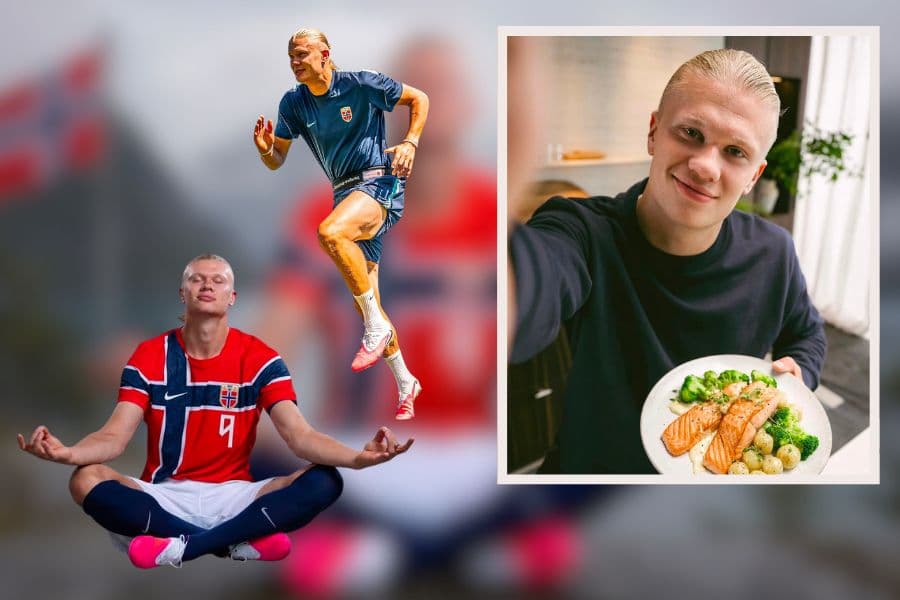
After dismantling five-time world champions Brazil almost 'single-legedly' on football's biggest stage, Erling Haaland once again became the centre of global attention. It was not long before the discussion turned to strategy and objectives. What does it take for one 25-year-old striker to consistently possess explosive speed, incredible strength and remarkable stamina, along with clinical finishing? Many fans can see the Norwegian striker as a sort of 'robotic' figure.


Standing 6 feet 4 inches tall, Haaland possesses extraordinary physical attributes. But sports scientists would point out that his consistency is not explained solely by his genes. It's all about the practised lifestyle behind his performances, like disciplined training, proper nutrition, recovery and sleep.
One of the most intriguing things about Haaland's schedule is his eating habits. The Manchester City striker said in the 2022 documentary Haaland: The Big Decision that he prefers to eat high-quality, homegrown foods rather than overly processed ones.
Some of the strangest ingredients in his menu include organ meat like beef heart and liver, which he gets from local butchers.
Although these foods are not widely recognised in today's diets, they are an excellent source of high-quality protein, iron, vitamin B12, folate, and zinc; all important nutrients for oxygen transport, muscle function, and energy metabolism, which are critical for high-performance sports.
The documentary also shows that Haaland's diet includes fish, eggs, dairy products, vegetables and homemade smoothies made with milk, spinach and kale, media reports said.
He has even said that before his home matches, his father cooks him homemade lasagna, which he jokingly says is part of his match-day routine.
These selections are part of a dietary philosophy that's based on whole, minimally processed foods rather than diet trends.
There have also been reports that Haaland burns almost 6,000 calories per day during periods of heavy training and competition.
That number has made it into the public eye.
Still, sports nutritionists stress that it reflects the demands of elite football.
They shouldn't be considered a standard for the rest of the population. The nutritional quality of the diet is more important than the calorie count, and you should make sure there is sufficient protein, carbohydrates and healthy fats to fuel performance and recovery.
But nutrition is not the only factor. The Norwegian striker emphasised the need to follow good habits, including getting natural daylight shortly after waking to help regulate their internal clock, in the book Haaland: The Big Decision. He also claims to get about 10 hours of sleep a night, focusing on the recovery aspect of athletic performance, according to media reports.
Haaland's recovery methods, such as the use of cryotherapy, have garnered significant attention.
The evidence for long-term performance benefits of cryotherapy is not yet consistent; however, some athletes do experience decreased muscle soreness following the treatment.
The importance of balanced nutrition, organised training, and adequate rest in achieving long-term athletic success remains emphasised.
In the end, it is impossible to pinpoint one food or recovery method that is causing Haaland to perform so well. Rather, it's a result of years of discipline, considered food intake and regular cooking.
His regimen is a testament to the idea that great athletes make the best use of the basics, grounded in hard work and consistency, rather than relying on shortcuts or instant fixes.
Nutrition is just one of the factors, however. The Norwegian international had to have 'a daily routine' in Haaland: The Big Decision, as he stated that he needed to get a lot of natural light in his body soon after he woke up. Around 10 hours of sleep at night is his priority, and he acknowledges that recovery is an integral part of his athleticism, media reports state.
jarinrafa20@gmai.com