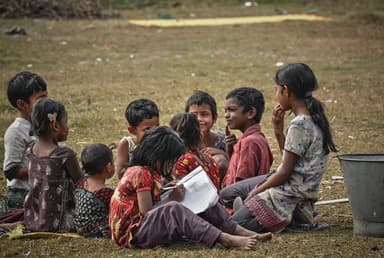


Have you ever been moved by John Lennon's iconic song, 'Imagine'? This masterpiece vividly paints a picture of a world where people coexist peacefully and harmoniously. The Poignant line, 'Imagine all the people living for today,' encapsulates the desire to embrace the present, foster peaceful coexistence, and let go of past and future anxieties to appreciate the now fully.
In 1981, the International Day of Peace was formed. The United Nations General Assembly formally announced May 16 as the 'International Day of Living Together in Peace.'
Living together in peace entails valuing one another and acknowledging differences to promote peace and harmony. Promoting the fundamental principles of peace via knowledge, education, science, and culture was the goal of UNESCO, spreading serenity after World War II.
Now, the world is grasped by the horrors of war and diseases. People start hating each other over differences of opinion, whether political, ideological, or religious dogmatism. Years of friendship get broken over a silly Social media debate. Living in peace means loving the diversity of cultures and people. It is acceptance while disagreeing with your friends, and S.M. Haider Shuvo, a lecturer at United International University from the Department of Electrical and Electronic Engineering, believes in that philosophy.
Mr. Haider lives with his loved ones and finds the meaning of living together peacefully. He believes that emotions are intangible and help build the power of love and semblance. He says, "It is essential because we can not live alone; we need to stay together, and togetherness helps us overcome every hurdle. Moreover, it acts as an aid to gain trust and spread peace in society."
Sharing one of his campus days, he says, "I had to stay in a hall where I had to share his room with a friend. They were from a science background and used to spend hours and hours of intense bickering and exchanging opinions over cups of tea. Sometimes, a difference of opinion seemed to lead to their cold war. Once, his friend fought with him, but later, they patched up again when they understood. Thus, they have remained excellent friends till now.
Shamsun Nahar Setu, a former student from RUET, said, "Living together in peace means mutual understanding and respect for others' thinking, opinions, and activities. Despite differences in opinions, listen to the person in front of you—not just for replying but for understanding."
Faria Binta Jebu is living in the United Kingdom for higher studies. She does part-time work in a department store. On her first day of joining, she met her colleague for the first time named- Amelia, who was a Christian. So, at lunchtime, she offered Faria Binta a Hamburger. But Faria refused it as it was Haram (prohibited in Islam).
Faria thinks she might get disheartened and might not talk to her, but Amelia understands Faria's emotions regarding her religious beliefs and respects her words. She said living in peace means respecting and valuing each other's beliefs.
According to Abraham Maslow's Hierarchy of Needs, it even boosts an individual's self-worth within the community. Love and a sense of belonging are essential for all humans to sustain the circle of life. The vital components of the peace cycle are affection, acceptance, intimacy, trust, and friendship.
If we let go of our egos and do not disrespect others' emotions, beliefs, or Sentiments, one day, we can have a world where people happily share everything. We can sing like John Lennon—See All the People Living Together in Peace when there is nothing to kill or die for. That is why we all have to join in spreading serenity.
zebamaliha60@gmail.com