

Budget for FY27 offers relief to consumers through tax cuts on essentials
Published :
Updated :
 For all latest news, follow The Financial Express Google News channel.
Amid persistently high prices of essential commodities, rising healthcare costs and increasing expenses for technology products, the proposed national budget for fiscal year 2026-27 (FY27) has brought some relief for consumers through a series of tax and duty reduction measures.
Presenting a Tk 9.38 trillion budget in the parliament on Thursday, Finance Minister Amir Khasru Mahmud Chowdhury proposed reducing taxes and duties on a wide range of goods and services aimed at easing the cost of living and supporting key sectors.
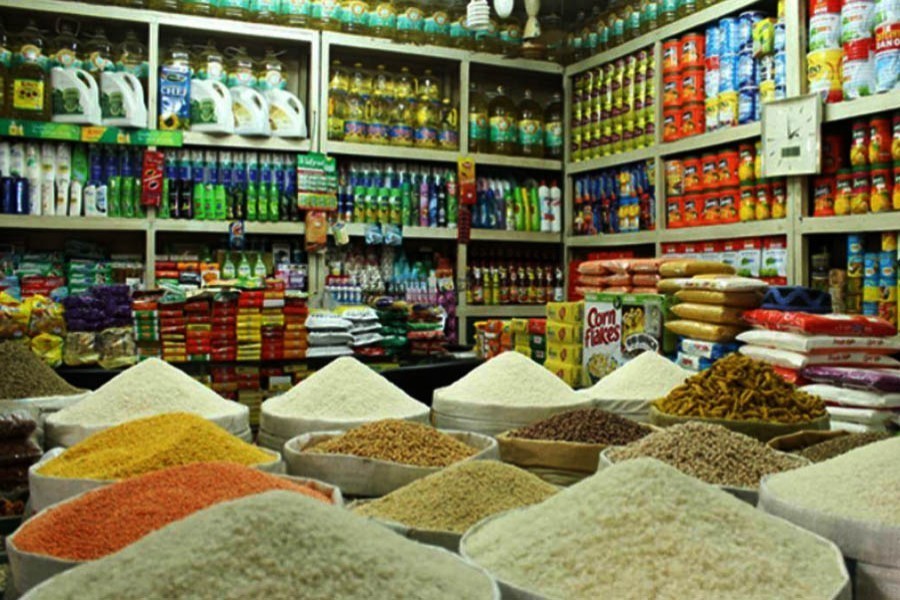
One of the most significant initiatives targets consumers affected by inflation. The minister proposed reducing advance tax at source to 0.5 per cent on various agricultural and consumer products, including cattle, goats, poultry, fish, edible oil and seeds. The same rate has also been proposed for essential items such as onions, garlic, ginger, salt and sugar.
The budget proposes withdrawing regulatory duties on all spices and extending similar benefits to date imports, measures that could help lower market prices. Import duty on raw materials used in baby food production is proposed to be reduced from 15 per cent to 10 per cent.
In the healthcare sector, the minister proposed full exemption of VAT and advance tax on kidney dialysis filters and withdrawal of the 7.5 per cent advance tax on dialysis blood tubing sets. A 10 per cent VAT on the supply of cardiac stents and intraocular lenses used in eye treatment is also proposed to be waived.
For persons with disabilities, advance income tax on 15 imported assistive products is proposed to be reduced from 2 per cent to 1 per cent.
The pharmaceutical industry is set to receive major incentives, with import duties on nine new raw materials used in cancer drug production proposed to be reduced to zero. Duties on 51 active pharmaceutical ingredients (APIs) and 17 other pharmaceutical raw materials are also proposed to be fully withdrawn, potentially lowering medicine prices.
To support the information technology sector, the budget proposes complete withdrawal of customs duties and VAT on laptops, desktop computers, servers, printers and monitors. Advance tax on computer printers and portable data-processing machines is proposed to be reduced from 5 per cent to 2 per cent.
The finance minister also proposed reducing the total tax burden on electric vehicles priced up to $25,000 from 93 per cent to 64 per cent to encourage environmentally friendly transportation. Educational institutions will enjoy full exemption from duties and taxes on imported electric buses, while all duties and taxes on EV chargers and charging stations are proposed to be removed.
In the renewable energy sector, tax and duty exemptions on various solar power components will continue. The budget also proposes a 5 per cent tax rebate on solar electricity bills and full duty exemption on raw materials used in manufacturing lithium-ion and sodium-ion batteries.
For agriculture, VAT on 36 raw materials used in pesticide production is proposed to be withdrawn, while import duty on raw materials for zinc sulphate fertiliser production is set to be reduced to zero. Three new raw materials used in poultry, dairy and fish feed production will also enjoy duty-free import facilities.
The budget proposes a sharp reduction in tax at source on gold and gold jewellery from 5 per cent to 0.5 per cent, a move expected to encourage legal imports and support the gold trade.
Among other measures, supplementary duty on imports of synthetic woven fabrics is proposed to be withdrawn, while imports of 10 essential raw materials used in producing smart cards and debit cards will receive exemption from the 5 per cent additional customs duty.
To encourage domestic edible oil production using locally grown oilseeds, the government has proposed a 10-year tax incentive package, including full tax exemption for the first five years, followed by 50 per cent exemption for the next three years and 25 per cent for the final two years.
The tax rate on recycled products and recycling raw materials is proposed to be reduced from 3 per cent to 1 per cent. Customs duty on sewage treatment plants would fall from 5 per cent to 1 per cent, while duty on mortuary equipment imports is proposed to be slashed from 25 per cent to 1 per cent.
The budget also proposes raising the excise duty-free threshold on bank deposits from Tk 300,000 to Tk 400,000 and completely withdrawing the Tk 300 tax currently imposed on new mobile SIM cards.