

Two in three rural adolescent girls experience menstrual disorders: icddr,b
Published :
Updated :
 For all latest news, follow The Financial Express Google News channel.
Nearly two in three adolescent girls in rural Bangladesh experience menstrual disorders, with painful periods disrupting daily life and forcing many to miss school, said a new study of icddr,b.
The AdSEARCH study, a research project of icddr,b, also found significant gaps in sexual and reproductive health and rights (SRHR) knowledge among adolescents, highlighting the need for earlier and more effective health education.
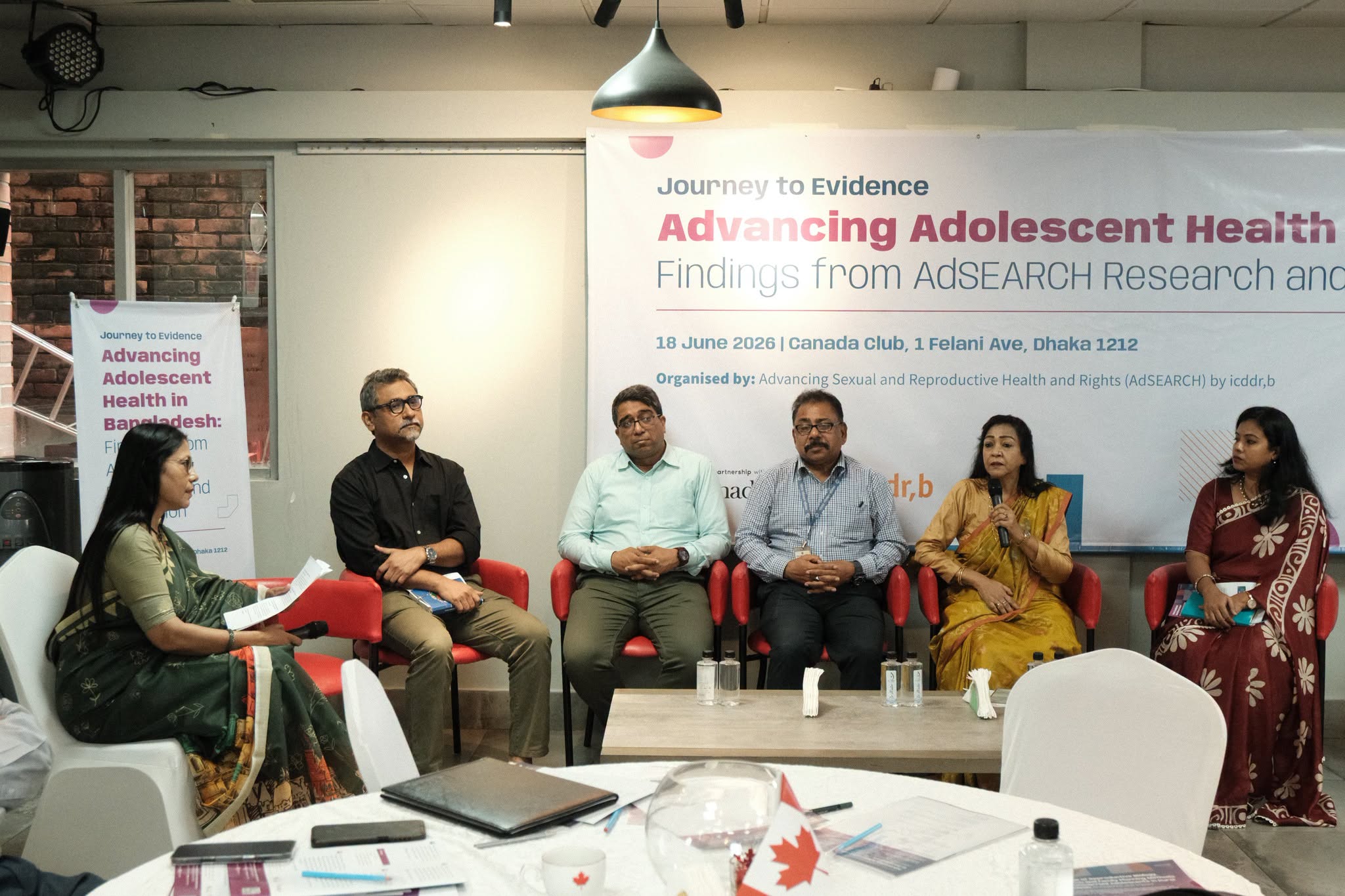
The findings were presented at a dissemination seminar held at a club in the city on Thursday, bringing together health experts, policymakers, representatives from the Directorate General of Health Services (DGHS) and Directorate General of Family Planning (DGFP), and development partners to discuss the state of adolescent health in Bangladesh.
The 24-month cohort study involving 2,713 adolescents from icddr,b’s Baliakandi Health and Demographic Surveillance System (HDSS), with data collected every four months between 2023 and 2025.
One component followed 1,255 adolescent girls aged 12–16 years and found that 64 per cent of them experienced at least one menstrual disorder. Painful periods, or dysmenorrhoea, were the most common condition, affecting 56 per cent of girls. One in three experienced painful periods during three or more menstrual cycles over the study period, while 9 per cent reported persistent menstrual pain, said the study findings.
Nearly 40 per cent of girls said menstrual pain interfered with daily activities, and around one in four missed school because of period pain or heavy bleeding. Among girls with persistent menstrual pain, 43 per cent also experienced additional menstrual complications.
A separate analysis involving 1,077 unmarried adolescents aged 16 years from Baliakandi and Rajbari, revealed major gaps in reproductive health knowledge.
During the panel discussion, Prof Dr Farhana Dewan, former President of the Obstetrical and Gynaecological Society of Bangladesh, called for greater attention to menstrual health stigma, particularly among adolescent girls in rural areas.
Edward Cabrera, First Secretary - Development (Health), High Commission of Canada to Bangladesh, also spoke, reassuring their support to the cause.
The findings called for stronger investment in adolescent health education and services, including menstrual health support, reproductive health information, and adolescent-friendly care, so that young people can make informed decisions and stay healthy.