

Private sector to drive Bangladesh's next phase of growth, says PM's adviser
Published :
Updated :
 For all latest news, follow The Financial Express Google News channel.
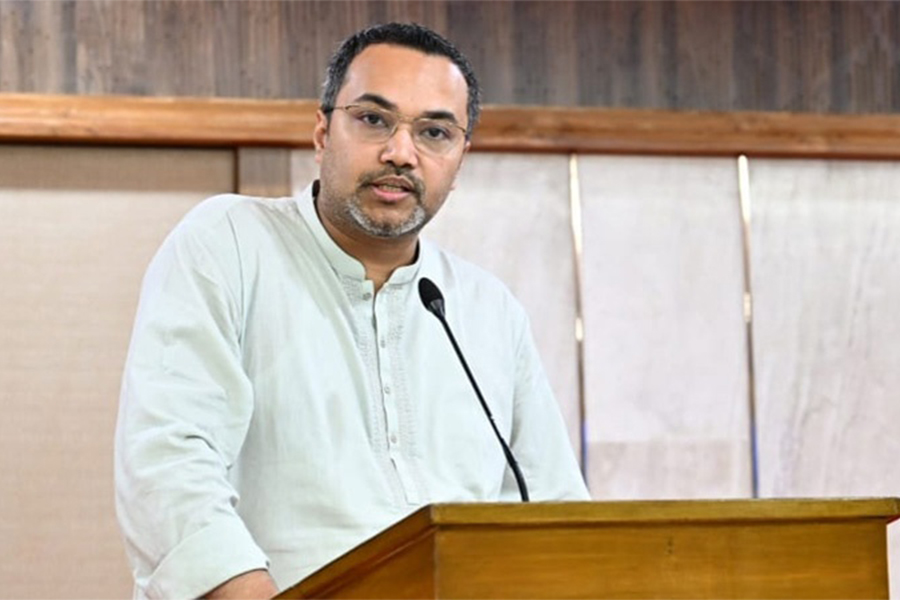
Bangladesh's future economic growth must be driven by the private sector, with the government focusing on creating a supportive policy environment rather than leading commercial activity, Prime Minister's Education Adviser Dr Mahdi Amin said on Thursday.
Speaking at the 31st Annual Council of the International Chamber of Commerce (ICC), Bangladesh, held at a city hotel, Dr Amin said the government's priority is to establish policies that encourage investment, create employment and improve the overall business climate.
The meeting was presided over by ICC Bangladesh President Mahbubur Rahman and attended by business leaders, policymakers and representatives from the corporate sector.
Dr Amin praised the country's private sector for its resilience and contribution to Bangladesh's economic development, describing its performance as a "tremendous track record of excellence".
"We want to move forward as a private sector-led country in terms of development and growth," he said.
He said the government would continue to set macroeconomic priorities, including generating employment for the country's large youth population and increasing opportunities for women, while the private sector would remain the principal engine of economic expansion.
"We believe the government's role is to formulate policies for the people, while the private sector should lead economic growth," he said.
The adviser said the administration is pursuing a broad agenda of deregulation and economic liberalisation aimed at reducing the cost of doing business and eliminating unnecessary bureaucratic obstacles.
"There is a big push for deregulation and economic liberalisation," he said, adding that the government is preparing an advanced policy framework to improve the ease of doing business and attract greater domestic and foreign investment.
He said efforts are under way to make Bangladesh one of the world's most investment-friendly destinations by reducing rent-seeking practices and streamlining administrative procedures.
Outlining the government's trade strategy, Dr Amin said policies would be designed to strengthen domestic manufacturing while ensuring greater self-sufficiency.
He said the government plans to reduce taxes on raw materials used by local industries while making imports relatively more expensive in sectors where adequate domestic production capacity already exists.
According to him, the prime minister's vision is to reduce the cost of essential commodities for consumers while encouraging local production and reducing dependence on imports.
"The policy that we have is to make Bangladesh as self-sufficient as possible," he said.
As the current administration approaches its 180-day milestone, Dr Amin stressed that achieving sustainable economic growth would require close collaboration between the public and private sectors.
He said the government is keen to learn from successful private-sector practices and incorporate them into public-sector governance to improve efficiency and service delivery.
The adviser also announced that the Council of Ministers would hold a series of consultations with trade bodies and business associations to identify reforms needed to further improve the country's investment climate.
"I look forward, under the leadership of the Prime Minister, to building a country where the private sector leads growth in alignment with public sector policies," he said.
bdsmile@gmail.com