

Published :
Updated :
 For all latest news, follow The Financial Express Google News channel.
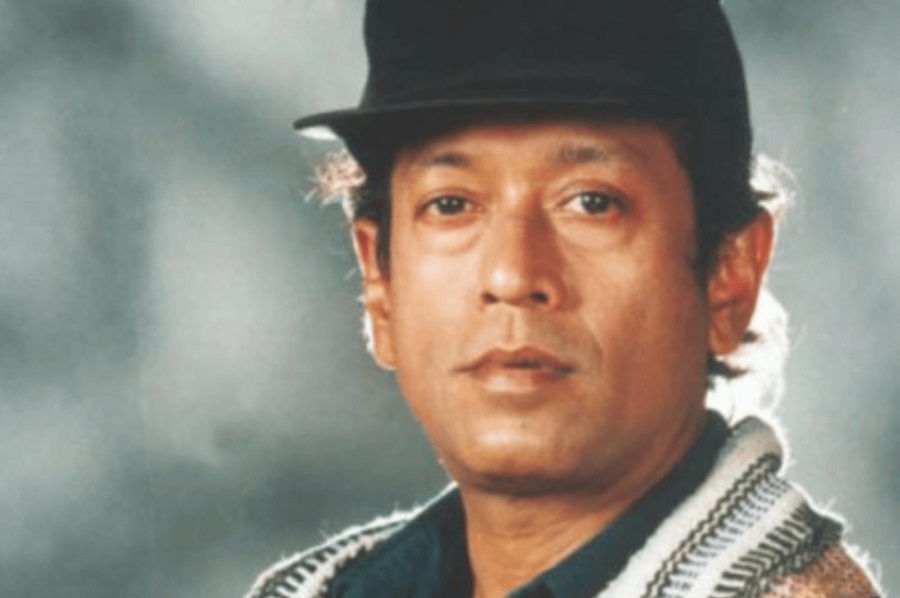
There is a particular kind of memory that does not announce itself. It arrives sideways — through the smell of rain on hot concrete, or the specific quality of afternoon light in a room where a cassette player used to sit. For an entire generation of Bangladeshis who grew up in Dhaka's apartments and semi-urban drawing rooms during the eighties and nineties, Lucky Akhand is that kind of memory. He does not need an introduction. He appears the way certain things from childhood appear — already inside you, already familiar.
Lucky Akhand's music embedded itself into the texture of middle-class Bangladeshi life so thoroughly that remembering the era is remembering him. The cassette era, the transistor radio on the kitchen shelf, the All India Radio signal cutting in and out on winter evenings — he was threaded through all of it. But the more interesting question is not that he was everywhere. It is why he was everywhere, and why nobody seemed to mind.
In those decades, the cultural wars in Bangladesh were real and often petty. Azam Khan and the emerging band scene made conservative families deeply nervous. Rock music arrived carrying suspicion. Parents worried. Clerics commented. The word 'opsanskriti'-foreign culture, corrupting influence- was deployed freely against anything that sounded like it came from the West. The battle lines were drawn between the traditional and the modern, and most artists ended up on one side or the other, whether they intended to or not.
Lucky Akhand passed through this suspicion almost untouched, and that itself tells you something about what he was doing musically.
The families who would not allow their children to listen to Azam Khan somehow had no objection to Abar Elo Je Shondha playing on the evening radio. The same aunts and uncles who distrusted the band culture would hum Aaj Ei Brishtir Kanna Dekhe without registering any contradiction. He had found a register that nobody in Bangladesh had fully occupied before: not folk, not film, not imported rock, but something that felt simultaneously urban and emotionally native. Sophisticated without being alien. New without being threatening. That is a genuinely difficult thing to pull off, and it does not happen by accident.
It happens through a specific kind of musicianship. Lucky Akhand moved between classical ragas — misrakhambaj and pilu — and jazz voicings, between soft rock textures and Western classical structures, without any of it feeling like a demonstration. He was not showing you his influences. He was digesting them and giving you something else on the other side. Songs like Ei Neel Monihar or Aage Jodi Janitam do not sound like exercises in genre-mixing. They sound like feelings that required exactly that combination of elements to exist. When musicianship is working at its best, the craft disappears. What remains is only the sensation of something being named that you did not have words for before.
His younger brother Happy Akhand was, in many ways, his first and most important collaborator. Lucky wrote the melodies; Happy gave them a voice that made them feel lived-in, unhurried, almost confessional. There was something in that combination: the composer's architecture and the singer's instinct- that produced a quality of longing new to Bangladeshi popular music.
Not the longing of classical music, formal and contained. Not the longing of film songs, which always had a narrative waiting to resolve the feeling. Something open-ended, slightly restless. Happy died very early in 1987, and that specific voice was gone before it had fully arrived. Lucky carried the music forward alone through Amay Deko Na, Aage Jodi Janitam, Jekhane Shimanto Tomar, Tara bhora Raat Brishtir DiganteTumi etc. But the loss of Happy left a particular silence in it that perhaps only those who heard them together can fully register.
The middle class is a specific kind of audience. Think of a family in Dhanmondi or Mirpur in 1990- a two-room flat, a government job, children in school uniforms, a cassette player on the shelf that everyone treated carefully because replacing it was not simple. That family wanted culture that felt aspirational without feeling out of reach, music that signalled a certain kind of refinement without demanding anything unfamiliar in return.
Lucky Akhand gave them exactly this- not because he calculated it, but because he was genuinely living inside the same emotional world. His music did not flatter that family or tell it what it wanted to hear. It simply arrived at the same coordinates by a different route, and the family recognised itself there, sometimes without knowing why.
Lucky Akhand died in 2017. The grief was large but quiet; the quietness of losing something you had not realised you were still carrying. People who had not thought about him in years found him suddenly everywhere in their own histories, in fragments of evenings they thought they had forgotten, in the specific weight of a season, in the gap between one song ending and another beginning. That kind of return is not how we remember musicians we admired from a distance. It is how we remember things that were simply part of the air we breathed.