

Published :
Updated :
 For all latest news, follow The Financial Express Google News channel.
You are scrolling. It is late. The fan hums overhead, steady like a metronome. Somewhere in the algorithm's vast and indifferent memory, a decision has already been made: tonight, you need a voice that does not rush.
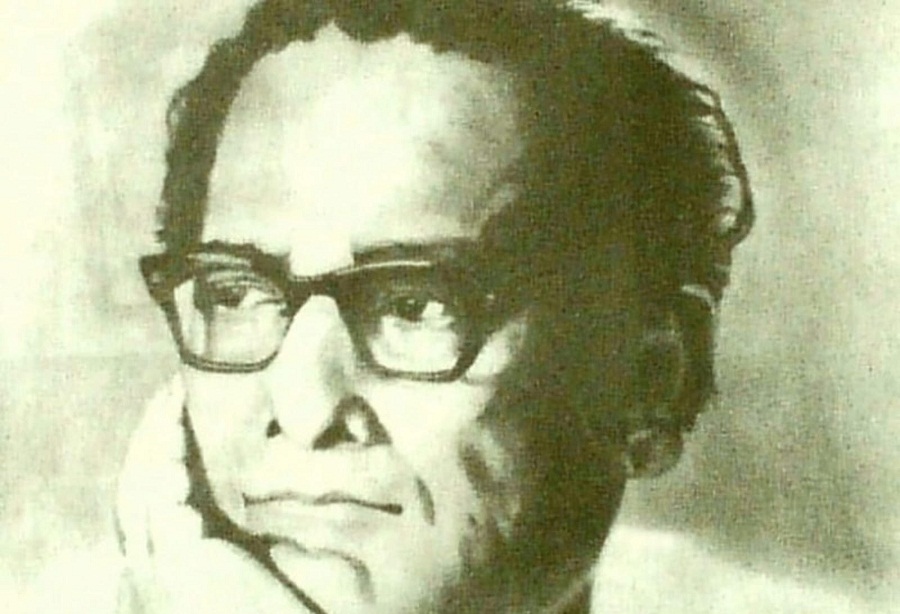
A few seconds of a Bengali song appear. A baritone that does not announce itself, but arrives as if it has always been there, waiting just beyond memory. The voice belongs to Hemanta Mukherjee. And the strange thing is that it still feels present, though it was recorded long before you were born.
A voice that didn't announce itself
Hemanta Mukherjee was born on 16 June, 1920 in Varanasi. Writing ran in his family; engineering was his father's plan.
Music, however, had already begun to rearrange his life quietly. He left engineering unfinished, no announcement, no drama. He moved toward music and stayed there.
His first recording came in 1935. Something in his voice resisted imitation from the beginning. Fuller, steadier, less ornamental, already different enough to feel slightly out of place in its own era.
Finding his voice in a changing time
In the 1940s, war, famine and political awakening shaped cultural life as much as aesthetics did. Hemanta joined the Indian People's Theatre Association not merely for artistic reasons, but for a movement where performance, politics, and survival were possible. Here he met Salil Chowdhury.
One composition changed everything. Written in response to the Bengal famine of 1943, it exceeded the formal limits of playback singing too long, too structurally ambitious, too emotionally loaded for gramophone conventions.
When Hemanta sang it, the result did not feel like entertainment. It felt like testimony. He became a voice the industry had to accommodate. The song is Gayer Bodhu.
Still, loving and soulful voices people miss
Hemanta's musical impact is so vast that one can map the entire emotional spectrum of millions of people. Music journals and cultural historians often note that Hemanta possessed a rare 'honey-dipped baritone', a voice dense with warmth that could convey deep melancholy and serene joy in the very same breath.
In Bengal, his voice became the definitive medium for romance, spiritual longing, and modern poetry.
Songs like Ei Raat Tomar Amar (Deep Jwele Jaai) and Tumi Je Amar (Harano Sur) became permanent cultural markers.
When he sang O Nadi Re, it did not remain as a track in a movie, but rather something more philosophical, more emotional.
In Hindi cinema, he composed music for Nagin (1954), which brought national recognition. As a playback singer in Hindi, his renderings of Yeh Raat Yeh Chandni (Jaal) and the sorrowly beautiful Jaane wo kaise from the movie Pyasa showcased a rare quality that international music critics have frequently praised: an ability to deliver massive emotional resonance without ever resorting to vocal theatrics or over-saturation.
One can find thousands of reels with 'Jaane wo kaise'. The song is more relatable, more connected to those who perhaps never found the 'true' nature of love.
Why does he still appear in your feed?
Hemanta Mukherjee's voice persists in digital circulation because it resists the platforms' tempo. It does not accelerate. It does not compete through volume or novelty. It is interrupted by slowing.
When he sings, it does not feel like a performance alone. It feels like someone fully inhabiting time without trying to escape it.
You were scrolling. You were not supposed to stop. But you do. And for a few seconds, the algorithm produces something it cannot fully interpret: a voice that still understands how time feels.
The late voice and final years
In the 1980s, after health setbacks, his voice changed. It did not collapse; it thickened.
Age removed some flexibility but added a different kind of gravity — the voice no longer carried only tone; it carried time.
In 1989, he travelled to Bangladesh to receive the Madhusudan Award. He appeared on BTV in one of his last public performances. Soon after returning to Kolkata, he fell seriously ill and died on 26 September, 1989.