

NCP unveils shadow budget, focuses on education, jobs, healthcare, energy, defence
Published :
Updated :
 For all latest news, follow The Financial Express Google News channel.
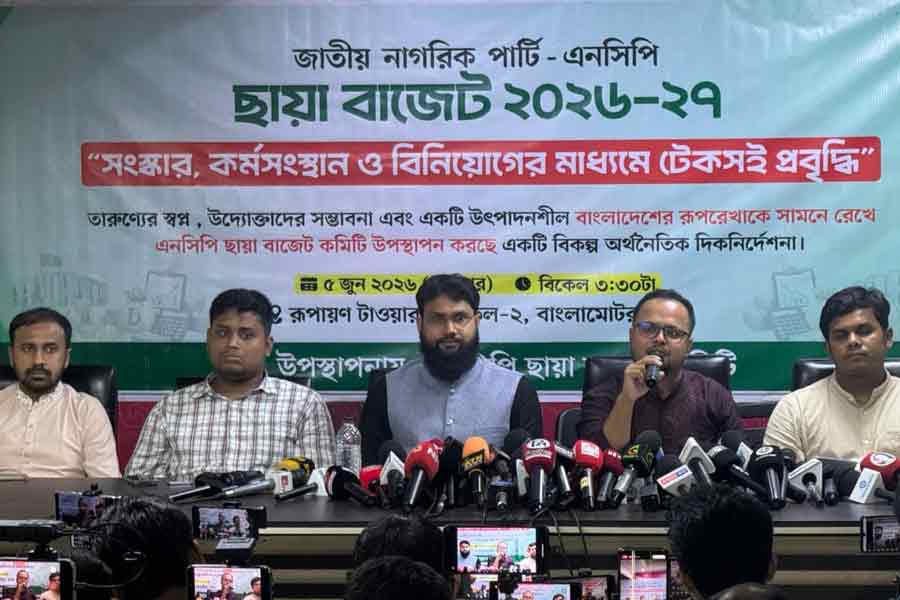
The National Citizen Party (NCP) has unveiled its shadow budget for the 2026-27 fiscal year, emphasising education, employment, healthcare, energy security, and defence modernisation. Titled “Bangladesh 2.0: Sustainable Growth through Reform, Employment, and Investment,” the budget outlines 71 policy proposals across 12 key sectors.
The shadow budget committee presented the proposals on Friday at Rupayan Tower in Dhaka. Attending the event were NCP’s chief organiser for the southern region and Member of Parliament Hasnat Abdullah, shadow budget committee chairman Dr. Atik Mujahid, vice-chairman Abdullah Al Faisal, and other central leaders.
In the education and employment sector, NCP proposed an allocation of BDT 124,425 crore. Key initiatives include school feeding programmes in all government primary schools, a BDT 5,000 crore “Teacher Quality Fund,” raising technical education participation to 30 per cent, and a government-backed startup guarantee fund. The party also aims to create 10 million new jobs over the next five years.
For healthcare, the budget proposes a 25 per cent increase in spending and the introduction of a National Health Insurance (NHI) scheme. Special funds would cover up to 70 per cent of costs for chemotherapy, dialysis, angioplasty, and bypass surgery for low-income patients. The plan also includes building two super-speciality hospitals and deploying 500 GPS-tracked ambulances nationwide.
In energy and environment, NCP proposes a BDT 6,000 crore programme to expand renewable energy, five-year zero-tax incentives for solar products, and conversion of 2 million e-rickshaws to lithium batteries. Tax incentives for energy-efficient technologies are also planned.
For defence and national security, the party recommends an additional BDT 5,775 crore allocation and plans to develop a self-sufficient defence technology ecosystem, focusing on domestic drone and missile capabilities.
Speaking at the event, Hasnat Abdullah said Bangladesh faces structural challenges, including high non-performing loans, import-dependent energy systems, and a low tax-to-GDP ratio. “We want a budget that goes beyond statistics,” he said. “It should improve citizens’ lives through education, healthcare, jobs, and social justice.”
newsmanjasi@gmail.com