

Published :
Updated :
 For all latest news, follow The Financial Express Google News channel.
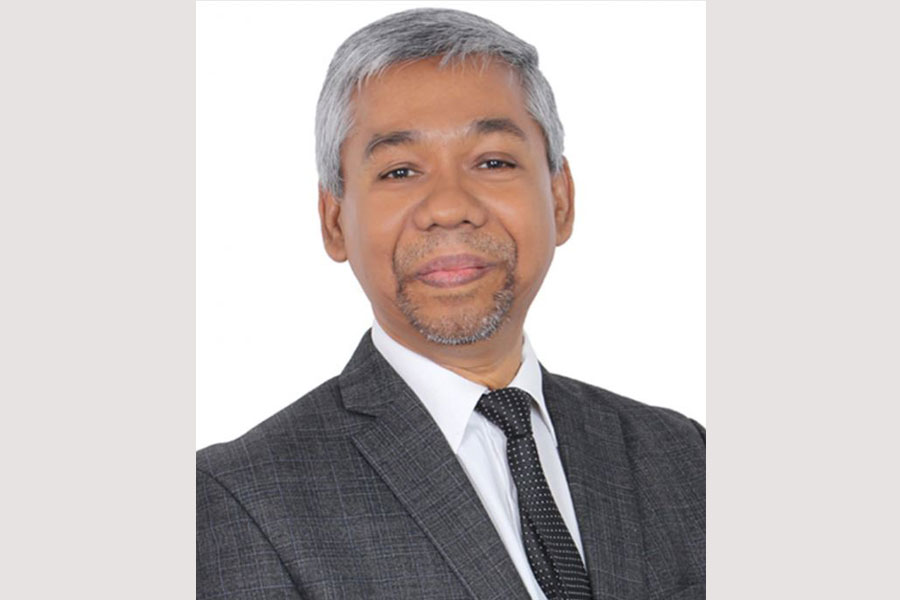
The National Board of Revenue (NBR) is working to develop a digital platform to help small and medium enterprises (SMEs) maintain online balance sheets instead of relying on traditional talikhata, said NBR Chairman Abdur Rahman Khan.
Under the proposed system, businesses will input their data and the platform will automatically generate balance sheets, he said while addressing a pre-budget discussion at the NBR headquarters in the capital on Tuesday.
He also urged the SME Foundation to share its database of SMEs, noting that such information is crucial as the sector is eligible for tax waivers of up to Tk 5 million. In the absence of such a database, the foundation may take the initiative to develop one, he added.
In a written proposal, SME Foundation General Manager Mohammad Jahangir Hossain recommended introducing a unified Preferential Tax Regime (PTR) for micro, small and medium enterprises (MSMEs) in the upcoming fiscal year 2026–27 to boost growth and simplify compliance.
Highlighting the sector’s importance, the foundation said Bangladesh has around 1.17 crore economic units employing about 3.06 crore people, according to the Economic Census 2024. Of these, 99.92 percent belong to the CMSME sector, which accounts for 77.87 percent of total employment and contributes roughly 30.4 percent to GDP.
Despite this, the sector faces compliance challenges due to the absence of a unified tax framework, with incentives scattered across various laws and statutory regulatory orders (SROs).
To address this, the foundation proposed enacting a separate law or issuing an SRO to establish a dedicated PTR. The framework includes a 10-year tax holiday for new SMEs and a simplified VAT system replacing monthly returns with annual filings based on turnover.
It also suggested green tax incentives for environmentally friendly practices and a five-year bonded warehouse facility to support export-oriented enterprises in importing raw materials.
The foundation placed 113 recommendations covering VAT, income tax, customs and excise duties. These include allowing SMEs with annual turnover up to Tk 5 crore to file VAT returns semi-annually, and introducing a specific tax model for firms with turnover between Tk 1 crore and Tk 5 crore.
On income tax, it proposed raising the tax-exempt turnover limit to Tk 1.5 crore for general MSMEs and Tk 1 crore for women entrepreneurs, alongside reducing advance income tax on raw material imports from 5 percent to 1 percent.
It also called for higher tariffs on imported finished goods such as plastic toys, furniture and light engineering products to protect local industries, along with VAT exemptions for plastic waste recycling and higher duties on imported frozen pangas fillets.
Meanwhile, the Bangladesh Economic Association (BEA) submitted a set of proposals urging a shift in budget strategy to address emerging stagflationary pressures.
BEA representatives warned that the economy is showing signs of stagflation, with GDP growth projected at around 3.5 percent and inflation hovering between 9 and 10 percent.
Led by Mahbub Ullah, convener of its interim committee, the association stressed the need to prioritise inflation control, revenue mobilisation and debt sustainability to stabilise the economy.
The BEA also expressed concern over the stagnant tax-to-GDP ratio, currently around 8 percent, and proposed a National Financial Identity System integrating national ID, TIN, banking and mobile financial services data to improve compliance.
Other recommendations include expanding taxation to the digital economy, introducing a cross-border digital services tax, and establishing a digitised land registry linked to national identification systems.
To ease compliance, it suggested a unified tax documentation framework with pre-filled returns generated through automated data integration.
On fiscal management, the BEA called for reforms in the Annual Development Programme to prioritise high-impact projects and reduce reliance on debt, noting that interest payments account for 14–16 percent of the national budget.
It also recommended an inflation-linked expenditure ceiling and cuts in non-essential spending to ease fiscal pressure and improve efficiency.
Among other organisations, Economic Research Group (ERC), Business Initiative Leading Development (BUILD), Anti-Tobacco Media Alliance (ATMA), Center for Policy Dialogue (CPD), Policy Research Institute (PRI), Bangladesh Society for the Change and Advocacy Nexus (B-SCAN) and Bureau of Economic Research (BER) representatives also took part in that discussion.