

Published :
Updated :
 For all latest news, follow The Financial Express Google News channel.
The total marine water area of Bangladesh covers about 48,365 square nautical miles, an area as large as the country's landmass. As a coastal country, with 300-mile long coastline, Bangladesh is well-positioned to develop a thriving marine fisheries and seafood processing industry. This vast untapped marine fisheries potential has been the subject of frequent discussion among policymakers and experts for well over a decade. But it remains largely untapped so far.
The issue once again came for a lively discussion at a recent seminar titled "Investment Potential in Fisheries and Marine Economy in Bangladesh". The seminar was jointly organised by Maheshkhali Integrated Development Authority (MIDA) and Japan International Cooperation Agency (JICA). Speaking at the seminar, maritime experts and policymakers highlighted how the country could unlock an industry worth at least US$3 billion annually by strategically investing in deep-sea fishing, marine biotechnology, and value-added seafood processing.
The seminar identified deep-sea fishing, mariculture, aquaculture and shrimp, and seafood processing as four high-potential sectors where Bangladesh possesses abundant natural resources but has yet to develop commercial-scale industries. Participants pointed out that the country lacks a commercial deep-sea fishing fleet capable of operating in deep-sea waters. Traditional artisanal fishing boats generally venture only 30 to 40 miles from the coast, while mechanised vessels operate only slightly farther offshore. Consequently, much of Bangladesh's 200-nautical-mile Exclusive Economic Zone (EEZ), particularly the deep waters beyond the 200-metre depth contour, remains underexploited. Bangladesh currently harvests only about 700,000 tonnes of marine fish annually, although experts estimate that the Bay of Bengal within its maritime jurisdiction could yield around 8 million tonnes of marine resources each year.
To realise this potential, maritime experts stressed the need for investment in industrial fishing fleets, offshore operations, fish landing and logistics systems, commercial mariculture, internationally certified shrimp value chains, cold-chain infrastructure and modern seafood processing facilities.
Responding to these recommendations, MIDA Executive Chairman Ashik Chowdhury said the government was stepping up efforts to unlock the country's marine fisheries potential and transform Bangladesh into a major fish-exporting nation. He said MIDA would develop a pipeline of investment opportunities based on expressions of interest from private-sector investors and development finance institutions.
Fishery has long been a neglected sector of the government and if it is lately receiving some attention, the move is to be welcomed. Fishery is a vital sector providing 60 per cent of the people's protein intake, making the sector indispensable to national food security. The Bay of Bengal is also exceptionally rich in marine biodiversity. According to a government survey conducted last year in collaboration with the Food and Agriculture Organization (FAO) and Norway, Bangladesh's marine waters contain 475 species of marine fish, 36 species of shrimp, five species of lobster, more than 15 species of crab, five species of sea turtle, and 13 species of coral.
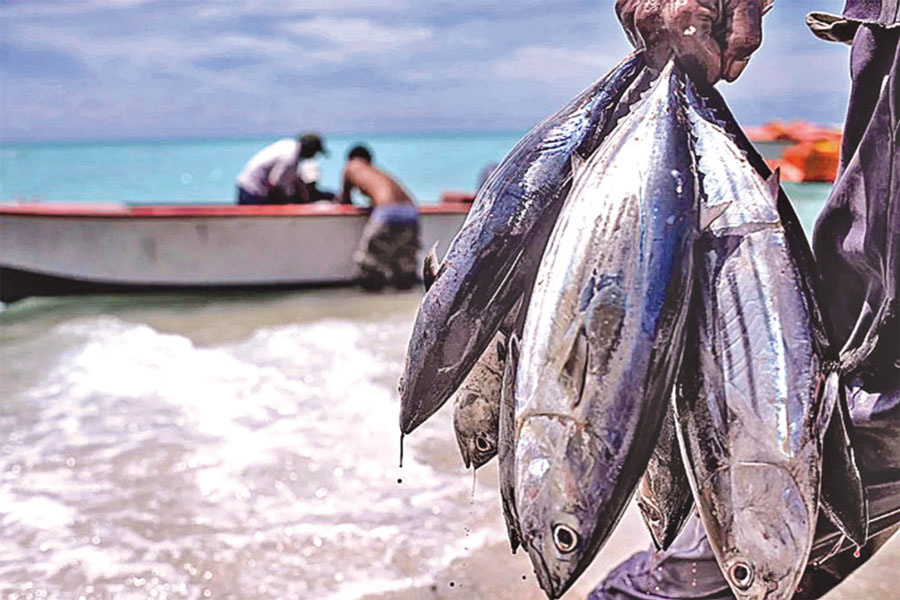
The survey also confirmed the presence of skipjack tuna and several other tuna species within Bangladesh's Exclusive Economic Zone. Scientists reported observing schools of tuna in these waters, indicating significant commercial potential. Tuna is among the world's most commercially valuable fish species and a cornerstone of the global seafood trade, with the international tuna market valued at around US$40 billion annually. Demand continues to grow, driven by rising seafood consumption and the increasing popularity of processed and ready-to-eat products. Neighbouring countries have already capitalised on this opportunity. India earns over $8 billions annually from seafood exports, with tuna among its important export products, while Sri Lanka exports tuna worth nearly US$30 million each year despite having a much smaller marine economy. Bangladesh, despite possessing comparable marine resources in the Bay of Bengal, has yet to secure a meaningful share of this lucrative market. At present, tuna is caught only incidentally as bycatch, and no dedicated commercial tuna fishery or value-added processing industry has emerged. Consequently, seafood export remainS heavily dependent on shrimp, which accounts for the majority of the country's roughly US$400 million in annual seafood export earnings.
Following the successful settlement of its maritime boundary disputes with India and Myanmar, Bangladesh secured undisputed sovereign rights over vast offshore waters and subsequently issued licences to private firms for deep-sea fishing. However, industrial-scale commercial operations have yet to take off. Investors remain cautious because of the high capital costs involved, limited scientific data on tuna stocks and fishing grounds, and the lack of supporting infrastructure.
This situation calls for a comprehensive national strategy. The government must invest in scientific research to accurately assess marine fish stocks, modernise fishing infrastructure, facilitate access to long-term finance for investors, and establish internationally certified seafood processing facilities. At the same time, private-sector participation should be encouraged through removing regulatory bottlenecks, providing fiscal incentives, public-private partnerships and a stable policy environment.
The blue economy has long been recognised as one of Bangladesh's most promising frontiers for economic growth. Opportunities, however, will not last indefinitely. If the country continues to delay investment in deep-sea fisheries and marine industries, others will reap the benefits of resources that Bangladesh itself is well-positioned to exploit. The country has already demonstrated its strength in fisheries, ranking as the world's second-largest producer of inland capture fish. It is now time to extend that success to the marine sector by taking full advantage of its open sea front.
aktuhin.fexpress@gmail.com