

Published :
Updated :
 For all latest news, follow The Financial Express Google News channel.
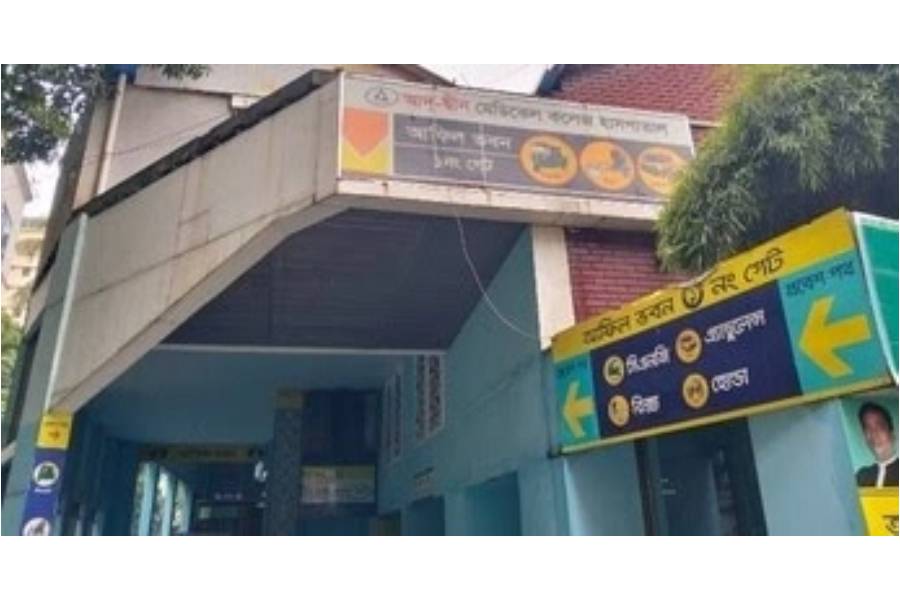
When six neonates died at Ad-din Hospital at Dhaka's Moghbazar in a span of only three hours on May 27, the entire nation was shaken. The tragedy triggers grief and outrage. In a country where medical negligence surfaces so frequently, people expected a thorough investigation into the incident and exemplary punishment for those found responsible.
The authorities, however, abruptly revoked the hospital's licence, forcing it to shut, without a complete investigation. This swift reaction has led to certain doubts that need to be considered carefully.
According to the findings of a preliminary inspection, the deaths of the babies were linked to the lack of oxygen and excessive levels of carbon dioxide at the hospital's post-delivery ward, owing to overcrowding and the failure of the air conditioning system for quite some time. If these findings are ultimately proven correct, those responsible must certainly be held accountable.
Yet many observers have noted that the preliminary observations were made before the completion of a full-scale investigation and without any publicly disclosed chemical analysis of the air in the affected ward and the causes are not established conclusively.
The authorities also stated that Ad-din Hospital's physical infrastructure did not meet the standards required for operating a hospital. Then, how could such a large institution operate for decades if its infrastructure was faulty?
Hospital buildings, facilities, expansions and bed capacities are subject to oversight by regulatory authorities --- the Directorate General of Health Services (DGHS). No hospital can even add a single bed without its approval. If there were longstanding deficiencies in infrastructure, should the responsibility not also extend to those entrusted with monitoring and regulating the sector?
These questions have become more pertinent because of the way the decision was taken. The contrast between the handling of this case and that of many previous incidents has led some to believe that the fate of the institution may have been decided before the investigation reached its conclusion. But the question is whether shutting down the entire hospital serves the broader public interest.
Alternative measures were available. The authorities could have levied substantial monetary penalties on the hospital, ordered compensation for the affected families, suspended the responsible staff and barred them from practising, given reform protocol and strengthened regulatory oversight. However, the closure affects thousands of people, particularly patients, who had no role in the tragedy.
For nearly three decades, Ad-din Hospital at Moghbazar built a reputation for providing affordable healthcare services, particularly in obstetrics and gynaecology, to lower-income and middle-income families. According to available information, the hospital served more than 15.77 million patients during its 29 years of operation.
The institution is part of Ad-din Foundation, a non-profit organisation under Akij Group that operates nine hospitals, five medical colleges, a nursing college, four nursing institutes, a health technology institute and an educational institution.
The immediate victims of the closure are therefore not only the management but also countless ordinary patients who relied on the hospital's low-cost services. One must ask where these patients will now go.
The healthcare sector in Bangladesh is already suffering from extreme pressure. Public hospitals are packed with patients at all times while private hospitals are too expensive for the common people. With the closure of a major healthcare facility known for low-cost medical services, access to such services will be reduced for thousands of people.
The decision also creates uncertainty for many medical and nursing students. Hundreds of students of Ad-din Women's Medical College and Ad-din Nursing Institute at Moghbazar undertake their clinical training and internship at the Ad-din Hospital. A significant number of these students are foreign nationals, particularly from neighbouring countries. The government has yet to clearly explain how their education and clinical training will proceed.
Reports suggest that some Indian students studying at Ad-din Women's Medical College already informed college authorities that National Medical Register (NMR) of India does not register anyone studying at a medical college but doing internship in a separate hospital. Such uncertainty risks damaging Bangladesh's growing reputation as a destination for medical education. This is especially important because the country has invested considerable effort over the years to attract foreign students to its medical colleges.
Every government has a responsibility to ensure accountability when people die due to negligence. At the same time, the government needs to think about their decisions not only in relation to what needs to be done but also to the consequences of those decisions on the overall welfare of society. Any punishment should be proportionate and evidence-based.
The closure of a major hospital may be seen as a swift action. Whether it ultimately serves patients, medical education and the healthcare sector as a whole remains an unanswered question.
rahmansrdk@gmail.com