

Published :
Updated :
 For all latest news, follow The Financial Express Google News channel.
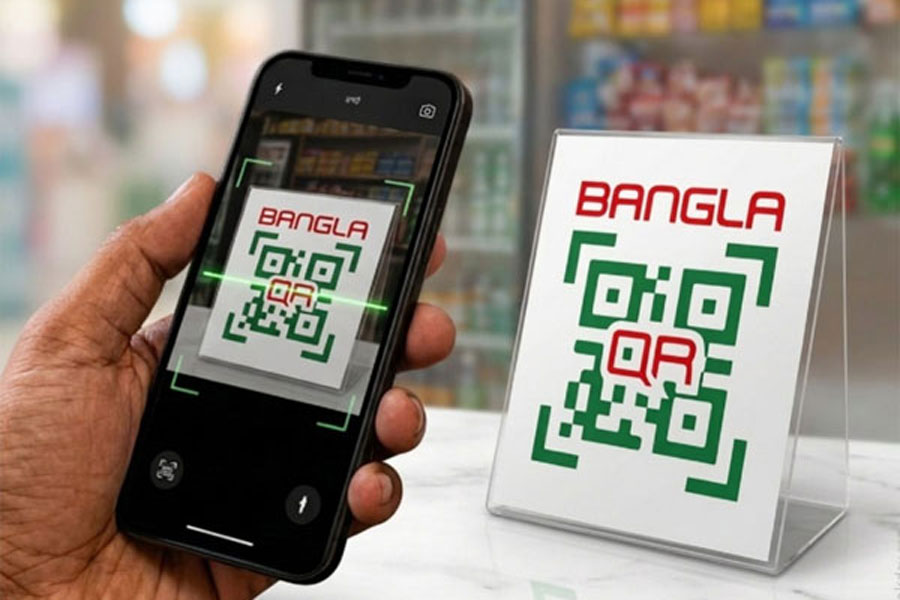
Bangladesh’s journey towards a cashless economy has received a significant boost through the introduction of Bangla QR, a universal quick-response payment framework initiated by Bangladesh Bank. The system aims to allow customers to pay merchants using any participating bank application, Mobile Financial Service (MFS) application or digital wallet through a single interoperable QR code. The vision is compelling. Instead of merchants maintaining separate QR codes for different payment providers, Bangla QR seeks to bring banks, MFS operators, payment service providers and digital financial platforms under one common payment acceptance framework. Such interoperability can simplify the customer experience, reduce fragmentation and encourage more people to make digital payments.
For a country where cash remains dominant in everyday transactions, Bangla QR could play an important role in accelerating payment digitisation. Digital financial services, internet banking, Real-Time Gross Settlement (RTGS), National Payment Switch Bangladesh (NPSB), cards and MFS platforms have already expanded the country’s digital payment infrastructure. However, a large share of retail transactions still takes place in cash. The key question, therefore, is not whether Bangla QR is technologically possible. The technology already exists. The real question is whether the commercial model is strong enough to motivate merchants to accept digital payments regularly.
A personal experience illustrates the challenge. A local medicine shop was encouraged to accept QR-based payment and was eventually on boarded as a merchant. However, after a few months, the shop owner showed more interest in becoming an MFS agent rather than remaining a MFS merchant. His reasoning was straightforward: as a merchant, he had to bear the Merchant Discount Rate (MDR) on each transaction. As an agent, he could earn commission from cash-in, cash-out and other services. This reflects a wider market reality. Small retailers often view merchant acceptance as a cost centre rather than a business opportunity. Unless the economics change, many of them may continue to prefer cash or move towards the agent business model instead of actively promoting QR payments.
Why Merchants May Resist Digital Payments
HIGH MDR COSTS: The first and most critical issue is the MDR. In Bangladesh, the merchant discount rate for card and MFS-based payments generally ranges from around 0.7 per cent to 2 per cent, depending on the product, service provider and business arrangement. For large retailers, such charges may be manageable. But for small shops operating with narrow profit margins, MDR can significantly affect profitability. A grocery shop, pharmacy, stationery store or small retail outlet may earn a gross margin of only 7 per cent to 10 per cent on many products. When a merchant must surrender 0.7 to 2 per cent of the transaction value as payment acceptance cost, the impact on net profit becomes substantial. As a result, merchants may prefer customers to pay in cash, even where QR acceptance is available. Bangla QR can reduce the need for multiple QR codes and improve the customer experience, but it does not automatically solve the merchant cost issue. Unless QR payments become commercially attractive, merchants may display the code but remain reluctant to encourage its use.
INCOMPLETE DIGITAL ECOSYSTEM: The second issue is the absence of a complete digital supply-chain ecosystem. A merchant may receive digital payments from customers, but the value of that digital money remains limited if the merchant cannot use it easily to pay suppliers, distributors, wholesalers and service providers. For example, a pharmacy may receive QR payments from customers throughout the day. However, if it has to cash out the funds or incur additional charges before paying pharmaceutical suppliers, the merchant will see little benefit in accepting digital payments. A true digital payment ecosystem requires funds to move seamlessly from customer to retailer, retailer to distributor and distributor to supplier at a low cost.
Without a connected supply-chain payment framework, QR acceptance may remain limited to the final customer transaction rather than becoming a full business payment cycle. This reduces the practical value of digitisation for merchants.
AGENT BUSINESS IS MORE ATTRACTIVE IN MFS: The third challenge is the imbalance between merchant and agent business models within the MFS ecosystem. Bangladesh has a large and well-developed agent network, while the number of merchants accepting digital payments continues to grow. However, the financial incentives for the two categories are not aligned. An MFS merchant generally pays MDR when receiving a digital payment. An MFS agent, on the other hand, earns commission for facilitating transactions. For a small business owner, the choice becomes obvious: why pay to receive money when there is another model that allows the business to earn from transactions?
This creates a structural challenge for QR payment adoption. If every small retailer becomes an agent, the merchant ecosystem may lose its distinct role. On the other hand, if a business wants to operate both as an agent and merchant, it may create commercial conflict and cannibalisation within the existing MFS distribution model. Financial institutions and MFS operators will need to redesign incentives carefully so that merchant acceptance and agent services can coexist without undermining each other.
TAX VISIBILITY: The fourth challenge is the fear of tax visibility. Digital transactions create traceable records. While this transparency is beneficial for formalisation, compliance and financial inclusion, some small businesses may worry that higher digital transaction volumes will expose them to additional tax scrutiny. Cash transactions are relatively difficult to trace, whereas digital payments generate records automatically. Unless businesses see clear incentives in return for adopting digital payments, many may continue to remain cash dependent. This concern cannot be ignored when designing policies for large-scale QR adoption.
What Needs to Change?
To make Bangla QR sustainable, stakeholders need to focus on merchant economics as much as technology and regulation. Reducing MDR, particularly for small-value merchant transactions, would be an important starting point. Financial institutions, MFS operators and payment service providers may need to explore lower-cost models, volume-based pricing or targeted subsidy mechanisms for micro and small merchants with the assistance from government. Merchants should also receive practical incentives for accepting digital payments. These may include tax rebates, preferential access to business loans, lower lending rates, reward programmes, faster settlement and reduced transaction charges. Digital payment acceptance should provide visible business value, not merely compliance pressure.
Interoperability must also become smoother, faster and more affordable. The cost of adding money to wallets and moving funds between financial platforms remains an important issue. Greater focus on digital money inflows through salary disbursement, government payments, remittance, business collections and institutional payments could reduce dependence on costly cash-in transactions.
Customer adoption is equally important. People need awareness about the safety, convenience and benefits of QR payments. Affordable smartphones, user-friendly applications, promotional offers and cashback programmes can help encourage more customers to choose digital payment over cash.
Bangla QR has the potential to become a major pillar of Bangladesh’s digital financial transformation. But technology alone will not ensure success. Its future will depend on whether merchants find it profitable, convenient and useful in their daily business operations. A universal QR framework will only thrive if the economics are viable for the country’s millions of micro-merchants. Despite strong regulatory support, high costs and ecosystem gaps may slow adoption of Bangladesh’s universal QR payment system.
Mohammad Mahbub Sobhan, Chief Commercial Officer, Prime Bank FinTech Limited