

Trump, Putin and Beijing: A glimpse of emerging world order?
Published :
Updated :
 For all latest news, follow The Financial Express Google News channel.
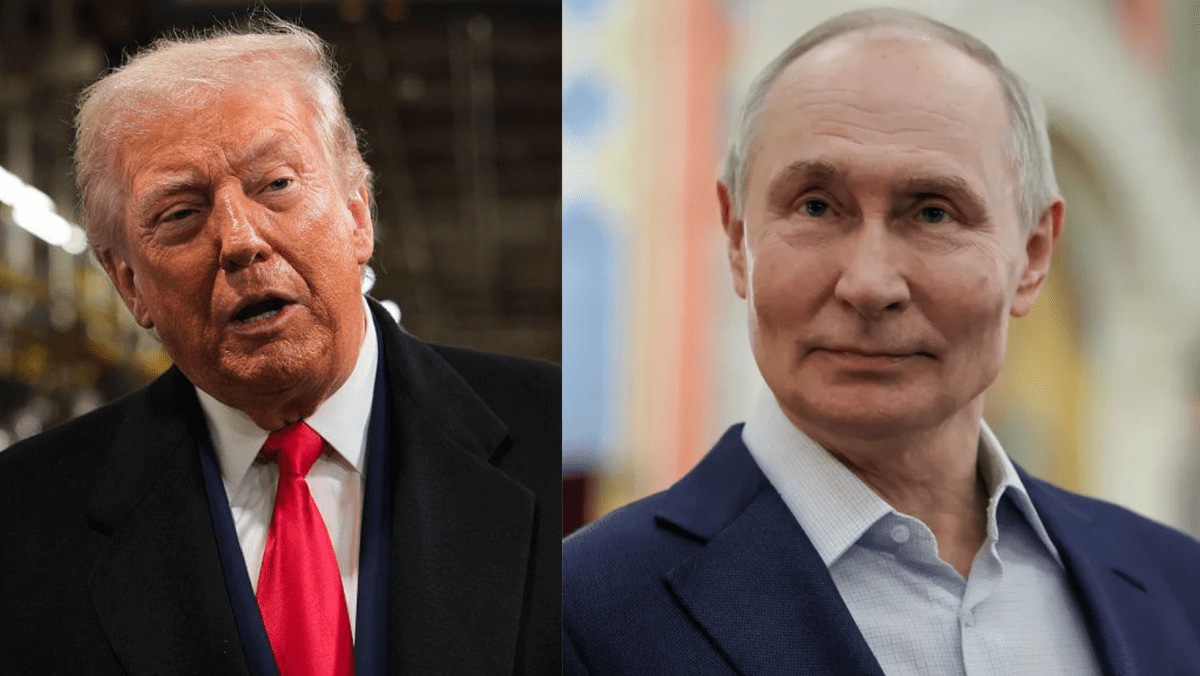
Diplomacy often unfolds behind closed doors. But occasionally, world politics is expressed more powerfully through symbolism than agreements. The recent visits of Donald Trump and Vladimir Putin belong to that category.
Taken individually, neither visit appears revolutionary. No dramatic treaties were signed. No geopolitical earthquake followed. Yet together they produced an image that may outlast any communiqué: the leaders of two competing powers arriving in Beijing in succession to engage China.
That image alone deserves attention.
For more than three decades following the collapse of the Soviet Union, the international system functioned under overwhelming American influence. Washington shaped security structures, dominated financial institutions, set diplomatic priorities, and remained the principal reference point of global affairs. That reality has not disappeared. But it is increasingly being questioned.
China's hosting of both Trump and Putin offered a subtle but unmistakable message-that major global actors, whether partners or rivals, increasingly find themselves compelled to engage China. For Beijing, this was more than diplomacy. It was strategic messaging. Trump's visit reflected an uncomfortable truth confronting American policymakers. The United States seeks to compete with China while remaining deeply interconnected with it.
Washington wants to preserve technological leadership, secure supply chains, strengthen alliances, and maintain strategic deterrence. Yet it also requires continued economic engagement with China. The relationship has become one of simultaneous rivalry and necessity. The visit yielded some limited economic understandings and restored political communication, but there was little evidence of any strategic reset.
More importantly, there was no sign that Washington succeeded in weakening Beijing's relationship with Moscow.
Russia demonstrated that despite sanctions and sustained Western pressure, it remains diplomatically active and strategically relevant. But beneath the carefully managed optics emerged another reality; Russia's dependence on China continues to deepen. Moscow may present the partnership as one of equals, but China's ability to dictate timing, terms, and priorities increasingly reveals the imbalance. China offered political reassurance. It stopped short of providing unconditional economic concessions. That Distinction Speaks Volumes.
For years, analysts have debated whether the world is entering a "New World Order," often suggesting either American decline or China's rise as the dominant global power. However, such assumptions may be overly simplistic. The United States remains the world's strongest military power, commanding an unparalleled network of alliances while retaining significant technological and financial advantages. At the same time, China has emerged as the world's manufacturing hub and an increasingly influential diplomatic actor. Russia, despite its relatively modest economic weight, continues to wield strategic influence that far exceeds its economic standing. Yet no single power appears capable of exercising global dominance in the way the United States once did. What seems to be emerging instead, at least for some timem, is a more fragmented and negotiated international system under a multipolar order.
Under an environment as painted above, military strength alone will not determine influence. Economic resilience, technological capacity, industrial competitiveness, energy security, diplomatic flexibility, and control over strategic narratives may become equally important.
Across Asia, the Middle East, Africa, and Latin America, many states increasingly resist choosing exclusive alignment with either Washington or Beijing. They seek diversified partnerships and greater room for strategic maneuver. This trend may ultimately prove more consequential than any summit. That is why the significance of these visits extends beyond bilateral relations.
These visits-call them sojourns, stopovers, or diplomatic engagements-did not inaugurate a new world order. They did, however, reinforce the perception that the old one is no longer uncontested.
History rarely announces its turning points in real time. More often, they emerge quietly through official photographs, carefully choreographed meetings, and diplomatic encounters whose deeper significance becomes apparent only years later. The most important question, therefore, may not be why Trump and Putin went to Beijing. Rather, it is why the world paid such close attention when they did.
Mudassir Hossain Khan is a retired colonel and a Bir Protik