

Debapriya sees absence of steps against discriminatory policies
Published :
Updated :
 For all latest news, follow The Financial Express Google News channel.
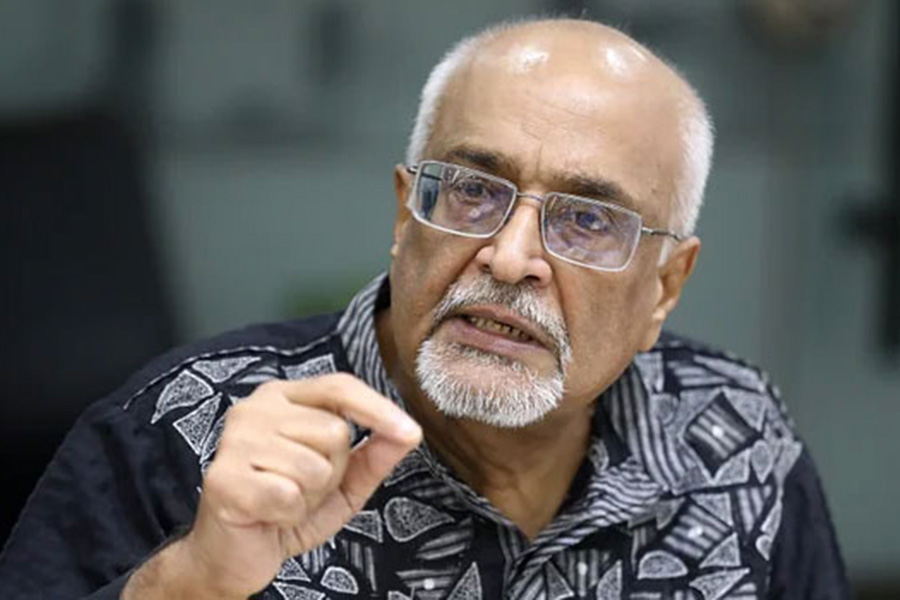
The interim government, which assumed office following a popular movement against discrimination, has yet to take sufficient steps to eliminate entrenched discriminatory policies within the economy, observed Dr. Debapriya Bhattacharya, convenor of the Citizen’s Platform for SDGs, Bangladesh, and distinguished fellow at the Centre for Policy Dialogue (CPD).
He made the remarks on Monday while addressing a multi-stakeholder forum titled 'Bangladesh Economy 2025–26: Policy Reforms and National Budget', organised by the Citizen’s Platform with CPD acting as the Secretariat. The event was held at a city hotel.
Dr. Debapriya expressed concern that the upcoming national budget remains grounded in the fiscal framework left behind by the previous administration, with no major reforms having taken place under the current regime.
He noted that the opportunity for open discussion on the budget has also been curtailed, as a ten-day public holiday is set to begin immediately following the budget's announcement, limiting meaningful deliberation and engagement.
Touching on institutional reforms, he pointed out that while the decision to split the National Board of Revenue (NBR) was fundamentally sound—and in fact recommended in the Citizen’s Platform’s earlier white paper—the way in which it was carried out lacked transparency and professional engagement. He criticised the process as one that narrowed the space for expert input while expanding the influence of certain autonomous sectors, calling it a flawed implementation that now requires urgent correction.
In his address, Dr. Debapriya also reflected on the evolving power dynamics in the country following the fall of the previous regime. He said the politicians associated with what he described as a “theftocracy” have mostly fled the scene, and influential business groups appear dormant, whereas the bureaucratic class has seen a resurgence in influence.
He lamented the government’s apparent disinterest in economic reform, saying that while other areas of governance may be receiving attention, economic restructuring is being overlooked. This imbalance, he argued, is deeply problematic, as progress in other sectors will remain constrained unless economic relief and revitalisation are prioritised.
Despite numerous inconsistencies and unresolved issues, the effectiveness of the forthcoming budget, according to him, will hinge on several developments in the broader political and economic landscape. These include the outcome of the ongoing national unity process, the establishment of a clear and credible roadmap for the next general election, the timing and seriousness of promised trials addressing past misdeeds, and the overall state of peace and security in the country.
He further stated that prevailing investment conditions are far from encouraging, resulting in stagnant job creation. Workers’ wages are not keeping pace with inflation, leading to a decline in real incomes. Under such circumstances, he said, it is difficult to speak confidently of any genuine economic recovery.
Referring to the government's fiscal approach, Dr. Debapriya observed that revenue expenditure is being dominated by two major components: interest payments and subsidies. He criticised the absence of a coherent, policy-driven economic strategy, suggesting instead that fiscal management is being carried out on an ad hoc basis, without long-term vision.
On the issue of inflation, he remarked that current monetary policy has yet to yield tangible results. A clear signal of progress might emerge if inflation falls within the range of 8 to 9 percent. However, he warned that extreme poverty, particularly among youth, is on the rise, and the socio-economic consequences of this trend cannot be ignored.
Also speaking at the event were Anisuzzaman Chowdhury, Special Assistant to the Chief Adviser (Finance Division, Ministry of Finance), and Amir Khosru Mahmud Chowdhury, Member of the BNP’s National Standing Committee, both of whom offered their perspectives on the challenges facing the economy.