

GBA ROADMAP FOR ECONOMIC GROWTH
Experts push for reforms in e-commerce, skill dev policies
Published :
Updated :
 For all latest news, follow The Financial Express Google News channel.
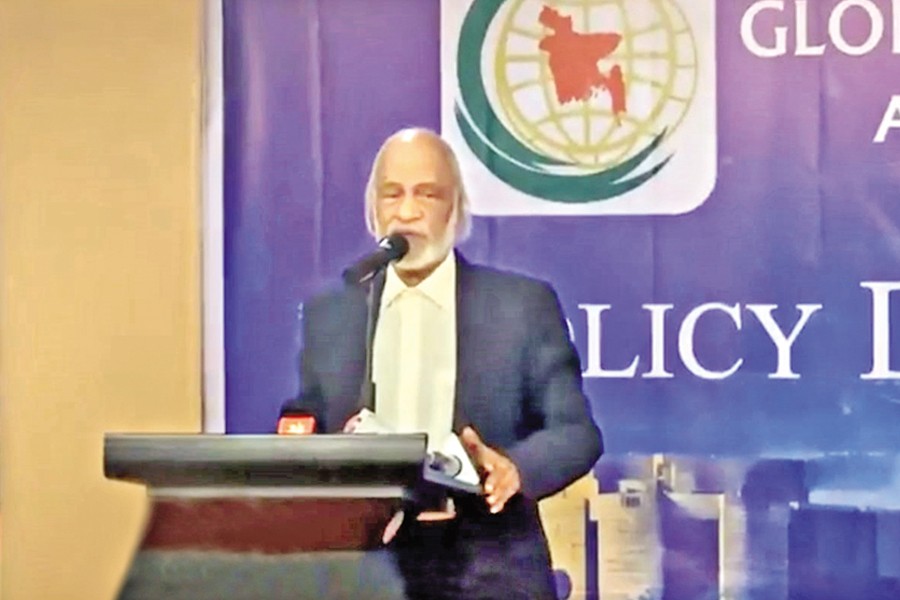
The Global Bangladeshi Alliance (GBA), a diaspora-led platform, hosted its first policy dialogue in Dhaka on Monday, unveiling an economy-focused roadmap aimed at integrating Bangladesh into the global digital trade while preparing its workforce for the challenges of rapid automation.
At the event, GBA leaders in a joint presentation warned that Bangladesh could risk becoming a "digital island" unless urgent reforms are implemented in its cross-border e-commerce and skills development policies.
Central to the proposal was the "Amazon Economy" blueprint, an export diversification strategy aimed at giving small and medium enterprises (SMEs) a direct digital platform to connect global consumers.
The plan calls for policy changes to integrate international payment gateways and global marketplaces, creating a seamless "click-to-cash" transaction system that would allow local entrepreneurs to bypass costly intermediaries. This would enable SMEs to sell niche products directly to international markets, expanding Bangladesh's export base beyond traditional sectors.
The second pillar of the proposal focuses on global skills alignment as a response to the accelerating impact of artificial intelligence. With an estimated 40 per cent of low-skill jobs at risk of automation over the next five years, the GBA leaders urged a shift its focus from "exporting labour" to "exporting skills".
The roadmap prioritises high-demand, high-touch professions -- such as specialised nursing and healthcare -- to meet ageing population needs in advanced economies, alongside internationally recognised technical certifications to keep Bangladeshi workers globally competitive.
Presenting the keynote paper, GBA co-chair Mizan Chowdhury said Bangladesh's development trajectory would depend on responsible leadership and structured consensus.
Through engagement with the US-Bangladesh caucus and other partners, he explained, the alliance aims to contribute to policy development spanning trade, investment, technology, innovation, healthcare, culture, and the emerging "new economy."
He noted that innovation, good governance and growth are inseparably linked.
Joining virtually from Washington, D.C., GBA chief coordinator Dr Golam Rabbani Nayan emphasized ethical leadership as the foundation for sustainable development.
He said that a GBA team would soon visit Bangladesh, "not for patronage politics, but to work collectively on building the Bangladesh of the future."
The policy discussion on the US-Bangladesh caucus, economy, and skills development was moderated by GBA co-chair Kawser Chowdhury, with contributions from economist Naved Manzoor and entrepreneur Munaf.
The session underscored the need to align education and training with global market demand, particularly in technology-adjacent services.
In his address as the chief guest, Dr. Moyeen Khan, a standing committee member of BNP and former science and technology minister, said the foundations of Bangladesh's ICT sector were laid under BNP leadership.
He argued that failing to build on that legacy would be an injustice to previous leaders.
Citizens prioritise freedom over wealth, and that guiding the country's democratic transition in the right direction is the greater achievement, he added.
Expressing optimism about the upcoming elections, he noted that a representative government would emerge through the democratic process.
Abdus Salam, who was present as special guest, called on expatriate professionals to play a more active role in rebuilding Bangladesh, arguing that comprehensive sectoral reform would require a patriotic government committed to rejecting corruption and violence, and resisting hegemonic pressures through the ballot.
Engineer Abu Hanip, chairman of People N Tech Group, highlighted the scale of opportunity in human capital development.
He noted that Bangladesh's 76 universities could, with targeted skills upgrading, significantly reduce unemployment.
The dialogue marked GBA's first on-the-ground engagement in Bangladesh since its formation four months ago by US-based technology professionals, entrepreneurs, and policymakers.
Organisers stated that the alliance would continue policy engagements aimed at strengthening digital trade integration and aligning skills with global demand, as part of a broader effort to unlock Bangladesh's economic potential.
bdsmile@gmail.com