


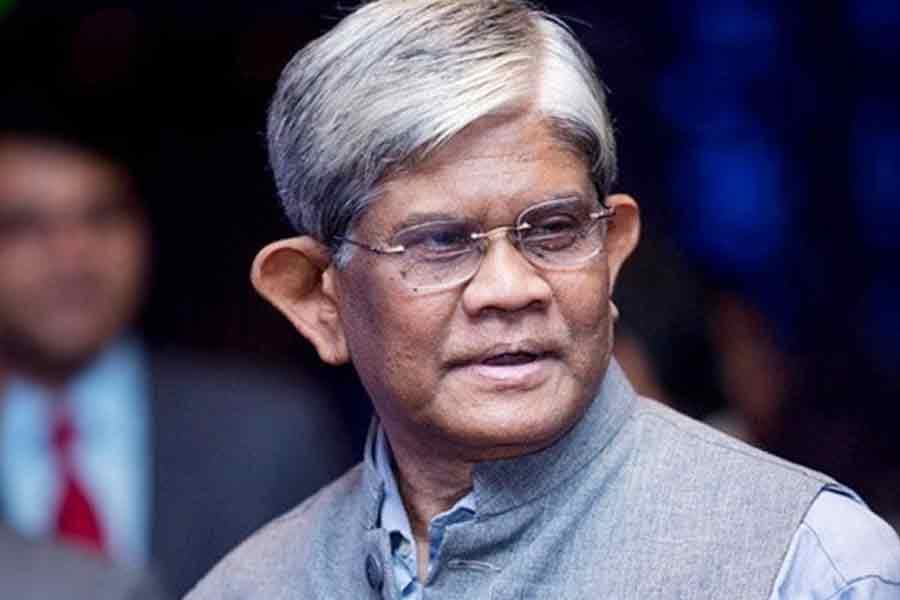
Finance Adviser Dr Salehuddin Ahmed has called for sustainable poverty reduction through the development of rural entrepreneurship, stressing that creating jobs outside cities is essential to narrow the growing gap between urban and rural areas.
While acknowledging the need for projects to address urban poverty, he said making rural areas more attractive through investment in entrepreneurship and small industries was equally important.
Linking rural enterprises to value chains, he added, was critical to ensuring long-term sustainability.
Dr Salehuddin made the remarks while addressing a workshop on "Rural Livelihood Transformation and Inclusive Resilience Initiatives" at a city hotel on Wednesday, organised by the Social Development Foundation (SDF).
"We do need projects to reduce urban poverty levels. But it is also necessary to make rural areas attractive by investing more in entrepreneurship development for industries," the adviser said, adding that linking rural enterprises to value chains was equally important for long-term sustainability.
The Social Development Foundation (SDF) organised the workshop, where Finance Division Secretary M Khairuzzaman Mozumder, Economic Relations Division Secretary M Shahriar Kader Siddiky, and Financial Institutions Division Secretary Nazma Mobarek also spoke as special guests.
Chaired by SDF Chairman Dr Muhammad Abdul Mazid, the event was also addressed by representatives of the World Bank and SDF Managing Director M Nurul Amin.
Chairman of RAPID (Research and Policy Integration for Development), Dr Mohammad Abdur Razzaque, presented the keynote paper titled "Rural Poverty Reduction and Resilience: Insights from the RELI Project Experience".
Two beneficiaries of the RELI project, Bibi Morium and Rozina Akter, shared their experiences, saying that loans received through groups formed under the SDF and World Bank-funded project helped them expand their small enterprises, engage rural workers and develop leadership skills.
In his keynote presentation, Dr Razzaque highlighted weaknesses in the social safety net system, noting that it reaches only 37.5 per cent of the targeted population. He said non-government organisations reach just 27.4 per cent of both poor and vulnerable groups.
While appreciating the RELI project's targeted approach, particularly its 97 per cent focus on women, Dr Razzaque stressed the need for incorporating its successes at the national level, ensure continuity across generations, and scale up entrepreneurial skills into value-chain-based businesses.
He also emphasised the importance of transparency through social audits to prevent misuse of funds, with meaningful participation of beneficiaries in SDF working areas.
Referring to projections of rising urban poverty, based on recent findings that the majority of the population will live in urban areas and towns in the coming decades, Dr Salehuddin reiterated the need to make rural areas more attractive and promote decentralisation.
He urged the SDF, which has received continued World Bank support since its inception, to design interventions aimed at vulnerable groups to counter this trend.
The adviser noted that Bangladesh's longstanding record of poverty reduction since 2010 has recently shown signs of reversal, underscoring the need for projects focused on sustainability and resilience in the face of multiple challenges.
Dr Salehuddin criticised government-driven poverty reduction projects for failing to play their intended role due to poor implementation, citing inefficiency, corruption and procedural bottlenecks.
Established under the Ministry of Finance with World Bank funding, the SDF has reached about 835,213 beneficiaries across 9,333 poverty-stricken villages in 159 upazilas of 35 districts through around 3,200 projects targeting the rural poor and extreme poor.
With the objective of building a hunger- and poverty-free "Golden Bangladesh", beneficiaries are selected through a community-driven development process.
smunima@yahoo.com