

Bank of England, Reserve Bank of Australia to hike interest rates as inflation persists
Published :
Updated :
 For all latest news, follow The Financial Express Google News channel.
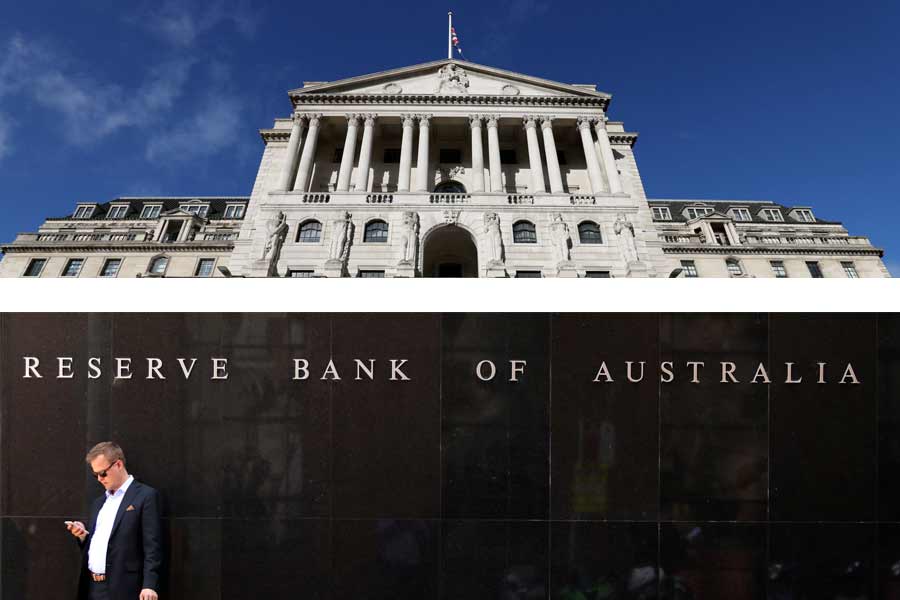
The Bank of England looks likely to raise rates by a quarter-point to 5.25 per cent on August 3, though economists and markets see a risk of a repeat of June's surprise half-point hike as inflation remains hotter than in other big economies.
Both the US Federal Reserve and the European Central Bank increased interest rates by a quarter of a percentage point this week, but unlike the BoE, markets think they are at or near the end of their rate-tightening cycle.
Besides, the Reserve Bank of Australia will hike interest rates once more by a quarter percentage point on Tuesday and pause for the rest of the year as inflation is still running well above the target, according to a slim majority of economists in a Reuters poll.
Although the RBA has raised rates by a total of 400 basis points since May 2022, inflation was still running at 6.0 per cent in the last quarter, double the upper end of the 2-3 per cent target range.
Reuters report says in contrast, bets on where BoE rates will peak have swung sharply since the central bank's last rate move on June 22 as investors try to work out if Britain has a deep-rooted inflation problem, or if rapid price growth is on the cusp of the sharp slowdown seen elsewhere.
"Where rates go after August will depend on the extent to which second-round effects persist," said Andrew Goodwin, chief UK economist at Oxford Economics, referring to the knock-on impact on wages and prices of last year's surge in energy costs.
Expectations for peak BoE rates reached 6.5 per cent on July 11 after data showed record wage growth. But they fell back after a bigger-than-expected decline in consumer price inflation. Investors are now split fairly evenly between a peak of 5.75 per cent or 6 per cent late this year or early in 2024.
The surge in rate expectations has pushed mortgage costs to their highest since 2008, and higher rates are weighing on house-building and some other sectors. A survey on Monday showed private-sector growth had fallen to a six-month low this month.
Meanwhile, a record low unemployment rate and a rebound in house prices in Australia - one of the world's most expensive housing markets - suggests the RBA still needs to raise base borrowing costs.
Most global central banks are inching closer to the end of an historic tightening campaign, including the U.S. Federal Reserve, and economists also expect the RBA will be done soon.
Over 55 per cent of economists in a July 26-28 poll, 20 of 36, forecast the RBA to raise its official cash rate (AUCBIR=ECI) by 25 basis points to 4.35 per cent, the highest in nearly 12 years, at its Aug. 1 meeting. The remaining 16 expected no change.
But financial markets were pricing in only a one in five chance of that happening.
"We're still expecting a hike," said Jameson Coombs, an economist at Westpac.
"However, the risk of a pause has definitely increased, potentially after (the) inflation report, but it's again going to be another quite finely balanced decision," said Coombs, referring to the fall in quarterly inflation data on July 26.
"It's not clear evidence yet that we're seeing a turn in the trajectory of inflation, but it is a potential early indicator that some of the impacts of rate hikes on demand are starting," he said.
If realised, this would be the final rate hike from the RBA under governor Philip Lowe. Deputy governor Michele Bullock was appointed in July as the next RBA chief and will take up her role in September.
Among major local banks, CBA and Westpac expected a 25 basis points hike next week, while ANZ and NAB predicted a pause.
A strong majority of economists, 25 of 31, who had a view beyond the August meeting forecast rates at their current level or 4.35 per cent by end-September. Six saw rates at 4.60 per cent.
Median forecasts showed rates at 4.35 per cent until the end of the first quarter in 2024. That was 25 basis points lower than in a snap poll conducted after the July meeting.