


Rice, fish, and meat remained the dominant drivers of food inflation in October, accounting for 99.78 per cent of the total, while a continued decline in vegetable prices helped temper overall price pressures, according to the General Economics Division (GED) of the Planning Commission.
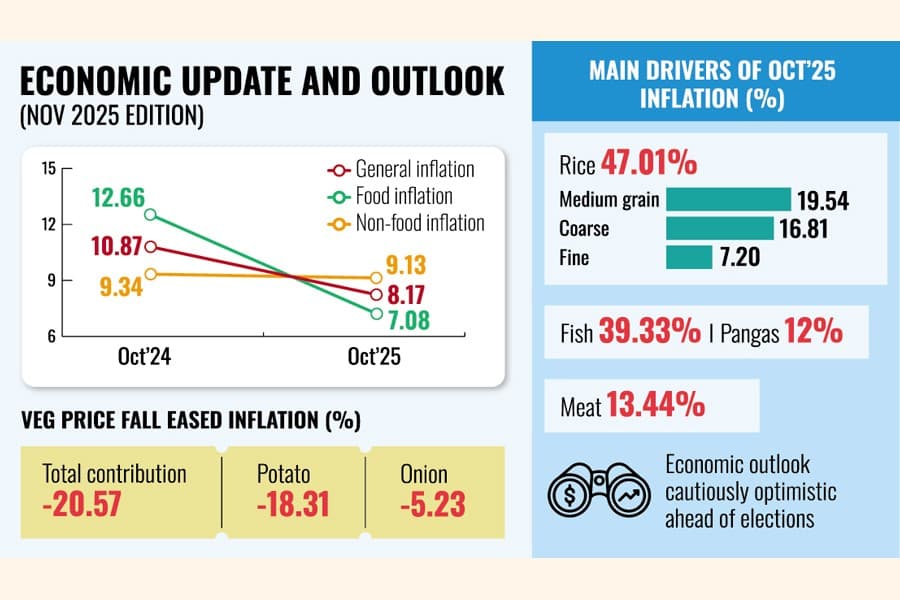
The November edition of the Economic Update and Outlook shows rice alone contributed 47.01 per cent to food inflation, followed by fish at 39.33 per cent and meat at 13.44 per cent, while vegetables posted a negative contribution of 20.57 per cent.
The report released on Monday offered a cautiously optimistic outlook ahead of the next national election, projecting growth on the back of resilient remittances and exports, while warning that persistent inflation, subdued business confidence, and a fragile banking sector continued to weigh on the economy.
It added that heightened election-related spending and possible political disruptions could restrain domestic demand and investment unless a clear post-election mandate enabled reforms to improve the business climate, strengthen the financial sector, and stabilise energy and fiscal conditions.
The report revealed that medium-grain rice accounted for 19.54 per cent of food inflation in October, followed by coarse rice at 16.81 per cent and fine rice at 7.20 per cent.
The rise in Pangas fish price alone contributed more than 12 per cent to overall food inflation.
In contrast, several perishable items exerted a downward pull on inflation, while potatoes contributed -18.31 per cent and onions -5.23 per cent, broadly consistent with their trends in September.
Overall inflation eased to 8.17 per cent in October, down from 10.87 per cent in the same month a year earlier, supported by a gradual stabilisation of domestic supply chains and reduced pressure from imported commodities.
The decline was driven primarily by a sharp fall in food inflation, which dropped to 7.08 per cent from 12.66 per cent in the corresponding month last year.
In contrast, non-food inflation edged up to 9.13 per cent, reflecting persistent cost pressures in housing, transport, and healthcare.
The report noted that rice prices, which remained elevated in the first half of the year, had begun to soften.
With new Aman harvests reaching the market and domestic stocks rising due to imports and public procurement, the average retail prices of major rice varieties had started to decline.
"As Bangladesh heads toward its scheduled general election in February 2026, the economic outlook is cautiously optimistic," the report said.
On the one hand, economic growth is expected to rebound, with the Asian Development Bank (ADB) forecasting around 5 per cent gross domestic product (GDP) growth in the current fiscal year after a slower period, while remittances and exports, especially garment, remain key sources of foreign exchange and economic resilience.
On the other hand, persistent inflation, weak business confidence, and a fragile banking sector could limit domestic demand and private investment, the report said.
It said many investors and entrepreneurs appeared to be waiting for political stability before launching new ventures.
Moreover, increased election-related spending and potential disruptions associated with political transition may add pressure on inflation and the foreign exchange market, complicating efforts to stabilise prices and attract investment.
If the election delivers a clear political direction and the next government pursues reforms, especially to improve the business environment, stabilise banks, and ensure energy and fiscal stability, Bangladesh could regain momentum, the report concluded.
jahid.rn@gmail.com