


Bangladesh is increasingly exposed to global energy shocks as escalating conflict in the Middle East threatens to disrupt supply chains across Asia, S&P Global Ratings predicts and stresses fuel-sourcing diversification.


In its latest report released on March 26, the agency warns that Asia-Pacific economies-heavily reliant on Middle-Eastern fuels-could face a severe energy-availability crisis, with Bangladesh among the most vulnerable due to its import dependence.
The report says the potential closure of the Strait of Hormuz, a critical oil-shipping route, is turning a geopolitical conflict into a full-blown "energy shock and supply-chain crisis".
However, Iran Thursday said fuel ships meant for Bangladesh would be allowed to pass through.
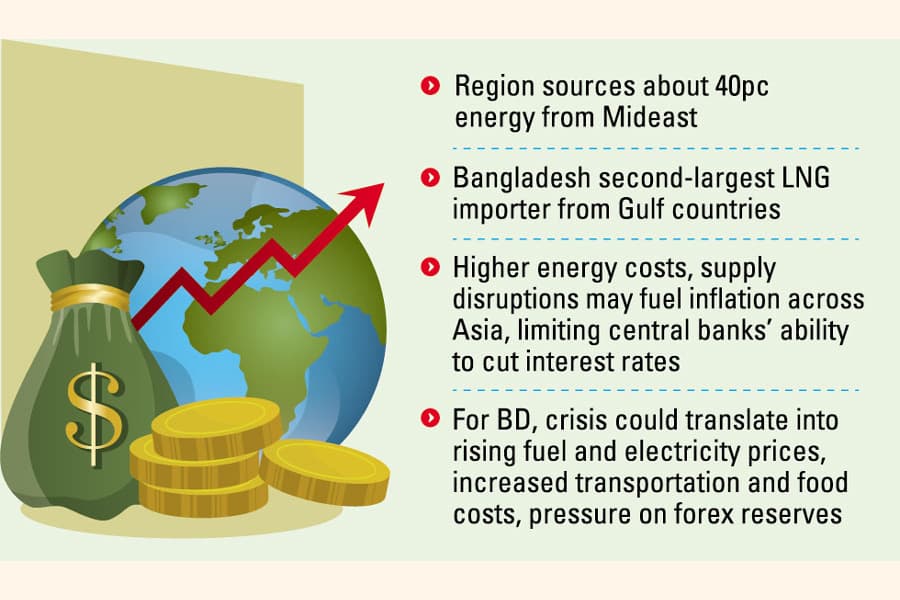
The region sources about 40 per cent of its energy imports from the Middle East, making alternatives difficult in the short term.
Bangladesh is the second-largest LNG importer having 72-percent dependence on the region after Pakistan.
The S&P report says energy supply, not price, is the biggest threat.
Unlike previous crises driven mainly by rising oil prices, the current risk lies in physical shortages of fuel, which could hit countries like Bangladesh harder.
"Energy availability-not prices-is the biggest threat," S&P notes, warning that disruptions could affect power generation, transport and industrial production.
For Bangladesh, which imports most of its oil, liquefied natural gas (LNG), and refined fuels, any prolonged disruption could strain electricity supply and industrial output-particularly in export-oriented sectors such as export-oriented garments and textiles.
It notes that inflation and growth pressure are mounting.
"Higher energy costs and supply disruptions are expected to fuel inflation across Asia, limiting central banks' ability to cut interest rates."
In Bangladesh, this could translate into: (a) rising fuel and electricity prices (b) increased transportation and food costs (c) pressure on foreign-exchange reserves
The US-based financial services company, Standards & Poor's or S&P, warns that stagflation-like conditions-slower growth combined with rising prices-could emerge if the conflict persists.
The report highlights another critical risk for Bangladesh: disruption in fertiliser supply.
Blockages in the Strait of Hormuz are already affecting shipment of urea and petrochemical products, key inputs for agriculture.
For a country where agriculture still plays a major economic and social role, delays in fertiliser import could reduce crop yields.
And food prices might jump.
For Bangladesh, this could mean higher import bills for fuels.
Such fiscal pressures could complicate macroeconomic management at a time when the country is already navigating inflation and reserve challenges.
Supply-chain disruptions are to hit export.
The report also flags broader supply-chain disruptions affecting industries from chemicals to pharmaceuticals.
Bangladesh's export sector may face indirect impacts too.
At the same time, uncertainty in US trade policy could further complicate export prospects for Asian economies.
The agency underscores the urgent need for energy diversification across Asia.
The S&P report delivers a clear warning: Bangladesh's heavy reliance on imported energy leaves it exposed to geopolitical shocks far beyond its borders.
If Mideast tensions persist, the impact could ripple across power supply, inflation, agriculture, and exports-testing the resilience of one of Asia's fastest-growing economies.
jasimharoon@yahoo.com