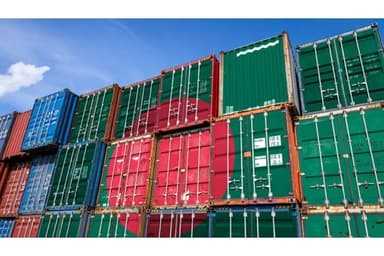
The latest figures on Bangladesh's export earnings make for grim reading. For each of eight consecutive months since August last, export earnings recorded a fall year-on-year, and the performance of March 2026 was the worst, registering an 18.07 per cent decline. The country received $3.48 billion in export earnings in March 2026, down from $4.28 billion in March 2025, a contraction that shows just how severe this downward spiral has become. The cumulative damage over the first nine months of fiscal year 2025 to 2026 is just as concerning. Total export earnings stood at $35.38 billion against $37.19 billion in the corresponding period of the previous fiscal year, marking a 4.85 per cent decline. The readymade garment sector which accounts for more than 80 per cent of total merchandise export earnings has been the principal casualty, registering a 5.51 per cent contraction during the same nine months. The damage is not confined to one corner of the industry either. Knitwear exports fell by 6.42 per cent while woven garments declined by 4.48 per cent, meaning the rot has spread across the sector leaving little room for one sub-sector to compensate for the weakness of another.
Fluctuations in export earnings are normal for any trading nation, but what Bangladesh is experiencing right now goes far beyond the usual ups and downs. The causes of this sustained decline are multiple and they feed into one another which make the prospect of a quick recovery considerably harder. On the one hand, the imposition of reciprocal tariffs by the US directly reduced demand from one of Bangladesh's key markets, as American buyers scaled back orders in an increasingly uncertain trade environment. On the other hand, China, facing heavier tariffs on its own exports to America, turned its attention aggressively toward European markets and offered prices that Bangladeshi manufacturers find difficult to match. This has created pressure from both sides, with weaker demand in the US and intensified competition in Europe, two markets that together account for a large share of Bangladesh's garment exports. Geopolitical turmoil has added further weight to this burden. The conflict involving the United States, Israel and Iran has introduced volatility into energy markets and disrupted shipping lanes, raising freight costs to levels that render exports of agricultural and processed food products to the Middle East financially unviable. Shipping companies have reportedly demanded risk surcharges of $3500 per container for Gulf destinations, charges that entirely wipe out the commercial logic of many export transactions.
Bangladesh's export basket remains dangerously concentrated, with readymade garments constituting more than four fifths of total earnings. This concentration means that any disruption to global clothing demand, whether driven by recession, changing consumer habits or competitive pressure from rival producers, transmits almost instantly into a national export crisis. The sectors that managed positive growth during the July to March period, including frozen fish, leather goods and engineering products, are instructive because they are more insulated from the factors battering the garment sector, and their modest gains point toward the diversification that Bangladesh needs but has been slow to achieve.
The outlook, as things stand, is not reassuring. Industry leaders from both the BGMEA and BKMEA have warned of further deterioration in the months ahead, a prognosis that deserves to be taken seriously. The grim figures of March 2026 are a warning, and the cost of ignoring that will be measured in lost earnings, lost livelihoods and a lost opportunity to consolidate the economic gains of recent decades.