

Published :
Updated :
 For all latest news, follow The Financial Express Google News channel.
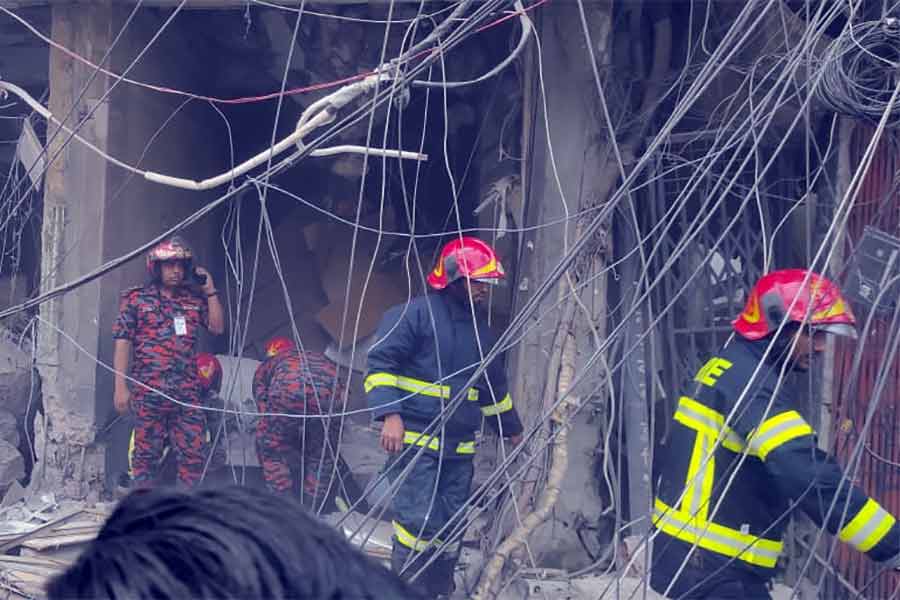
Three devastating blasts ---one in Sitakunda, another in Science Laboratory area and yet another in Gulistan's Fulbaria ---within just four days have sent a shockwave all across the country. The number of casualties in the three blasts ---seven dead and 24 four seriously injured in the first, three dead and 15 injured in the second and 18 dead and about 100 injured in the third ---is evident enough of the deadliness of the blasts. Clearly, the first blast in the Seema Oxygen Ltd is of industrial nature, the other two occurred in commercial establishments. In high summer, the country usually witnesses incidents of deadly fire in both crowded urban locations and in rural settings. But these are not fire incidents. In case of the oxygen producing and filling plant, experts visiting the spot after the blast have primarily pointed accusing fingers at the column through which oxygen passes into cylinders. The causes of blasts in Fulbaria and in the three-storied building near Science Laboratory are still shrouded in mystery.
Different agencies including the Army, Rapid Action Battalion (RAB) and Counter Terrorism and Transnational Crime (CTTC) responsible for detection of the cause of explosion of any kind have, after initial check-up, ruled out sabotage in case of the blasts in Shirin Bhaban in Science Laboratory area and Queen's Tower in Fulbaria. Their considered opinion so far is that accumulated gas has led to the deadly explosions in both cases. Thankfully, none has made the observation conclusive. All the agencies will give their final verdicts after further and comprehensive investigations. This is highly imperative because the frequency of the explosions have indeed struck terror into people's hearts. They must rest assured that such devastation will not take place with increasing frequencies and claim lives and cause grievous injuries to scores of people in areas unsuspected.
As for the oxygen filling plant, there are claims and counterclaims ---none of which, though, is conclusive ---over updated explosive licence, monitoring by government agencies and negligence of the management of the factory. After the BM Container Depot blast following the fire, there was a need for intensive monitoring of such depots and oxygen plants in Sitakund, which are directly related to ship-breaking. Hazardous as these industrial ventures are, there is no alternative to technologies' upgrading and constant monitoring to ensure safety of all such activities. Let the probe be decisive and the follow-up remedies adopted by such industrial units.
Quite evidently, the cases of Shirin Bhaban and Queen's Tower blasts, are intriguing. Even if there might have been a concealed gas line left plugged with any chance of leaking in the former, no such gas line or use of gas cylinder---a potential risk now---has been reported from the latter. There are only shops of different kinds. The only remote possibility is the accumulation of gas and consequent blast from toilet pipes similar to the one at a hotel opposite to Jonaki Cinema Hall. A former director general of the Fire Service and Civil Defence has made such a reference. The other possibility of a blast from air conditioner has been ruled out. This warrants that the investigation is thorough in order to identify the real cause or causes so that maintenance of buildings can be failsafe and their users know about and practise the dos and don'ts.