


A quiet technological revolution is taking place in the country's garment industry. The industry's journey from its tentative beginning in the late 1970s to the current number one position in terms of leadership in energy and environment design (LEED)-certified factories is long and arduous. Its transformation from the humble beginning into the world's second-largest exporter after China has witnessed ups and downs. Fire tragedies at Tajreen Fashion and several other garment factories were capped by the Rana Plaza collapse. But the ready-made garment industry seems to have come off spectacularly from those nightmarish days. Now the country has reasons to be proud of its 268 LEED-certified or green RMG buildings, highest number in the world, that adhere to stringent energy efficiency and high environmental standards as set by the US Green Building Council (USGBC). The country ought to be grateful to the two major workplace safety initiatives apparel buyers undertook in the form of the Europe-led Accord and US-led Alliance following the Rana Plaza tragedy.
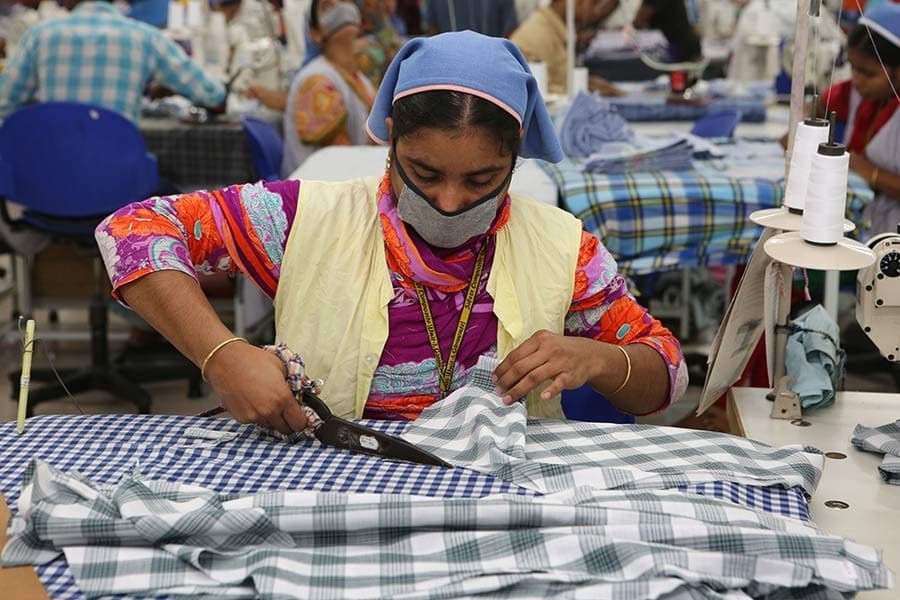
While the safety issues have been addressed, the garment industry now faces fresh challenges from emerging technological leap to add a new dimension to the existing ones. The four-day exhibition of garment accessories and advanced technologies called Garment Technology Bangladesh (GTB) arranged by the Bangladesh Garments Accessories and Packaging Manufacturers and Exporters Association (BGAPMEA) has given an indication of the fast-changing trends of the RMG industry. It is good to know that RMG factories here are investing heavily in automation through introduction of cutting-edge technology. This has become a compulsion for apparel factories to stay in competition in the changing landscape of manufacturing and quality control. Introduction of energy-efficient, automation-driven technologies is redefining not only the production system but also the economies of scale. The factories are opting for such technologies to improve energy efficiency, cut carbon emissions and boost productivity. With manual inspection, inventory and logistics becoming dispensable, however, more and more workers and employees will become unemployed.
Much as the growing unemployment may be undesirable, there is no way technological march ahead can be resisted. In a global village, human capital is bound to prove irrelevant unless this vital element in the production system is upskilled. With the country's graduation from the status of a least developed country to a middle-income one this year, a technological leap for the number one foreign exchange earner becomes incumbent. There is hardly any option other than introduction of chip-based apps of the latest version. Robotics is already there to take from manual function and completing tasks precisely and at a much faster pace.
Bangladesh cannot lag behind its rivals in adoption of advanced technology not only in the garment sector but also in other manufacturing and exporting areas. Quite a number of LEED factories have already introduced advanced automatic fabric-cutting machines with built-in repeat cutting facilities. Robotics and Artificial Intelligence (AI) have started their presence in the textile industry which serves now as a backward linkage sector to the RMG. Clearly, such radical transformation is way ahead from retrofitting initiatives. But the retrofitting is the backbone of the subsequent transitions. The 4th industrial revolution (4IR) will bring about many more changes in the production system not only in the garment sector but also in other manufacturing sectors. In the interest of diversifying the production and export base, the latest technologies can be highly useful tools.