


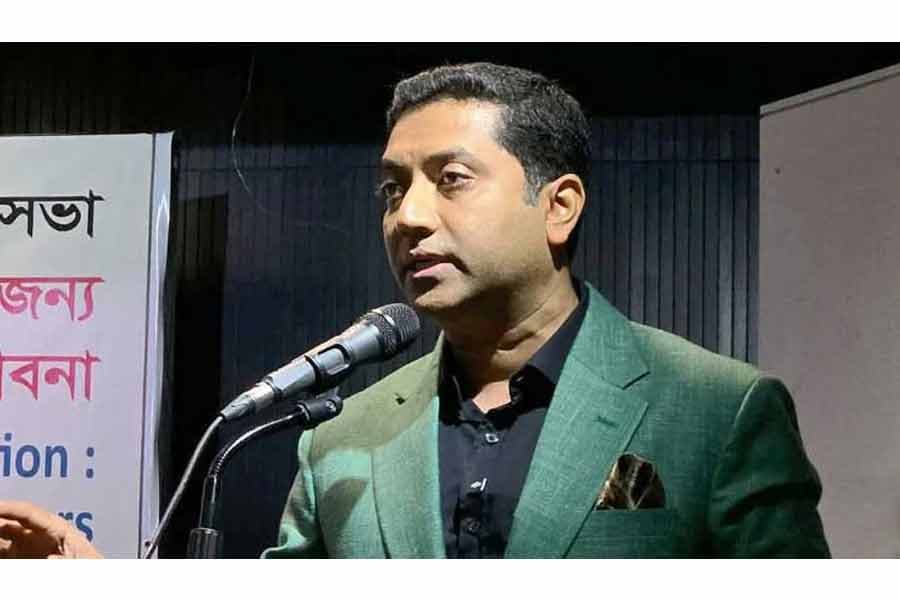
State Minister for Primary and Mass Education Bobby Hajjaj has expressed disappointment over the learning gap among primary school students.


He believes that, at most, 30 percent of students at this level have achieved the expected competencies according to their grade, bdnews24.com reports.
Speaking at an event organised by the Campaign for Popular Education (CAMPE) at the Bangladesh Tourism Corporation conference hall in Dhaka’s Agargaon on Thursday, he voiced concern over the poor learning outcomes of primary students.
Although the latest National Student Assessment (NSA)-2022 report found that nearly 50 percent of primary students had achieved the expected competencies for their grade levels, Bobby believes that even more students are actually falling behind.
He said, “According to the NSA, 50 percent of primary students are lagging behind in the classroom. That means about 50 percent are not falling behind. But my personal finding is that perhaps even more than that are struggling. The situation is not good at all.
“You visit any school with 30 students. Maybe roll numbers one, two, and three can manage reasonably well. But from roll number sixteen onward, many students can hardly do much. Some even struggle to recognise basic letters. I have already visited at least 25 schools in six districts.”
He also commented that district primary education officials usually take ministers and senior officials to the best schools during inspections.
He said, “Even after visiting the best schools in those districts, my finding is that we can achieve proper learning outcomes for no more than 30 percent of students. Thirty percent maximum.”
“I’m saying this as a random number. It could be even worse. And these are the best schools in each district. So we still have a long way to go.”
The state minister spoke as the chief guest at a programme titled “Remedial Education: Experiences and Future Directions”, focusing on helping students who are falling behind.
The minister said a large portion of students present in classrooms are unable to achieve age-appropriate or grade-appropriate skills.
“We have clearly observed that a student may be in Class Three but (their learning or knowledge) is not at a Class Three level. Someone may be in Class Four or Five but not at the expected level for those grades. No one is helping them.”
He added that strengthening the basic learning of children aged four to 10 at pre-primary and primary levels is a key goal of the ministry.
Referring to plans for struggling students, he said the government is preparing special programmes for those dropping out or unable to keep pace in class. These plans include learning circles, community engagement, parental participation, and technology-based content to reduce learning gaps.
He also said the current government considers education a national investment and that Prime Minister Tarique Rahman had clearly stated in the election manifesto that education would receive the highest priority.
The event was chaired by Rasheda K Choudhury, executive director of CAMPE. Educationist Manzoor Ahmed, professor emeritus at Brac University, and teachers and education officials from various institutions were present on the occasion.