



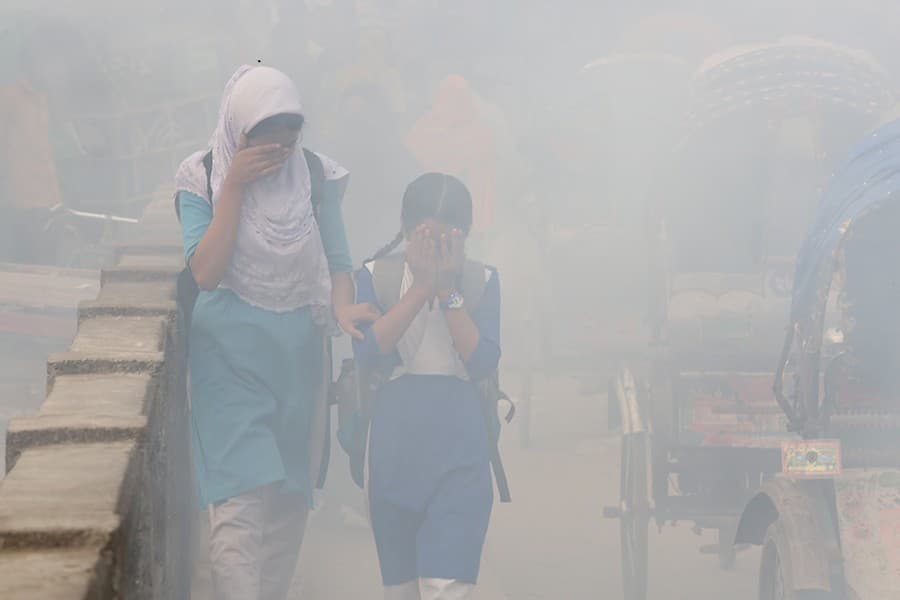
Indoor air pollution has emerged as a significant contributor to Dhaka's air quality crisis, posing serious health risks, according to a recent study by the Air Quality, Climate Change, and Health (ACH) Lab at Jahangirnagar University.
The study, titled "Characterizing Indoor Air Quality and Identifying Factors Influencing Air Quality at Home Microenvironment in Dhaka City," was led by Dr Sakhawat Hossain, head of the lab, and published in the international journal Indoor Environments.
Researchers assessed PM2.5 pollution levels in 43 homes across Dhaka and identified key factors for improving indoor air quality. The study found that the average indoor pollution level was 75.69 micrograms per cubic metre, nearly five times higher than World Health Organization (WHO) guidelines. In some homes, levels exceeded 200 micrograms per cubic metre, posing severe risks to residents. The findings also reveal that Dhaka's indoor air quality is significantly worse compared to many cities worldwide.
They reported that indoor air pollution is linked to severe health risks, including respiratory diseases, heart disease, lung cancer, low birth weight, impaired brain development, mental health issues, and premature death.
One of the main causes of indoor air pollution is the entry of polluted air from outside. The results of the study show that about 40 per cent is due to outdoor air infiltration. The second leading cause is prolonged cooking. PM2.5 levels increase significantly during cooking, especially when the cooking time exceeds 1.5 hours per session.
The study also found that people who clean their homes regularly have relatively lower levels of indoor pollution. Another significant factor is the size of the home; the study found that homes with an area of more than 1,200 square feet had higher levels of pollution.
Dr Sakhawat Hossain emphasized the importance of addressing indoor air pollution, noting that people spend 60-65 per cent of their day indoors, where a significant portion of air pollution is inhaled. “While we are often aware of outdoor pollution, indoor pollution remains overlooked. Since avoiding it entirely is not possible, identifying and controlling its sources is crucial,” he said.
Highlighting solutions, Dr Hossain referred to his 2021 research published in Building and Environment, which found that keeping windows closed can block up to 68 per cent of outdoor PM2.5 pollution. He also recommended using air purifiers with HEPA filters, which his studies have shown to significantly reduce indoor PM2.5 levels.
Research team member Afsana Yasmin added that preventing the entry of outdoor air by keeping windows closed or using air conditioning during high pollution periods is effective. She also stressed the importance of proper kitchen ventilation, regular cleaning, and eco-friendly cooking stoves to reduce pollution, particularly to safeguard women’s health.
They also stated that, according to the "State of Global Air" 2019 report, indoor air pollution is the 4th leading cause of death in Bangladesh and kills more than 70,000 people every year. Women and children are the most affected by the accumulation of harmful substances in indoor air, as they spend most of their time indoors.
Researchers urge policymakers to prioritise indoor air pollution and implement sustainable measures to mitigate its harmful effects.
sojib.mhs@gmail.com