


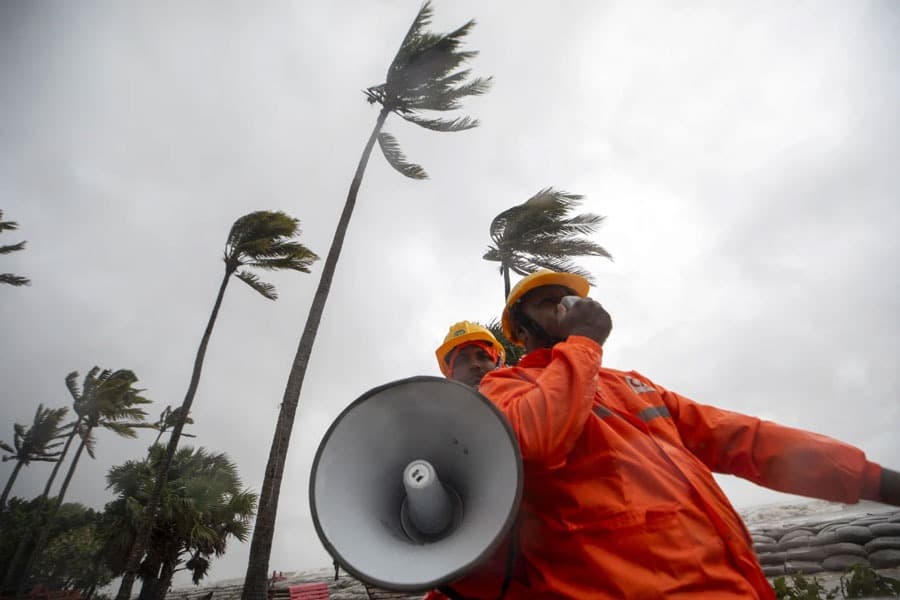
Cyclone Remal costs Bangladesh around US$622 million in economic losses and damage due to non-operation of one of the country’s two operational floating, storage and re-gasification units (FSRUs), the US-based Institute for Energy Economics and Financial Analysis (IEEFA) revealed Monday.


“The storm reportedly cost Bangladesh US$600 million in economic losses and damage, in addition to the US$22 million demanded by the Summit LNG Terminal Company – partly owned by Japan’s JERA (16.5%) and Mitsubishi (25%) – for contractual payments while the terminal was offline,” the IEEFA stated in a report.
One of Bangladesh’s two floating liquefied natural gas (LNG) import facilities, the Summit LNG terminal, was offline for nearly six months through September 2024, it said.
After undergoing routine repairs from January to March, the terminal sustained structural damage during Cyclone Remal in May and was sent to Singapore for further repairs. Upon its return to Bangladesh in July, challenging oceanic conditions then hindered the reconnection process, delaying the terminal’s restart to September, the IEEFA report titled, “Floating LNG import terminals pose cost and climate challenges for Asian market,” the report noted.
Interruptions are often brief, but Bangladesh’s recent experience demonstrates that weather-related operational challenges can have prolonged impacts on fuel supply, foreshadowing energy security risks for other countries building offshore LNG import projects, it noted.
South and Southeast Asia are expected to be the largest growth markets for LNG over the next two decades, but LNG import projects have often faced extensive delays.
To expedite growth in these key regions, the LNG industry has promoted floating LNG import terminals as quicker, cheaper options than larger onshore facilities.
However, floating import terminals face several overlooked drawbacks that may undermine their uptake in potential growth markets, according to a new briefing note from the IEEFA.
For example, while offshore terminals have lower upfront capital costs compared to onshore configurations, their higher operating costs can make them more expensive within just seven years. Additionally, their inability to operate in inclement weather conditions presents a critical risk proposition for South and Southeast Asian markets, which are increasingly exposed to severe weather and oceanic conditions driven by climate change, the study revealed.
“Stronger and more harmful weather events increasingly threaten the reliability of offshore LNG projects and the energy security of importing countries,” says Sam Reynolds, the briefing note’s co-author and LNG or Gas Research Lead for IEEFA Asia.
“Recent cancellations of floating projects in Bangladesh and the Philippines, along with ongoing delays in Vietnam, show that bringing these projects to fruition may not be so simple, potentially curbing industry expectations for rapid, near-term LNG demand growth,” he says.
“It is telling that none of Asia’s largest LNG importers – including Japan, China, South Korea, Taiwan, India, or Thailand – currently employ floating LNG import terminals,” says Christopher Doleman, co-author and an LNG or Gas Specialist for IEEFA.
“The implications of relying on fair-weather technology for energy security were clearly too risky for the LNG industry’s leading incumbents,” he said.
IEEFA’s analysis finds that floating LNG import vessels – including FSRUs and floating storage units (FSUs) – may face operational issues at wind speeds classified as “moderate breezes” on international wind scales.
Moderate to rough wave conditions can also inhibit operations and force floating terminals to temporarily relocate.
Azizjst@yahoo.com