

BLOCKADE IN WORLD TRADE-LIFELINE HORMUZ
Global fertiliser price four-year high, may affect Bangladesh farming
Published :
Updated :
 For all latest news, follow The Financial Express Google News channel.
Global fertiliser prices hit a four-year high, putting pressure on Bangladesh through fertiliser-supply problem and import-cost escalation, as the US-Israel war on Iran blocked the world trade-lifeline Strait of Hormuz.
Although the country has fertiliser stock of 1.8-million tonnes for until May, analysts forewarn rising energy prices, higher freight charges and possible disruption to key shipping routes could affect fertiliser production and import both later in the year.
Meanwhile, the government has targeted to import 1.7 million tonnes of the cropping input from different countries for the Aman and winter crops following the global volatility, according to BADC and BCIC sources.
Urea prices have increased by around 25 per cent, rising from about $480-500 per tonne to around $625 in recent weeks, according to commodity portal 'tradingeconomics.com'.
The DAP fertiliser prices also increased 10 per cent and could rise further by as much as 50 per cent.
Current DAP price hover around $640-650 a tonne.
According to the Department of Agricultural Extension (DAE), Bangladesh requires around 6.2-6.5 million tonnes of fertilisers annually to support its agriculture sector.
However, several domestic fertiliser plants remained shut for gas shortages-one of the fallouts from the Gulf Armageddon--increasing dependence on imports.
The country imports major quantities of fertilisers, including urea, triple super phosphate (TSP), di-ammonium phosphate (DAP) and muriate of potash (MOP), from countries such as Saudi Arabia, Morocco, China, Russia and Canada.
Industry sources say Saudi Arabia feeds a significant share of Bangladesh's DAP demand, while Morocco and China are major exporters of TSP and urea.
Russia and Canada remain key suppliers of MOP fertiliser.
Officials at the agriculture ministry say Bangladesh currently holds around 1.8 million tonnes of fertilisers in stock, which is expected to meet domestic demand until May-June.
The stock comprises 0.45 million tonnes of urea, DAP 0.55, TSP 0.46 and MOP 0.33 million tonnes.
A ministry official says the highest amount of fertiliser is required during the ongoing Boro season. "The country currently has enough supply to produce rice, wheat, maize and other crops until June," he says.
Bangladesh Agricultural Development Corporation (BADC) and Bangladesh Chemical Industries Corporation (BCIC) officials have said the government has a target to import 1.7 million tonnes for the Aus and Aman cropping seasons scheduled for April to December.
Out of the amount, urea is 0.5 million tonnes and non-urea including TSP, DAP and MOP, are 1.2 million tonnes.
Former executive chairman of Bangladesh Agricultural Research Council Dr Wais Kabir says any disruption to the Strait of Hormuz, a key global shipping route for oil, gas and fertiliser-related raw materials, could further tighten supply and push prices higher.
"A prolonged geopolitical crisis in the Gulf region may increase Bangladesh's fertiliser-import bill and create additional pressure on the agriculture sector and food security," he told The Financial Express.
He appreciates the government move to purchase fertiliser much earlier.
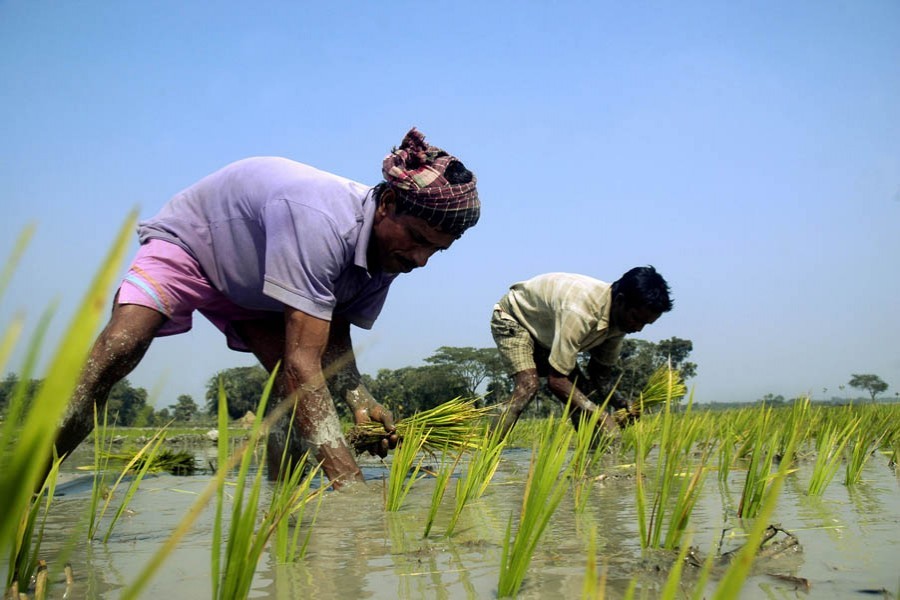
Meanwhile, farmers in the country have already been paying more for fertiliser and irrigation this season than the official rate.
Ratan Burman, a farmer in Sundarganj of Gaibandha, says he had to pay Tk 4.0-10 more per kg for urea and non-urea fertilisers, which would add around Tk 5,000 extra cost for his 10 bighas of land.
Irrigation cost also increased by Tk 400-500 per bigha in his area.
He says paddy prices should be at least Tk 1,400 per maund for farmers to make some profit. Bangladesh has set a target to produce 22.7 million tonnes of rice in the Boro season this year.
The Boro crop accounts for around 55 per cent of the country's total rice production and requires about 3.0-3.2 million tonnes of fertilisers between December and May.
tonmoy.wardad@gmail.com