

Acute Air Pollution: Increasing number of patients hospitalised with diseases
Published :
Updated :
 For all latest news, follow The Financial Express Google News channel.
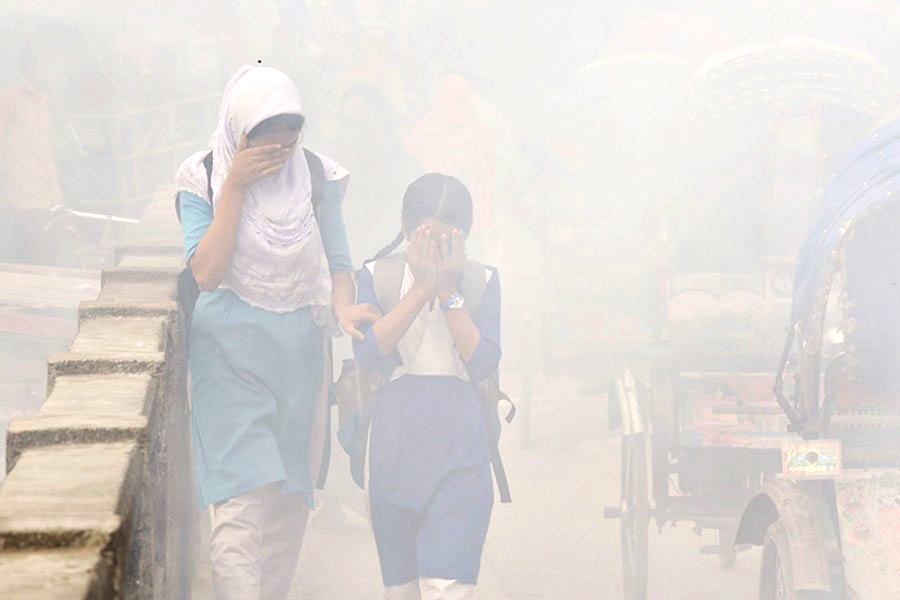
The present poor air quality and unabated pollution continue to cause various diseases and breathing difficulties among people. As a result, an increasing number of patients are getting admitted to hospitals. The air continues to remain unhealthy or severely unhealthy in the city, forcing residents, particularly children and elderly, to go for treatment.
A report of the World Bank (WB) published this month noted that as many as one million people die annually in South Asia, including in Bangladesh, due to air pollution. It is also causing major losses in health and productivity and remains one of the most severe development challenges in the region.
Dr Sadia Sultana Reshma, a specialist at the National Institute of Diseases of the Chest and Hospital (NIDCH), told the FE that a large number of patients are getting admitted at hospitals with lung infection and breathing difficulties caused by severe air pollution. On an average, 1,500 people are coming to the NIDCH outdoor and 50-60 to the indoor.
"Weak lungs can cause deadly symptoms. We see an increasing number of dengue patients are developing breathing difficulties and pulmonary edema (water in lungs), which make getting oxygen hard."
The air has also become hostile, as climate change has changed the weather pattern and lengths of seasons, affecting the human immune system. So, patients of asthma are on the rise. Dust particles and pollutants are making the situation critical for them.
The airborne diseases are pushing a number of people to use inhalers for immediate relief. The number of occupational deaths is also increasing in the country, especially in the cement, brick and construction fields and industries, she added.
Shahriar Hossain, an environment expert and secretary-general of the Environment and Social Development Organization (ESDO), told the FE that air pollution is increasing about 50-60 per cent yearly, which ultimately causes serious health issues, including premature deaths.
About 50,000 children die of pneumonia every year, while it is responsible for around 28 per cent of deaths among the children under five years old, according to a study of the International Centre for Diarrhoeal Disease Research, Bangladesh (icddr,b).
Furthermore, air pollution, unsafe water, poor sanitation and hygiene, and lead exposure caused over 272,000 premature deaths each year in Bangladesh, according to a WB report, published last year. The air pollution also caused 5.2 billion days of illness annually and cost the equivalent of 17.6 per cent of the country's GDP in 2019.
Shahriar Hossain also said the number of deaths has increased sharply, as the higher level of pollution is now causing 50-60 per cent additional premature deaths than what was anticipated by the WB in 2019.
"We see an increasing number of construction and industrial activities in Dhaka and other parts of the country. The dry air is having more pollutants and dust particles than before."
The children and the elderly are among the worst victims, as their immune system is not ready to deal with such pollutants in the air. The dust particles, including heavy metals like lead and cadmium, infect lungs and cause breathing difficulties.
In the winter, many poor people burn waste for warmth. It not only affects the air but the inhalers' lungs, as the waste materials carry heavy metals and toxic pollutants, the ESDO official added.
Meanwhile, the Ministry of Environment officials said air pollution has emerged as a serious threat to public health. Emissions from vehicles, brick kilns and industrial facilities as well as open burning of waste are steadily worsening air quality across the country. As a result, health risks are increasing, particularly for children, elderly and people with pre-existing health conditions.
To address the challenge, the government has taken a series of measures to identify and control key sources of air pollution. It has decided to take firm action against waste burning, one of the major contributors to deteriorating air quality.
To combat air pollution, the government last week announced an incentive-based initiative for encouraging citizens to submit photographs of waste burning in open areas - to gather accurate information on locations where burning occurs.
nsrafsanju@gmail.com