

BRAC Healthcare: A quiet reminder of what our health system could be
Published :
Updated :
 For all latest news, follow The Financial Express Google News channel.
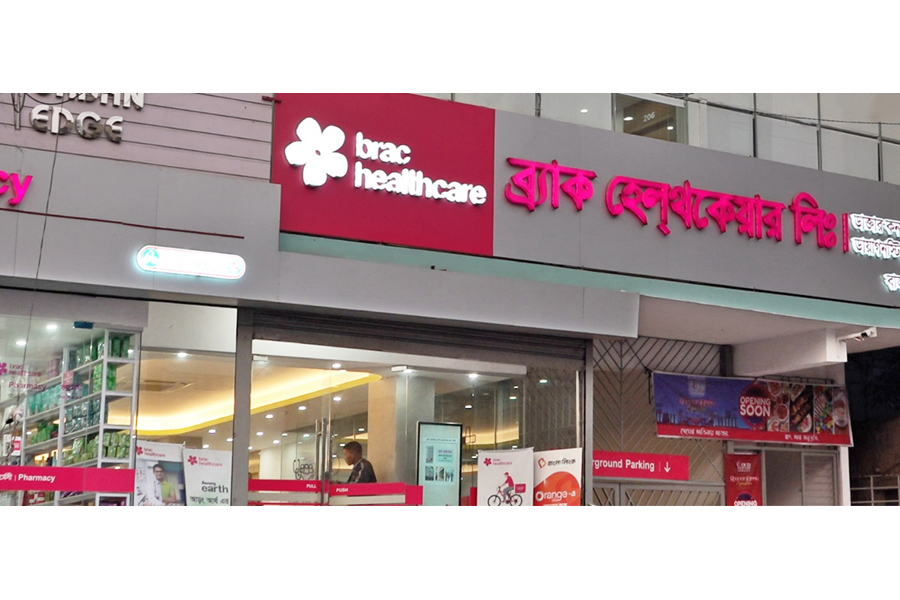
For months, during my daily commute, a modest signboard reading BRAC Healthcare at Siddheswari kept catching my eye. I paid little attention at first, assuming it was just another pharmacy — one more addition to Dhaka’s crowded streetscape of drugstores and clinics. Curiosity, however, has a way of interrupting assumptions. When I finally looked it up, I realised it was something rather different: a healthcare initiative under BRAC’s social enterprise umbrella, offering consultations, diagnostics, dental care, physiotherapy, mental health services, nutrition counselling, and pharmacy facilities — all under one roof.
Like many residents of Dhaka, I had been postponing a visit to a medicine specialist. And like many others, I carried with me a familiar apprehension: long waiting hours, rushed consultations, unclear prescriptions, unnecessary tests, and a bill that would sting more than expected. Still, I decided to experience BRAC Healthcare firsthand.
My first interaction was a phone call to their call centre. I was impressed not just by their efficiency but also by their tone. The representative spoke about patient dignity, transparency, consultation time, and respect for patients’ time and money — concepts that are frequently discussed in policy circles but rarely felt by patients in Bangladesh. I was also informed in this phone call that I could easily find my reports in my email or from their mobile app and thus did not need to visit the centre in person.
Having had the opportunity to see healthcare systems abroad, where patient safety and communication are treated as essentials rather than luxuries — and having also witnessed the many shortcomings of our own system — I arrived at the BRAC Healthcare centre on the Gulshan–Badda Link Road with measured expectations.
I reached the centre about a dozen minutes before my scheduled appointment on a Sunday evening. The environment was noticeably calm. There was no crowding, no raised voices, no sense of disorder. I was received warmly and guided through the process with ease. Within sixteen minutes, it was my turn to see the doctor.
What happened next may sound insignificant, but it mattered. The doctor — an associate professor of medicine — stood up to receive me. In a system where patients often feel like interruptions rather than individuals, this simple gesture immediately set a different tone.
The consultation itself lasted around ten minutes. The doctor listened carefully, asked relevant questions, suggested a few diagnostic tests, and prescribed medication — but, importantly, he explained why. Why the tests were necessary. How the medicines would work. What I should expect. In Bangladesh’s healthcare system, patients are often left confused, anxious, and uninformed, clutching prescriptions they barely understand. Here, communication was part of the care.
After the consultation, the doctor himself guided me on how to proceed with the diagnostic tests. The technicians were equally attentive and clear in their communication. When I was finally ready to leave, a staff member accompanied me outside, helped me find a CNG, and waited until I got in safely. These gestures may appear small, but together they create an experience where the patient feels respected rather than processed.
Three days later, I returned to the centre with my diagnostic reports. Once again, the doctor spent nearly ten minutes explaining the results in detail and adjusting the prescription where necessary. Only after the consultation did I learn that this follow-up visit was completely free. In a country where patients are often charged full or partial consultation fees merely to show test reports — sometimes after little more than a cursory glance — this felt quietly radical.
The sense of responsibility, however, did not end with that visit. Within the following week, after I had returned home and resumed my routine, I received an unexpected phone call from the centre, simply checking in on how I was feeling and whether there had been any change in my condition. When I expressed my surprise, the explanation was disarmingly simple: “We still feel responsible even after a patient leaves our centre.” It was a small gesture, but it revealed a fundamentally different mindset — one where care is not confined to the consultation room or the billing counter. In a healthcare system shaped largely by transactional encounters, this sense of continuity felt both unusual and deeply reassuring.
Consultation time at BRAC Healthcare is not left to chance. Doctors are required to spend at least ten minutes with each patient. This alone distinguishes the model in a system where patients are often rushed out within two or three minutes.
Time management is another chronic pain point in Bangladesh’s healthcare experience. Seeing a doctor often requires surrendering half a day — arriving hours early, waiting endlessly, and navigating uncertainty. BRAC Healthcare’s appointment-based system, accessible through its website, mobile app, or phone, attempts to restore predictability and dignity to the process.
Language, too, reflects culture. Here, patients are referred to as guests — not cases, not customers, not serial numbers. It may sound symbolic, but symbols shape behaviour, and behaviour shapes experience.
What intrigued me most was how BRAC Healthcare approaches ethics — an area where our health system struggles deeply. In conversations with the centre manager and staff, I learned that doctors here neither accept nor receive any financial benefit from diagnostic services. Prescriptions are periodically reviewed by senior physicians at the headquarters, along with experienced super specialists from other centres. When questions arise, the doctors are engaged in professional discussions aimed at clarification, reflection, and improvement. It felt less like surveillance and more like accountability grounded in trust.
The same restraint applies to interactions with pharmaceutical companies. Unlike the familiar sight of representatives freely moving through clinics and chambers, BRAC Healthcare keeps such engagement limited. Representatives may visit on a specific day only to share technical brochures or scientific information on newly introduced products. Promotional influence is discouraged, and prescribing decisions remain firmly with the physician.
In a healthcare environment where commercial interests often blur clinical judgment, these quiet structural choices matter.
What makes this model more striking is that it is not positioned as a premium service. Consultation fees range from Tk 400 to Tk 1,000 — significantly lower than many private facilities in Dhaka. According to BRAC Healthcare, the same standards apply across all four of its centres: Kazipara, Siddheswari, Badda, and Uttara.
Bangladesh’s healthcare system is often criticized — and often rightly so — for lacking empathy, compromising ethics, overburdening patients financially, and stripping care of its human touch. Against that backdrop, BRAC Healthcare does not claim to have solved all problems. But it does offer something important: a reminder that healthcare can be organized differently.
By positioning itself as “Someone in the Family,” BRAC Healthcare is attempting to reintroduce what our system has gradually lost — empathy. If scaled thoughtfully, this approach has the potential to reset expectations and establish new benchmarks for ethical, patient-centred healthcare in Bangladesh.
Sometimes, meaningful change does not arrive with slogans or grand promises. Sometimes, it simply listens.
- The writer can be reached by email: rahmansrdk@gmail.com