

 For all latest news, follow The Financial Express Google News channel.
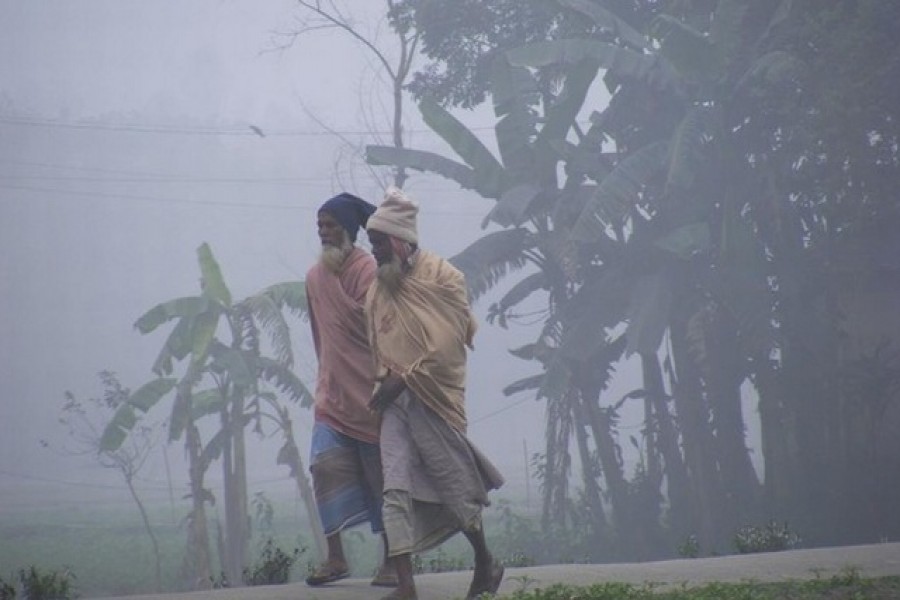
The feeling of cold has intensified across Bangladesh over the last five days, mainly due to a slump in day temperature, up to 8°C, as the country approaches its coldest winter month -- January.
The Bangladesh Meteorological Department said the temperature drop was driven by dense fog restricting sunlight hours during the day to only two to three hours from six to eight hours, bdnews24.com repots.
“This is happening because of transboundary fog stretching from Delhi in India to Bangladesh,” meteorologist AKM Nazmul Hoque said.
Moderate to thick fog may continue to occur across Bangladesh, especially between night and morning hours, through Friday, a bulletin released by the BMD at 6:00 pm on Thursday warned.
Nazmul said the fog hours might be reduced from Saturday.
“A cold wave, however, might set in by the end of the month or early January,” he said.
On Thursday, Dhaka recorded its lowest minimum temperature to be 14°C, which is the lowest so far in this winter season, which extends between December and February.
Minimum temperature represents the night temperature.
Dhaka’s highest maximum temperature, which represents the day temperature, however, dropped to 19°C on Thursday, marking an 8°C drop from 27.5°C since Dec 22, according to the BMD.
Bangladesh’s lowest minimum temperature on Thursday was recorded in Rajshahi with 10.2°C, marking a 2.2°C fall in the temperature since December 22.
The maximum temperature, on the other hand, dropped by 1.4°C to 21.6°C in Rajshahi on Thursday, compared with the maximum temperature recorded in the northern district on Dec 22 at 23°C, the Met office said.
A cold wave is an official way of describing lower minimum temperatures during winter. A cold wave occurs when the night temperature in winter falls to 10°C or lower.
Tetulia saw the minimum temperature drop to 10°C or lower only briefly in this winter. The temperature drop, however, failed to constitute a cold wave, for it was confined to a small pocket.
A cold wave requires a low temperature to prevail over several weather stations simultaneously or a low temperature to prevail over a certain area for a prolonged period of time.
The officially recorded minimum temperature in Rangpur and Rajshahi divisions ranged from 10°C and 11°C on Thursday. The temperature ranged between 12°C and 16°C elsewhere in the country.
The temperature drop made the poor suffer, particularly those living in city slums and remote areas, for they have limited access to warm clothes. In rural Bangladesh, houses are often unable to prevent cold wind and fog from invading their inhabitants due to their fragile construction. Many people in city slums live in houses made of plastic sheets or fences riddled with holes. Many people also live on the streets in cities and towns, often under the open sky.
A climate report released by the BMD last month predicted that winter will gradually become nonexistent by the end of the century, with cold waves gradually retreating from winters over time.