Defining class categories regarding financial status is mostly vague. You can earn more than most yet struggle to meet your needs, while others can be quite affluent with less income than you.
We can introduce the word 'comfortable' here. The country's middle-class section is the people labelled as comfortable. They can easily afford meals three times a day, afford to educate their children, and afford the occasional entertainment.
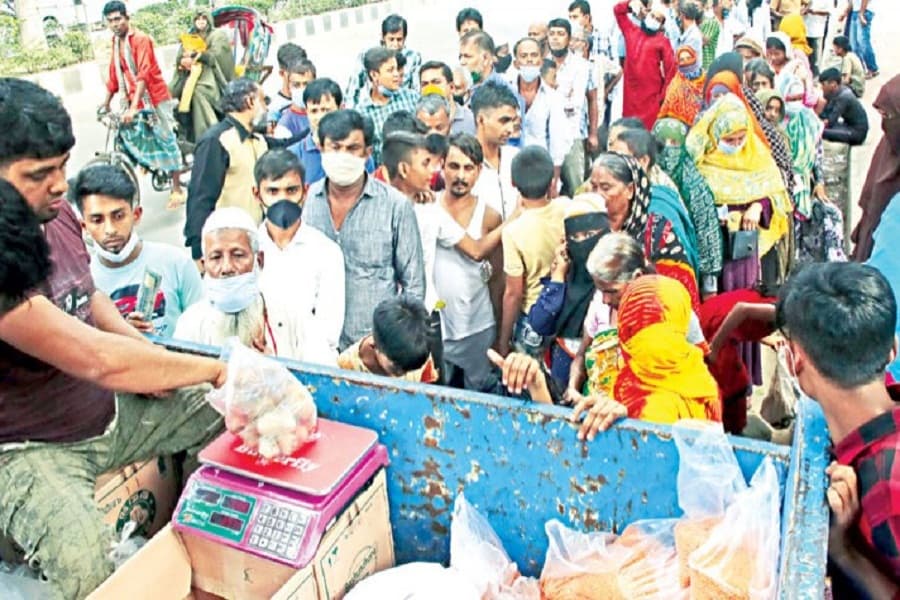
In the past months, as prices hiked, the word comfortable became unfamiliar. It started to hide in a newly created divide. The three meals of the day became harder as alternative food products started to take the place of the regular ones.
The same 1000 taka note that used to fill the grocery bag now covers only half of it. Considering the continuing inflation, the next purchase with the same note might barely cover the bag.
The potatoes were increased in the meals to keep up with the hike. Proteins of one meal were divided into two to add up. But then, the price hiked again, and we could no longer afford the potatoes and proteins we needed for the month. Then came the medications, tuition fees, milk powder brand, electricity bills, and utility bills. Slowly, everything joined the cult by Tk 10, 20, 30, and 40.
The monthly expenditure bill started to move here and there. The required expenditure exceeded the usual amount. They switched to cheaper brands, gave up some products, and adopted new habits to ensure the previous balance. The balance fit barely that month, but it was worth it. They needed the savings for emergencies and to get by comfortably.
But here is the irony - they weren't comfortable. They struggled to keep the balance month after month with no scope for inflation control. Each day, they saw their comfortable life become a distant dream. Every cost-cutting measure started to become exhausting.
It was no longer possible to keep the living expenses under control. The dreams started to die, desperation crept in, and holiday funds ceased to exist.
According to the Bangladesh Bureau of Statistics, the inflation rate stood at 9.41% in December 2023. The increased price of products has almost crippled the working class. They are struggling to afford the most basic necessities of life.
While the major global phenomenon is blamed for the global recession that kickstarted inflation, there are factors to be blamed at the local level. For example, according to the Ministry of Fisheries and Livestock, there is no shortage of eggs in the market. So why did the price of eggs take a complete business cycle of peak, recession, and recovery?
The local factors, such as market syndicate and too many middlemen in the chain, are to be blamed here. The sellers, producers, and wholesalers hoarded supplies, anticipating price hikes. This, in turn, has led price hikes to become so severe. The monthly average rate of inflation was 9.48% in 2023.
Now, the current issue is to make them release the hoarded supplies. Apart from the lack of strict government policies and regulations, mismanagement and corruption in the market ecosystem make it harder to take strict action.
The new cabinet has plans to prioritise inflation control, but there is no guarantee of the declining living crises that trouble the working and middle class. The citizens are being crushed under the development policies and models, along with their untold sufferings, sacrifices, and nightmares.
faijatasfia@gmail.com