

Cockroach Janata Party: How a satirical page stunned India's political giants
Published :
Updated :
 For all latest news, follow The Financial Express Google News channel.
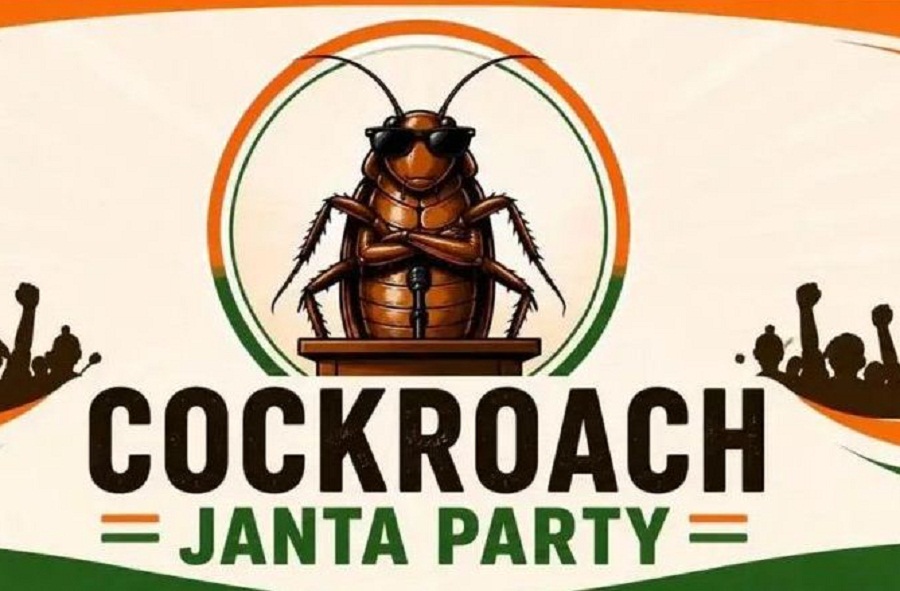
Political power traditionally relied on roaring lions, soaring eagles, or rising suns to command authority over the public and capture their imagination. Yet, in a bizarre twist, an insect has shaken the digital foundations of the region's most formidable political party and its long-established system in India. Yes, guessed it right, we are talking about the Cockroach Janta Party. This unregistered, highly satirical youth movement exploded onto the internet in mid-May 2026.
The satirical take has emerged from an absurd inside joke and has turned into a massive socio-political phenomenon.
Less than three weeks after its launch, this satirical page's follower base has completely eclipsed the digital landscape of India's long-established political environment, symbols, and figures.
The catalyst for this unprecedented movement traces back to a controversial moment inside India's highest judiciary on May 15, 2026. During an intense Supreme Court hearing, Chief Justice Surya Kant reportedly compared certain unemployed youth to parasites and cockroaches, saying they have no place or legitimacy in their professions.
Though the court later clarified that these biting remarks were aimed solely at a specific group of individuals who use fake academic degrees, the remarks became an immediate lightning rod for others, especially the youth.
Indian youth are already battling with a brutal job market. Graduate unemployment is rising, and they are traumatised by a relentless nationwide exam leak being tagged as a 'cockroach' made the youth angry.
Recognising this frustration and anger, Abhijeet Dipke, a thirty-year-old political communications strategist and Boston University graduate, moved swiftly to reclaim the slur.
On May 16, he officially launched a parody platform named the Cockroach Janta Party, a direct and satirical play on the ruling Bharatiya Janata Party.
The thought behind it was as brilliant as it was absurd: the cockroach is famously known for surviving a nuclear blast. By adopting it as their mascot, India's youth declared they were the ultimate survivors, indicating a harsh economic climate, soaring inflation, and an indifferent bureaucracy with unyielding resilience.
Rather than publishing a conventional political manifesto that a tech-savvy audience would ignore, the platform introduced a hyper-relatable, satirical set of membership criteria.
To join the movement, individuals were ironically required to be unemployed by force, choice, or principle, to exhibit a level of physical laziness in contrast to a hyperactive brain, and to clock at least eleven hours of daily screen time to maintain their status as 'chronically online.' Yet, beneath this heavy layer of internet humour lay a sharp, biting critique of severe contemporary issues.
The movement utilised its massive reach to demand absolute government transparency, directly challenge the lack of public accountability surrounding controversial state-managed funds, and mock the perceived alignment between mainstream media and the political establishment.
The speed and scale of this digital inversion completely caught traditional political machines off guard. By utilising artificial intelligence to rapidly produce high-quality memes, sleek infographics, and engaging satirical videos, the movement weaponised social media effectively.
The Cockroach Janta Party's primary digital handles rocketed to over twenty-two million followers. This explosion placed them significantly ahead of the main opposition, the Indian National Congress, which commands roughly 13 million followers, and more than doubled the official digital following of the ruling party itself.
This meteoric rise quickly pushed the movement beyond the digital world and onto the streets, shifting the narrative from a transient online trend into a tangible political threat.
Volunteers in various major cities began organising public welfare initiatives, showing up to clean local streets and run community drives while wearing elaborate cockroach costumes.
Realising they were losing control of the youth, the central government of India initiated a heavy-handed administrative response, issuing emergency legal directives to platforms like X to withhold the movement's primary accounts within India.
This act of censorship only added fuel to the fire, prompting immediate condemnation from civil society leaders and triggering a legal battle in the Delhi High Court over the right to digital satire.
The movement's founder has announced his return to India on Saturday, June 6, 2026, with plans to transition the digital uprising into a massive physical demonstration in the capital.
The scheduled youth march from the New Delhi airport to Parliament Street aims to demand the immediate resignation of Union Education Minister Dharmendra Pradhan over the devastating systemic examination lapses that have thrown the futures of millions of students into jeopardy. As regional onlookers watch this fascinating experiment in digital defiance unfold, the outcome of the June 6 flashpoint remains to be seen.