

Published :
Updated :
 For all latest news, follow The Financial Express Google News channel.
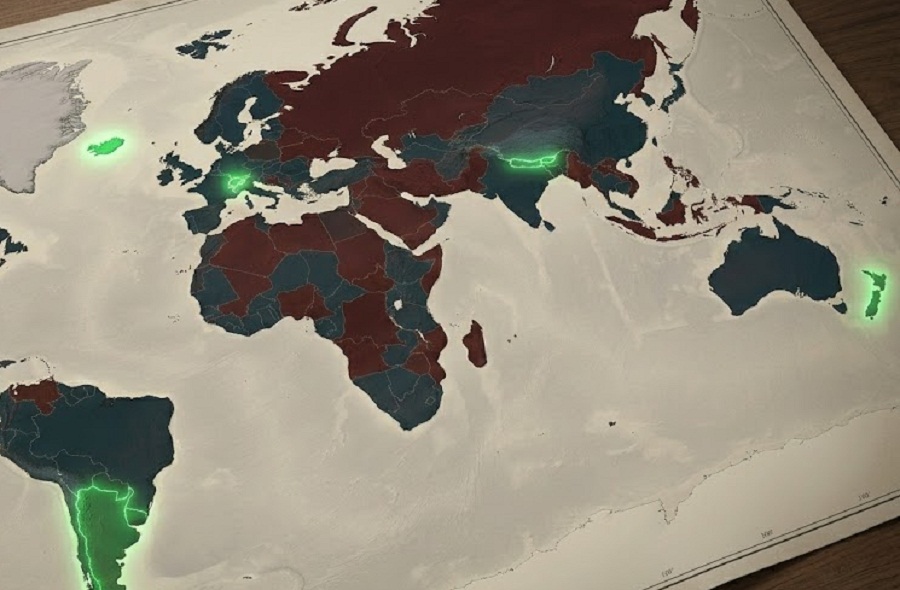
The drumbeats of global conflict are growing louder, and the phrase 'World War III' is no longer confined to science fiction. As geopolitical tensions simmer between major power blocs, many are asking a chilling question: If world war 3 happens, where can I go to be safe?
While no place can ever be declared 100% 'risk-free' in a global war, as secondary effects like economic collapse, supply chain disruptions, and potential environmental shifts would be felt everywhere, certain nations offer a higher statistical chance of survival. These 'safe havens' share key characteristics: they are geographically isolated, possess the means to produce their own food and energy, and have a strong, enshrined commitment to neutrality.
New Zealand
New Zealand is arguably the world's most famous 'shelter' candidate. Its primary defense is its extreme isolation: situated in the South Pacific, thousands of miles from any likely nuclear target or strategic military prize, it is safe from broader conflict.
New Zealand also possesses a unique combination of resilience factors. It is a developed nation with a small population and, most importantly, a global agricultural powerhouse.
It produces enough food, specifically dairy, meat, and vegetables, to feed multiple times its own population. In a scenario where global trade stops, New Zealand will not starve for lack of food, at least.
Its security is not enshrined in a treaty with an ally, but in its own domestic policy. The New Zealand Nuclear Free Zone, Disarmament, and Arms Control Act 1987 effectively bans nuclear weapons from its land, sea, and airspace. By removing itself from the nuclear umbrella of major powers, it has deliberately reduced its status as a strategic target.
Iceland
Iceland is a stable country in the North Atlantic region. It has been ranked as the most peaceful country in the world for 17 consecutive years by the Global Peace Index.
Iceland has no standing army. Its safety is based on its small size, remoteness, and militarily insignificant status to an aggressor. It is a NATO member, which technically provides it with a security guarantee, but it is not a nuclear state, nor does it host permanent foreign military bases.
Its true strategic advantage is resource self-sufficiency. Because of its volcanic landscape, Iceland is a world leader in renewable energy. It produces 100% of its electricity and heat from geothermal and hydroelectric sources. Even if the rest of the world's power grids fall silent from a lack of oil, Iceland will stay warm and powered.
Switzerland
Choosing Switzerland might seem counterintuitive, as it is located in the very center of Europe. However, its safety is based on mountains of infrastructure and a centuries-old tradition.
Switzerland's geography is dominated by the Alps, rendering a land invasion a logistical nightmare. But its primary defense is its codified policy of 'Armed Neutrality.' This isn't passive; it is an active deterrent. Its neutrality was formally recognised in the Treaty of Paris in 1815, following the Napoleonic Wars.
Switzerland is also unique in its civil defense. There is a legal requirement that its entire population, roughly 8.7 million people, must have access to fallout shelters. In a worst-case nuclear scenario, it is one of the few places on Earth with the physical infrastructure to protect its citizenry.
Argentina
South America has been the world's most peaceful region in recent years, and Argentina stands out as its most resilient member. Argentina's safety is a matter of pure geography. It is located at the very southern tip of the American continent, far from the critical infrastructure of NATO, Russia, or China. It has little history of being drawn into international wars outside of its own region.
Even in the event of total logistical collapse, Argentina would remain an agricultural sanctuary. It is one of the world's leading exporters of wheat and beef. A 2022 study in Nature Food identified it as one of the very few countries with the specific agricultural resilience needed to avoid famine in a 'nuclear winter,' as its food production could better adapt to drops in sunlight and temperature.
Bhutan
Bhutan, nestled in the heart of the Himalayas, is a nation that defines its worth not by GDP, but by 'Gross National Happiness.' This philosophy extends to its security. Bhutan's safety is a deliberate result of its isolation. It is a landlocked nation surrounded by formidable mountainous terrain, making invasion incredibly difficult.
It has a formal, enshrined policy of neutrality, having declared itself neutral in all conflicts upon joining the United Nations in 1971.
Bhutan maintains a low profile on the international stage and has zero ambition for global influence, making it a truly unattractive target for any major power bloc. However, it lies between China and India's conflicting regions of the world, both of which have a history of conflict and war.
However, the country has a traditional self-sufficiency in agriculture, and limited reliance on imported technology would allow its population to sustain itself if the modern world should break down.
Undoubtedly, a potential World War III would be the most catastrophic event in human history, impacting every person on the planet. But if one must choose a harbour for survival, it will be the places that are too remote to be targeted, too small to be feared, and resilient enough to stand on their own.