

Published :
Updated :
 For all latest news, follow The Financial Express Google News channel.
Human beings can't live without being affected by its surrounding, people, institutions, culture, technology, beliefs, and religious values; the practices, habits, and norms they inherit are derived from these.
The information we learn, practice, and hold to thrive comes from institutions, religious values, and communities where we live.
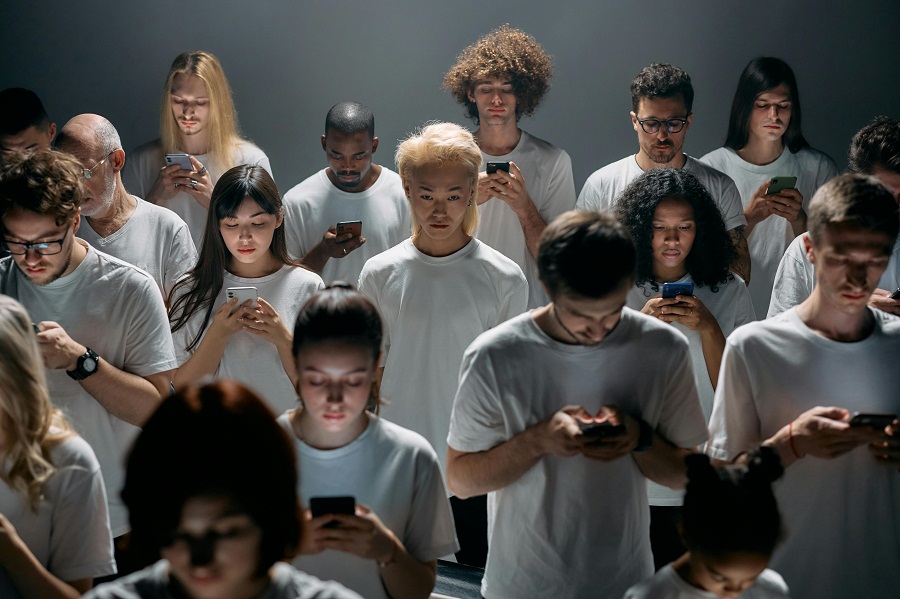
The aforementioned information from social media platforms such as Facebook, Instagram, YouTube, and TikTok shapes people's thought processes. It can shape cognitive style, even if we are unaware of this invisible influence on our worldviews.
People consume information on social media, which can have both positive and negative impacts on how they perceive, think, and interact. Positive and constructive information invariably creates a good impression and promotes wellbeing, learning, or community support.
To demonstrate, podcasts on entrepreneurship are hosted on social media platforms like Facebook and YouTube, discussing ways to start new businesses, strategies to grow, and how to sustain business growth. Young talents watch and are motivated to start their own businesses; gain courage through these podcasts.
Nevertheless, pessimistic information – misinformation, disinformation, hate speech, deep fakes, and coordinated propaganda discourages people and drains their emotions.
When a media platform constantly reports on crime, for example, people may view the world as the most dangerous place, a phenomenon known as the 'mean world syndrome.'
Dr. Mohammad Najim Uddin, Senior Consultant of Neuromedicine, Apollo Imperial Hospitals Chattogram, shares his neurocognitive perspective that social media functions as a continuous environmental stimulus that modulates attention, memory encoding, emotional salience, and belief formation.
Algorithms selectively amplify emotionally charged, novel, or controversial content, and this preferential exposure reinforces cognitive biases such as confirmation bias and availability heuristic.
He adds that clinically, this becomes evident in health-related misinformation. Patients increasingly seek advice from public forums where non-qualified individuals prescribe medications, recommend supplements for memory enhancement, obesity, sexual health, dermatologic issues, or musculoskeletal pain, often without a scientific basis.
Repetition of such claims increases perceived validity through the 'illusory truth effect.' The illusory truth effect is a psychological phenomenon where we are more likely to believe a statement is true simply because we've heard it before.
Essentially, repetition creates the illusion of reality. Dopaminergic reward circuits are activated by likes, shares, and novelty, reinforcing engagement rather than accuracy.
And he also said, "Following major public events (e.g., popular films or social trends), I also observe spikes in related advertisements, memory boosters, performance enhancers, nationalist narratives linked to sports. These narratives often frame competition as war or an identity struggle, thereby exaggerating emotional polarisation."
"In neurological terms, repeated emotional priming strengthens associative networks and may alter risk perception and judgment. Thus, social media does not merely transmit information; it actively shapes cognitive framing, risk assessment, and behavioral intentions," he added.
Mr. Najim views that social media can also be motivational. Seeing global colleagues engaged in research, advocacy, and innovation encourages self-improvement and intellectual growth. When curated properly, it becomes a professional amplifier rather than a distractor.
He said, "Through limiting exposure to emotionally manipulative content, proper recognition of algorithmic reinforcement loops, and avoiding compulsive scrolling that triggers dopaminergic reward cycles, one can maintain cognitive hygiene."
He prioritises psychological regulation by avoiding excessive stimulation-seeking behaviour, promoting activities that support long-term wellbeing—meaningful work, structured learning, community service, reflection —and encouraging emotional resilience rather than outrage amplification.
Taken together, social media is neurocognitively powerful. It can compromise perception or elevate global collaboration depending on how it is used. The determinant variable is not the platform itself, but the user's critical framework and behavioral discipline.
shafiul0019@gmail.com