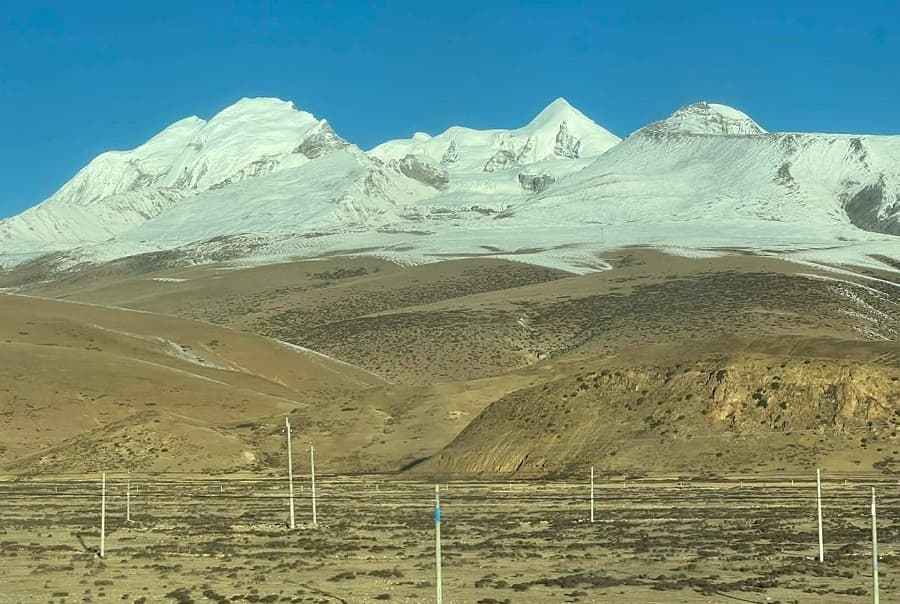
Some journeys are planned through logistics and infrastructure, others through faith and persistence. Both shaped our journey to Mount Kailash and Lake Mansarovar in June 2025. Travelling on the Qinghai–Tibet Railway, the highest railway journey on earth, was a lifetime experience one can wish for. Together with the content creator Salahuddin Sumon, one of Bangladesh's most followed YouTubers, we completed this remarkable journey.
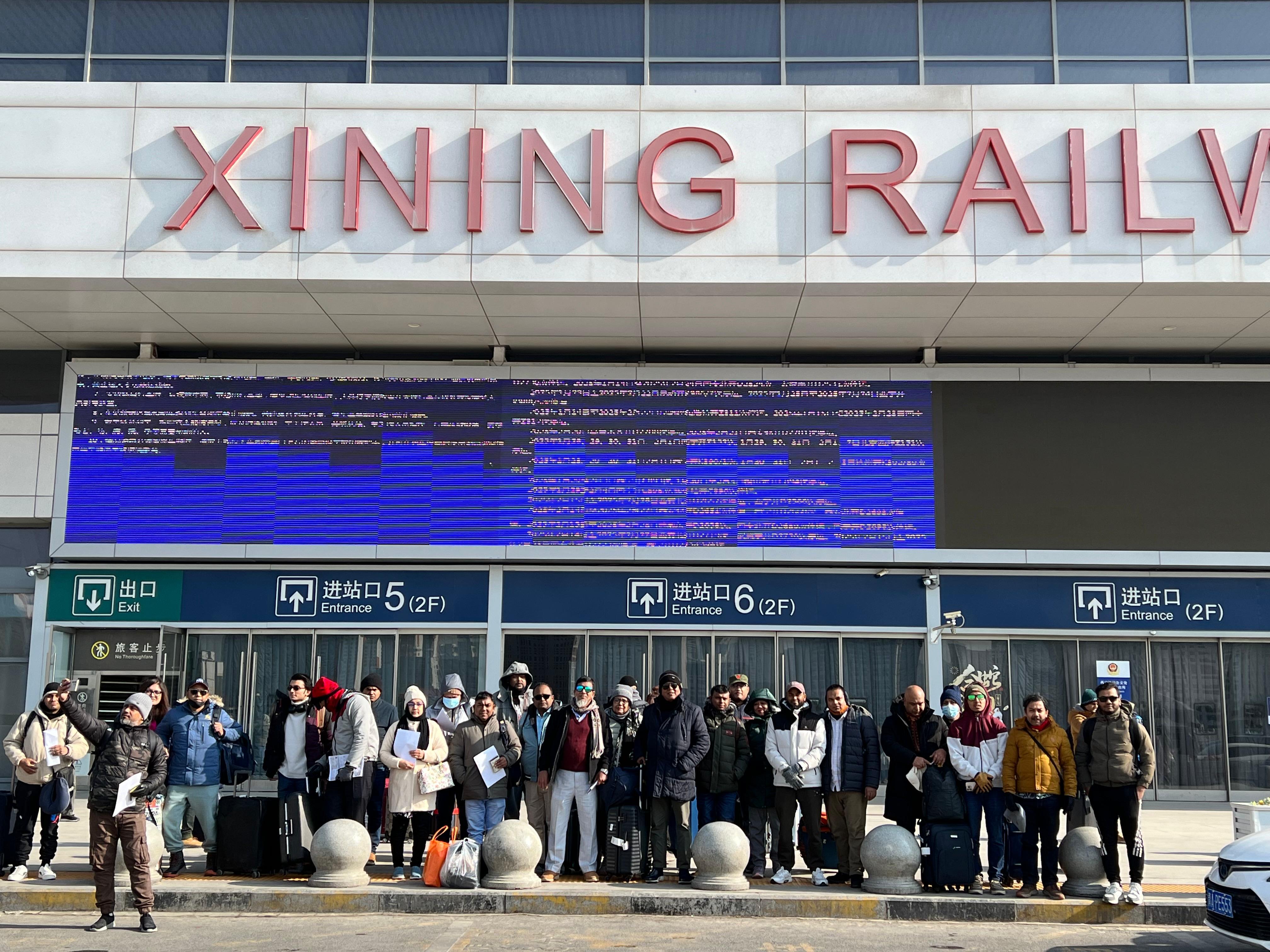
Our journey began in Xining, the capital of Qinghai Province and the official gateway to Tibet by rail. Sitting at over 2,200 metres above sea level, Xining serves as a natural acclimatisation point before entering the high Tibetan plateau.
Stayed there for two days, witnessed the city's unique cultural blend of Han Chinese, Tibetan, and Hui Muslim communities living there.
One of the most striking landmarks in Xining is the Dongguan Grand Mosque, one of China's largest and most important mosques. With its fusion of traditional Chinese architecture and Islamic design, the mosque stands as a reflection of the Silk Road.
Around the mosque, we explored street-food alleys, enjoying delicious and surprisingly affordable local dishes, grilled meats, hand-pulled noodles, and freshly baked flatbreads, a lively contrast to the stark landscapes that awaited us ahead.
The journey started aat 12:50 pm, after boarding the Qinghai–Tibet train from Xining, on a nearly 1,900-kilometre journey that would take approximately 22 hours.
The train gradually ascends from grasslands to frozen wilderness, crossing some of the most extreme terrain on the planet.
More than half of the route lies above 4,000 metres, passing through permafrost zones where engineering once seemed impossible.
We travelled first class, where each compartment had four berths, two upper and two lower, offering relative comfort at extreme altitude.
The fare ranged from USD 120 to USD 160. Oxygen outlets, sealed windows, and pressurised cabins are designed to combat altitude sickness.
There was a small restaurant car serving hot meals, and a guide regularly announced details of the route and construction history, all in Mandarin, which we unfortunately could not understand, though the visuals required no translation.
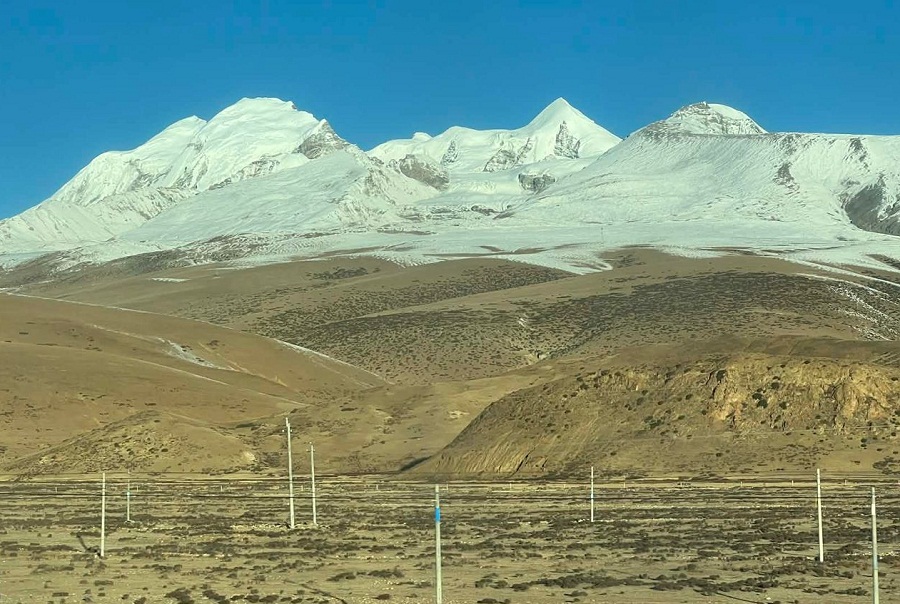
As the train moved deeper into the plateau, the scenery transformed dramatically. Endless grasslands stretched to the horizon, dotted with grazing yaks and sheep. We saw nomadic tents scattered across the plains, their inhabitants living a rhythm of life unchanged for centuries. Rugged, snow-covered mountains rose abruptly from the earth, raw and unforgiving.
The most breathtaking stretch came while crossing the Kunlun Mountain range, one of Asia's longest mountain systems, stretching over 3,000 kilometres.
The train glided through a landscape of glaciers, frozen rivers, and wind-carved peaks, a moment that felt almost unreal.
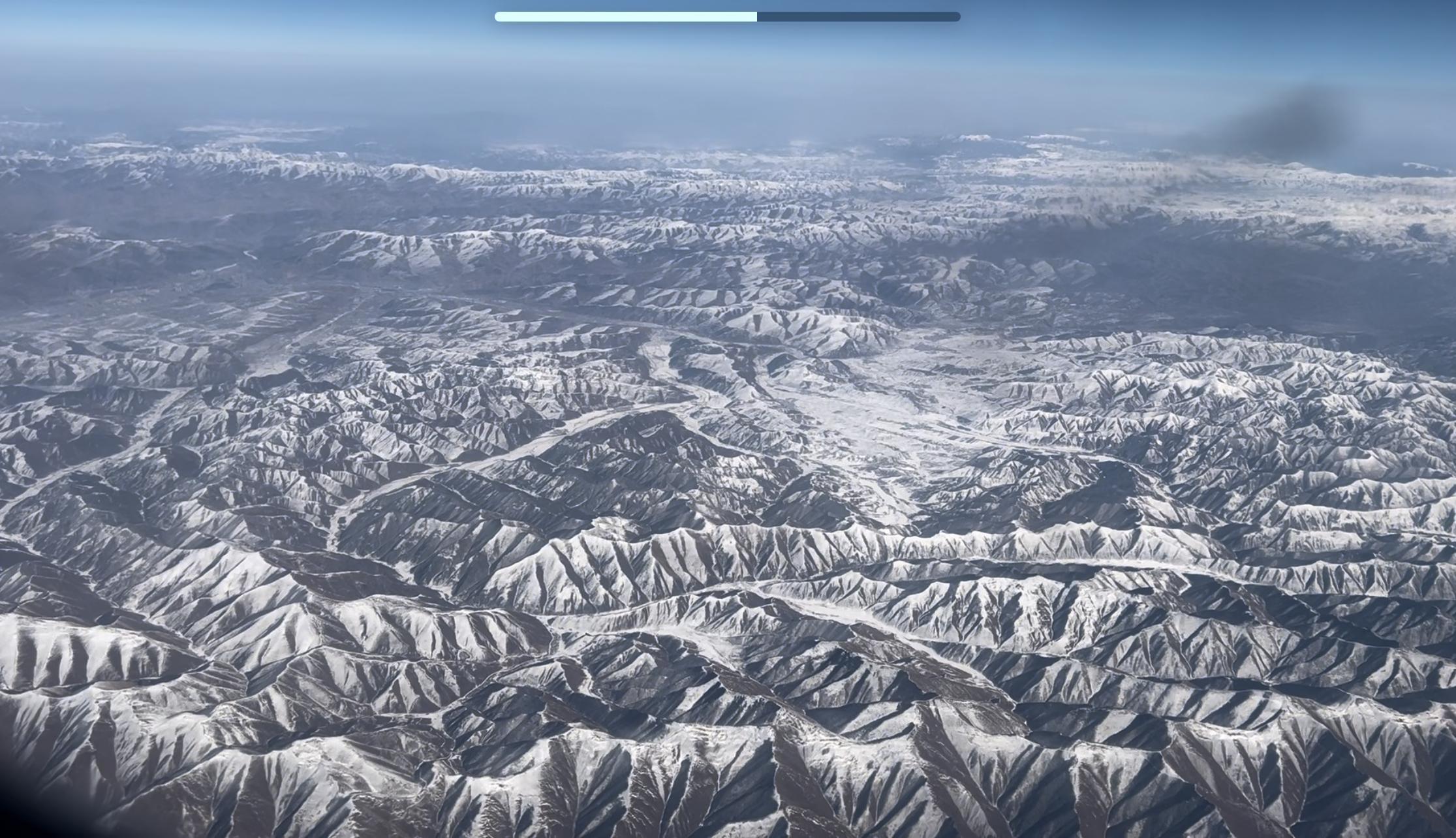
At midnight, we passed through Tanggula Pass, home to the world's highest railway station at 5,068 metres above sea level. Even at that hour, the vast plateau was visible, a surreal experience indeed. This is also one of the most remote inhabited regions on earth, where oxygen levels drop to nearly half of those at sea level.
We reached Lhasa at around 11 am the next day. Stepping off the train, one may feel an anush of emotion, goosebumps, at entering a land once known as the 'Forbidden City' of the Himalayas.
For centuries, Lhasa remained isolated due to its extreme altitude, harsh climate, and formidable natural barriers. Until the mid-20th century, very few outsiders had ever seen it.
Knowledge of Lhasa came mostly through pilgrims, traders, and rare explorers, giving the city an almost mythical status in world history.
This railway journey was more than a mode of transport. It was a passage through geography, history, and human endurance, a reminder of how modern engineering has opened access to one of the most remote places on earth, without diminishing its mystery.
From Lhasa, the road would eventually lead me to Mount Kailash and Lake Mansarovar. But it was this journey across the sky from Xining to the roof of the world that laid the foundation for everything that followed.
nilaymcj@gmail.com