


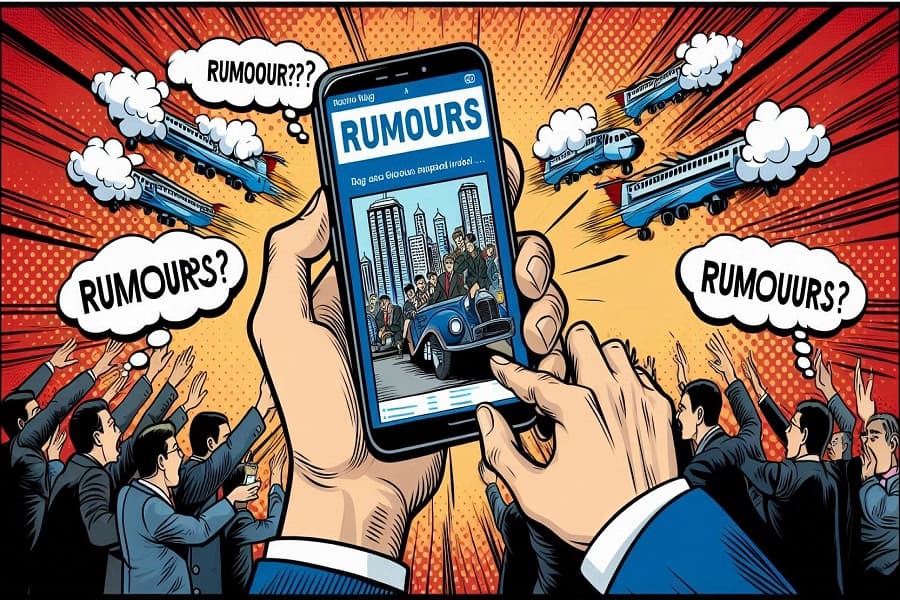
Rumours are the unexpected guests at the truth table; they show up out of the blue and frequently leave a path of mystery in their wake. They appeal to our baser desires and concerns, leading us to wonder where the boundaries are between what is real and what isn't and what is true. In a society where information is power, rumours may be the most deceptive and compelling currency, blurring the lines between reality and perception. Rumours have the power to shape perceptions and start conversations, making us wonder what the underlying narrative is. Gossip can spread quickly on its own.


Role of social media in amplifying rumours
The Internet, mobile phones, social media and the other communication tools we take for granted have enormous power for good, no doubt. But they also have serious side effects that often erase the benefits. Rumours spread on the Internet have become increasingly pervasive due to the proliferation of online social media. For example, False news about Barack Obama's injury due to the White House explosion was reported through Twitter by the Associated Press (AP), which brought monetary chaos in stock markets– $130 billion in stock values were wiped out.
Make a social separation between individuals
Rumours can split a community, particularly when they are directed towards particular people or organizations. As a result, members' trust and social cohesiveness may suffer. Relationships might also suffer from rumours because people may start to doubt each other or their beliefs.
Hearing about a minority being attacked by the majority may be used to divide them or incite disturbances in the community, leading to mistrust in the neighbourhood.
During a crisis, rumours affect public opinion
During times of crisis, rumours can significantly affect public opinion by spreading erroneous information, increasing worry, and undermining confidence. During the COVID-19 outbreak, for example, there was a general reluctance to get vaccinated due to stories of adverse effects and fake cures. Similarly, news of chaos in New Orleans following natural catastrophes, such as Hurricane Katrina, increased fear and complicated rescue operations. These stories spread quickly on social media, often preying on people's fears and uncertainties. They can amplify the issue, distort reality, and influence how decisions are made if they are allowed to continue.
Such rumours have the power to impact public opinion and cause illogical actions, such as stockpiling goods or disobeying professional advice, which can worsen the situation.
Long-term impact on people
Individuals are pretty dangerous and often leave behind psychological, professional, and social traumas. Being the subject of a rumour may be exceedingly hurtful to someone's self-esteem and lead them to suffer emotionally for a long time, especially if the rumour is harsh or inaccurate. Constantly fearing that you may be misinterpreted or judged can cause despair, nervousness, and even social disengagement. Rumours can damage someone's reputation by affecting how other people see and deal with them. Relationship problems, social isolation, and a decline in community trust could result from this.
In professional settings, rumours can destroy careers by causing missed opportunities, job loss, or difficulty finding new employment due to a damaged reputation.
Rumours, which mix fact and fiction, can ruin careers, result in job loss, and induce worry. They may also cause social isolation, job losses, and psychological anguish. Therefore, it is essential to support media literacy and open communication to lessen harm and advance an informed public.
iamaysha36@gmail.com