

Published :
Updated :
 For all latest news, follow The Financial Express Google News channel.
A twenty-year-old university student, Dia, commutes to her university every day by bus. As a regular scenario in metropolitan cities, traffic jams, intense honking, and the hue and cry of passersby are common on Dia's route, until one day, she was not only mentally exhausted but also physically tired. Instead of her concentration on the class activities, she found herself lost in an illusory setting. The monotonous noise of the road still vibrated in her ears, blocking her focus throughout the class. Like Dia, often, we become so mechanised in our daily routine that we hardly have time to analyse the reasons behind a specific problem, whether physical, mental, or emotional. Many students, jobholders, and other professionals cannot concentrate for long, which affects their professional and personal life. It is well known to us that in today's era of Artificial Intelligence (AI) and super-fast internet access, the human brain is used less than it should be, which reduces a person's analytical ability.
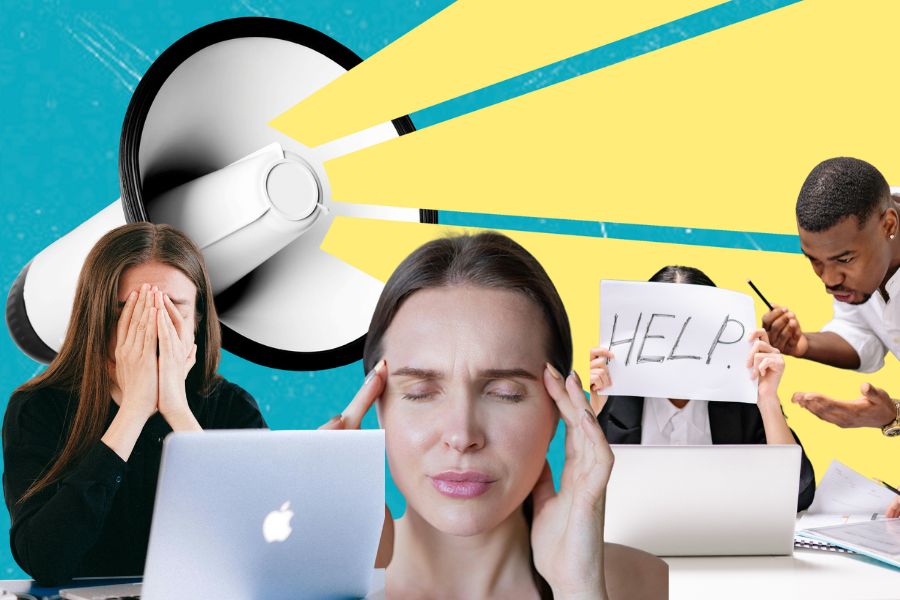
But how many of us know that excessive noise, or the noise pollution occurring around us, can impact our patience and concentration levels? This ultimately hampers our cognitive ability to learn, solve, and address a topic or problem, causing silent damage to our brains. Dr Bipasha Singha, Associate Professor at the Department of Psychology of the University of Dhaka, opined that "Excessive noise disrupts cognitive performance by overwhelming the brain's ability to process information and manage attention, resulting in reduced concentration, impaired memory, and slower, less accurate task execution."
From this statement, we can observe the harmful effects of excessive noise on the most important functions of the cerebral system.
Before discussing the negative aspects of loud noise, we shall identify its sources. During the heavy traffic jam, the beep of horns pierces into our ears and makes us feel dizzy.
The regular commodities of daily life, like the air conditioner, refrigerator, and ceiling fan, have distinct operative sounds of their own. Even if they are not as loud as traffic, gradual tolerance for these sounds impairs the brain's cognitive processes.
Moreover, when modern inventions become harmful to humans, such as earphones and earbuds, which some people use for hours on end, they ultimately impair hearing. The announcements made over the microphone, the hunger-inducing cries of street vendors and businesspeople, and the chaos caused by human disputes are among the sources of extreme noise.
As the sources of noise are evident, excessive noise, or noise pollution, overwhelms cognitive ability to process information. When the environment becomes too loud, the brain is forced into a 'divided attention' mode, which hampers productivity.
Again, loud sounds trigger cortisol, the stress hormone, because the prefrontal cortex, which is responsible for focus and decision-making, is disrupted.
Due to an unwanted stress response, the brain becomes overwhelmed, and a person cannot concentrate on a topic for long.
Our brain works like a filter, removing unnecessary distractions. But the filtration process requires glucose and energy, which, if used in excess, exhaust the brain and leave fewer resources to solve complex problems. According to research conducted at the University of California, when the brain encounters a loud noise, it takes an average of 24 minutes to return to a state of 'deep focus' (flow) after a significant interruption. Apart from these scientific explanations, loud noise can irritate people, causing restlessness and ultimately hampering social relationships and leading to social fatigue.
Irrelevant auditory stimuli block the retrieval of information from the brain. In this way, no matter how knowledgeable a person might be, the external environment hampers their progress.
If we analyse the social hierarchy, the higher officials usually sit in the workplace in almost pin-drop silence, and there is a strict rule regarding this.
On the contrary, entry-level and junior employees work in a chaotic environment, surrounded by it. This lack of agency over the issue triggers cortisol responses, and often, employees lack social empathy towards one another.
As the brain slips into survival mode, toxicity is created in workplaces. Thus, atmospheric disorder soon becomes a mental disorder, affecting both the physical and mental health of individuals.
To live properly, we should keep in mind the scientific and psychological effects of any extreme in life, whether it be stress or joy. A natural balance of calmness and discord can help us navigate the tough path of life.
amantuliffatfarisha@gmail.com