



'Power resides where men believe it resides. It's a trick, a shadow on the wall. And a very small man can cast a very large shadow.'
If you're a Game of Thrones fan, you may remember Lord Varys, the Master of Whisperers, and his conversation with Tyrion Lannister.
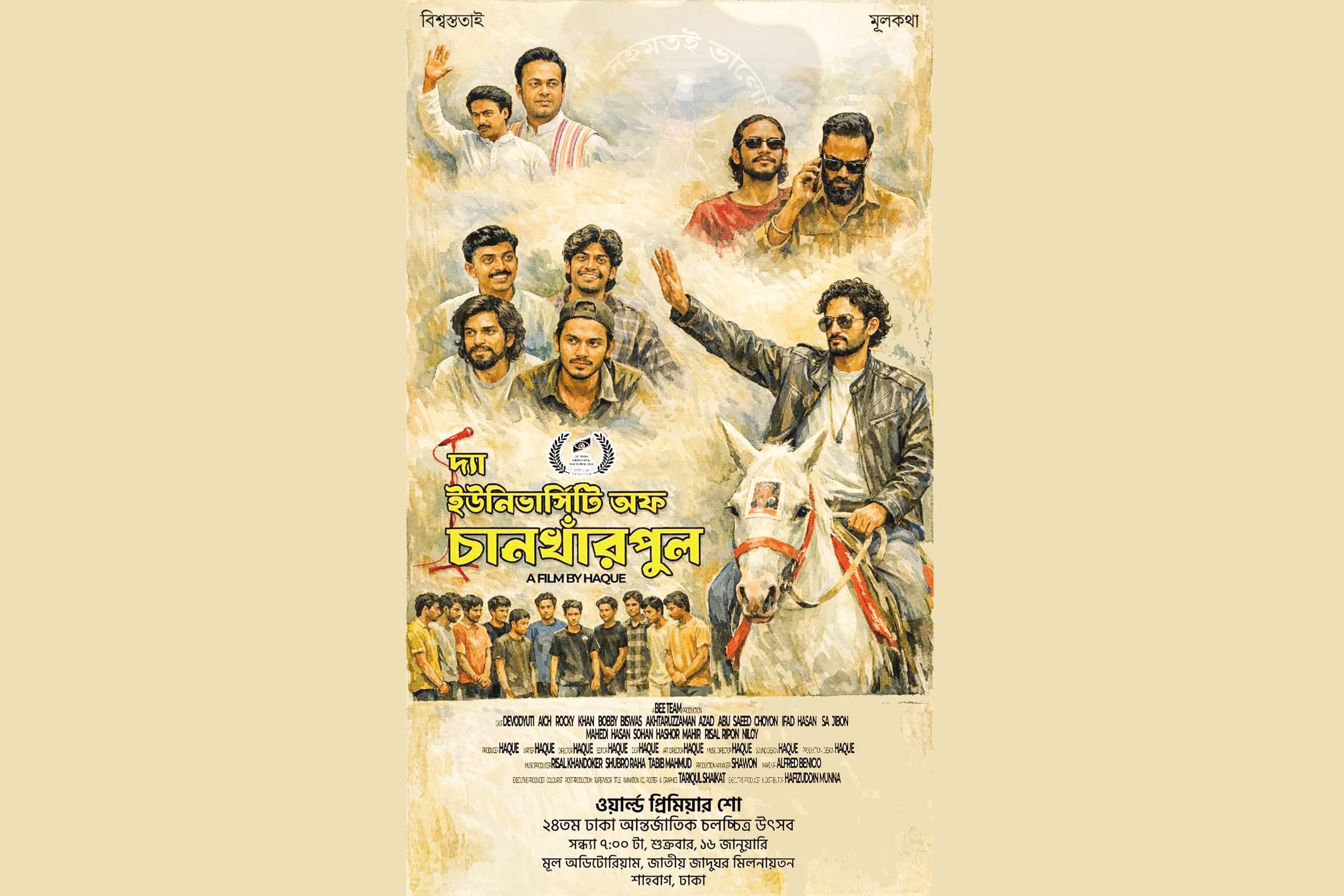
Well, power is a curious thing. And it becomes more of a matter of curiosity when you get to witness representations like 'The University of Chankharpul'. The film got selected for screening at the 24th Dhaka International Film Festival. Later, it received the FIPRESCI Award, given by the International Federation of Film Critics worldwide, to promote young and out-of-the-box cinema. The film also received the 'Best Feature Film' award at the festival in the Bangladesh Panorama section.
Given the reality of university power politics, the cinema explores its darkness, with a hint of satire in every aspect.
Directed by Akash Haque, the cinema has been a good addition to the less-explored political satire genre of the Bangladeshi Film Industry.
From the storyline to the acting to the music, everything makes you feel it's real. The University of Chankharpul is honest in its approach, raw at its best, and knows how to serve the rawness to the audience.
The cinema is inspired by a short story named 'Jhora Patar Dukkho Bilash' written by Rono Anowar. The story is probably one that many Bangladeshi university students experienced during the previous regime.
It's their stories on the silver screen. The characters are relatable, and what makes them more relatable is the actors behind the roles.
The energetic, stellar performances by a bunch of young, fresh talent make the cinema a refreshing place to watch. The characters don't have any names; probably the philosophy was that we are all what they portrayed at some points in our lives. The entire cast holds the philosophy with genuineness.
The ambitious protagonist, popularly known as 'Horseman', portrayed by Devodyuti Aich, is a hero with flaws. You can feel his growing frustration, hopelessness, and how you've been made a pawn in power politics. In the world of power hierarchy, sometimes you play the main character, sometimes you bow down. Devodyuti perfectly maintains the transition; sometimes he's the hero of the moment, the next moment he's bowing down to the university president. Devodyuti pulls it off with his solid performance.
Rocky Khan and Boby Biswas play the primary antagonists. Rocky Khan, as the University President, played what the character demanded.
Rocky Khan's on-screen acting was excellent, but the character had untapped potential and deserved more layers. Instead, it became more predictable. Another character that stands out is the hall president portrayed by Boby Biswas.
Boby Biswas has a strong screen presence that draws eyes. The dialogue delivery, the expressions are so on point! He's feared, he's tough, and the portrayal of it becomes believable. As an 'alpha-male' antagonist, he could go further, but he consciously avoids it with his measured, adequate acting that looks effortless. The special appearance by Akhtaruzzaman Azad was enjoyable, with a good sense of humour. The campus correspondent, played by Mehedi Hasan Sohan, did justice to the character. The friends of Devodyuti are played by Chayan Mondol, Abu Sayeed, and S A Jibon. They all delivered a decent performance. A small appearance in a harassment scene by Fariha Tasnim Hridi felt impactful, as you can feel her suffocation.
Interestingly, there wasn't any strong female leader or female character in the film; all the female characters are either just another 'yes boss', a 'fantasy' element, Devodoti's girlfriend or a victim- Which can be a subject of debate. But if you think about it from another perspective, as it's a satirical representation, it can be a deliberate decision to show the patriarchal side of campus politics and politics in general.
Coming to the other aspects of the film, the screenplay by Akash Haque was impressive. The movie's weakest point is its editing. At some points, the movie feels slow and loses its pace. Some scenes add nothing special to the story. The editing needs to be more tight to hold the pace of the movie.
The dialogues are unfiltered as the story demands, and they add heart to the movie. The cinematography was good. There are some memorable, cinematic shots that add depth and make the story more engaging.
Tabib Mahmud did an excellent job with the music. The songs are coming of age, exciting for their audiences, and serve the purpose of the film well. The background music was underwhelming, and the sound engineering could've been more engaging with the situations portrayed on screen.
An underwhelming aspect of the film is that the characters lacked layers, a lack of backstory of the characters. The characters had potential to be layered and unpredictable. Instead, they became black and white, which is disappointing.
The movie lost its pace at times and became predictable. However, the ending was less dramatic, more hard-hitting. It was blunt as reality. It showed what happens in power politics in the realist way possible.
The film carries the efforts, struggles, and power of independent filmmaking. As the writer, director, and producer of the film, Akash Haque upholds the courage of independent filmmaking. It's an honest piece of work with flaws, but at the end of the day, a refreshing addition to Bangla cinema. Probably a new beginning that you can't wait to have more!
nourinsultana534@gmail.com