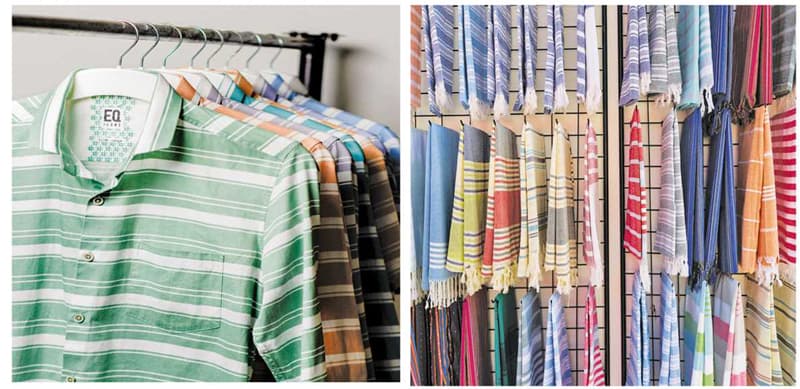
Bangladesh faces extreme heat every single year. The summer months bring high temperatures and thick humidity. People look for ways to stay cool and comfortable. At the same time, people also love to look good; they want fashion and style to come forward sometimes.
Most people now buy clothes made of synthetic materials. These materials include polyester and nylon. They are cheap and easy to find in local markets, and they look great as well. However, these fabrics are not helping us. In fact, they might be making us very sick. So what should Bangladeshi wear? Is our fashion and 'cheap' clothing making us sick?
Rise of fast fashion
The rise of fast fashion has changed our closets. Modern stores are full of shiny, colourful plastic clothes. These items look good on the shelf. They do not wrinkle easily after washing. They are very light in weight. But these clothes come with a hidden price. They do not work with our biology. Our skin needs to breathe to stay healthy. Synthetic fabrics act like a plastic wrap around our bodies.
Then why do we buy these?
If synthetics are so bad, why do we wear them? The answer is mostly about money and global trends. These items are sold cheaply in local markets. People with humble incomes find these prices very attractive.
A synthetic shirt might cost much less than a pure cotton one. This makes it the only choice for many families. Sadia Parvin is a university student. She buys clothes from the New Market, which saves her money. "I don't earn much, so I don't have much room to spend money on clothing. So, I buy them from the footpath. A two piece cords set cost me 300 taka only. I prefer comfort, but sometimes saving money gives more comfort than clothing."
A medical perspective on skin health
Doctors in Bangladesh are seeing more skin problems than before. They notice a clear link between clothing and disease, especially in Dhaka.
The humidity makes the situation worse for everyone.
"In a high-humidity environment like ours, synthetic fibres like polyester and nylon act as a non-porous barrier. Unlike natural fibres, they do not allow sweat to evaporate. This leads to a condition we call occlusion. This trapped moisture macerates the skin. It creates a perfect breeding ground for fungal infections. We see conditions such as tinea and bacterial folliculitis. Patients have persistent itching and rashes," says Dr Abdullah Halim, Assistant Professor, Dept. of Dermatology and Venereology, MAG Osmani Medical College, Sylhet.
The skin is our largest organ. It needs to stay dry to stay healthy. When it stays wet for hours, it becomes weak. This allows fungi like ringworm to grow very fast.
Many people use creams, but the infections come back. They come back because the person is still wearing the same clothes.
How your skin stays cool
The human body is very smart. It has its own cooling system. When we get hot, our brain tells us to sweat. Sweat moves to the surface of our skin. When sweat evaporates into the air, it removes heat from the body. This process is called evaporative cooling. This is the only way we can survive a Dhaka summer. But this system only works if the air can reach our skin. It needs a path to escape through our clothing layers.
Natural fabrics like cotton and linen have tiny holes. These holes allow air to move back and forth. They also absorb moisture from the skin. Once the cotton absorbs the sweat, the wind dries it quickly. This keeps your skin dry and your temperature low.
When you wear a polyester shirt, you create a trap. The sweat leaves your pores but has nowhere to go. It stays stuck between your skin and the fabric. This creates a very hot and wet environment.
This constant moisture softens your skin too much. It breaks down the skin's natural barrier. This makes it easier for germs to enter your body. You begin to feel sticky and very uncomfortable.
This trapped heat also raises your core temperature. Your heart has to work harder to pump blood. You might start to feel tired very quickly. Many people feel dizzy or get headaches in the sun. They often blame the sun alone. But the clothing is a big part of the problem.
We knew how to handle heat?
Our ancestors knew how to handle the heat. They did not have air conditioning or modern medicine. But they had the right fabrics.
They wore hand-woven cotton called Khadi. They wore thin muslin and light lungis. These clothes were designed for the delta climate.
They allow maximum airflow. They protect the skin from the sun while keeping it dry. This traditional wisdom is the best medicine for our current summer problems.
We need to support our local handloom industry. Fabrics like Tant and Mulmul are perfect for our weather. They might be more expensive than cheap polyester. They might also need more care and ironing.
But they will save you money on doctor visits. They will help you feel energetic throughout the day. Choosing natural fibres is an investment in your own health. It is also a way to protect the environment from plastic waste.
Can they be fashionable?
Cotton and khadi-type clothing look good in any setting. Be it professional, party or home. A mix of many colours with floral designs makes it look fashionable and sustainable.
Quality clothes over quantity
It might cost our budget, but having a few quality clothes is more useful than having uncomfortable clothes in greater numbers. Yes, we can show having a wardrobe full of colourful clothes, but it will come at a greater health cost.
Making better choices today
Changing the whole wardrobe is not easy. One can start by making small changes. Look at the labels on your clothes before you buy them.
Try to find items that are at least 80 per cent cotton. Avoid 100 per cent polyester shirts for outdoor work.
Choose light colours like white or sky blue. These colours reflect the sun's heat. Dark colours absorb heat, making us feel even hotter. Comfort should always come before a fashion trend.
Education is the key to a healthier future. We must tell our friends and family about the risks associated with synthetic clothing.
We must teach our children to value quality over quantity. A few good cotton shirts are better than ten cheap plastic ones. We have the power to stay healthy even in the hottest summer.
hasan.zahidwalkingtales@gmail.com