

Published :
Updated :
 For all latest news, follow The Financial Express Google News channel.
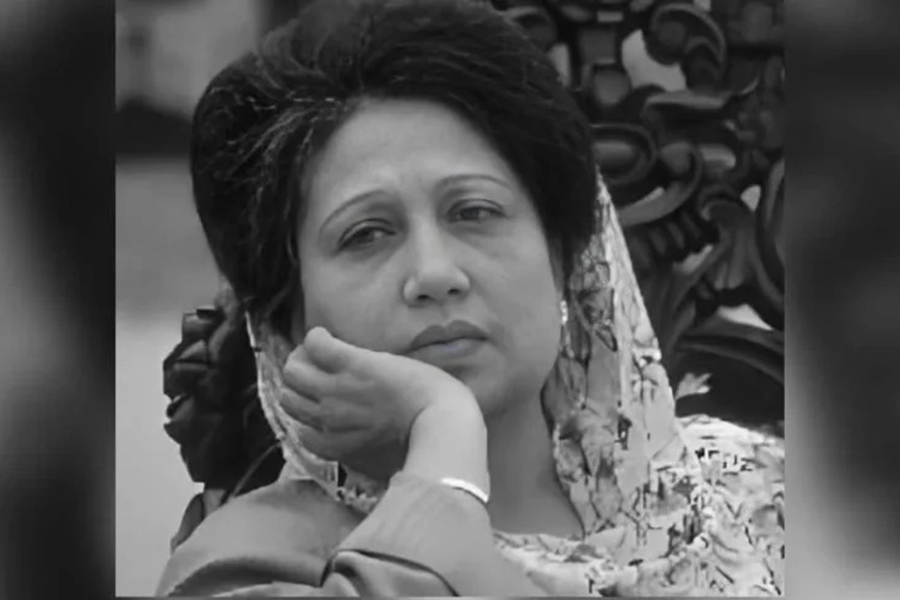
We have lost one of the towering figures of Bangladesh's political history -- Begum Khaleda Zia. The first female prime minister of the country, she slipped into eternal silence on Tuesday in Dhaka at the age of 79 after battling a prolonged illness. With her demise, an era characterised by uncompromising stands and personal sacrifice draws to a close.
Khaleda Zia's journey into politics was not carefully planned. The assassination of her husband President Ziaur Rahman in 1981 led her to politics. Once a housewife, she joined BNP, the party Ziaur Rahman founded, in 1982 and eventually took its helm. She gradually transformed BNP into a mass-based political force and herself into a stateswoman and one of the most powerful women leaders in South Asia. The transformation was not painless; it was earned through years of movements, political negotiations, personal sacrifice, and electoral battles.
Khaleda Zia's political career was inseparable from the country's struggle to restore democracy after a decade of autocratic rule of HM Ershad. She emerged as one of the top leaders of the anti-Ershad movement in the late 1980s. Her resolute stance was particularly evident in 1996, when the Awami League chose to participate in parliamentary elections under HM Ershad, breaking a commitment made by opposition parties. Khaleda Zia refused to legitimise the election and remained steadfast until the fall of the Ershad regime. Her steadfastness symbolised political integrity and earned her the fame as 'uncompromising leader'.
The nation witnessed her uncompromising stance again during the military-backed Fakhruddin Ahmed-led caretaker government of 2007-08. The government pressured Khaleda Zia and Sheikh Hasina, then in special prisons, to leave the country and quit politics under their "minus two" formula. Sheikh Hasina left for the United States on parole for medical treatment, but Khaleda Zia did not give up her struggle to stay. Her refusal reinforced her image as an uncompromising leader.
Despite her uncompromising quality, Khaleda Zia was widely regarded as a leader of personal decency. She seldom resorted to indecent language against rivals - a stark contrast to her peers in politics. She preferred silence over verbal abuse, a virtue that earned her respect even from those who did not subscribe to her political belief.
The later years of Khaleda Zia's political and personal life became increasingly threatened. During the Awami League government under Sheikh Hasina from 2009 to 2024, she was subjected to persecution, imprisonment, and suffering. In 2018, a special court in Dhaka sentenced her to prison in two corruption cases -- the Zia Orphanage Trust case and the Zia Charitable Trust case -- over embezzlement of taka 21 million in foreign grants. She was first given a five-year jail term, later doubled by the High Court, and then an additional seven-year term in another case.
It is widely believed that the cases were driven by political vengeance. The charges alleged embezzlement of foreign grants though the funds had not been misappropriated, merely transferred to a separate account due to procedural issues and the money remained intact in the bank.
When Khaleda Zia was languishing in jail over the charge of embezzling an amount of several million taka, oligarchs closed to Sheikh Hasina were emptying banks and siphoning off money with political protection and impunity. Their plundering money led to collapse of several banks and spiralling of non-performing loans of banks and financial institutions up to 36 percent. This disparity deepened the sense of injustice surrounding her treatment.
However, the High Court acquitted Khaleda Zia in November 2024 following the fall of the Sheikh Hasina government amid the July-August uprising. The Appellate Division later upheld the verdict in March 2025, clearing her from the charge. Her acquittal was not only a legal triumph but also a moral victory over detention and humiliation over the years.
Khaleda Zia spent her final years fighting illness, keeping a distance from political activism.
History will judge what Khaleda Zia was. But one thing can be said that she was undoubtedly consequential. A few leaders in Bangladesh have left such a vivid mark on the political psyche of the nation.
As the nation bids farewell to Khaleda Zia, it mourns not only a former prime minister but also an icon of uncompromising leadership, dignity, and personal sacrifice. She leaves behind a legacy that will remind every future leader that power can be exercised with decency, opposition can be maintained without surrender, and leadership can be sustained in adversity.
May Begum Khaleda Zia rest in peace!