

 For all latest news, follow The Financial Express Google News channel.
Ousted prime minister Sheikh Hasina has expressed condolences following the death of BNP chief Khaleda Zia, her archrival who dominated Bangladesh’s politics alongside her for decades.
In a condolence message posted on the Awami League's X account on Tuesday, Hasina described Khaleda as a significant figure in the country’s political history, highlighting her role as Bangladesh’s first woman prime minister and her contributions to the struggle to establish democracy.
“As the first woman prime minister of Bangladesh, and for her role in the struggle to establish democracy, her contributions to the nation were significant and will be remembered,” Hasina said.
She added that Khaleda's death marked “a profound loss for Bangladesh’s political life” and for the leadership of the BNP, bdnews24.com reports.
Hasina also offered prayers for Khaleda's soul and conveyed sympathy to her family, including her son and BNP Acting Chairman Tarique Rahman, as well as to party leaders and supporters.
“I hope Almighty Allah grants them patience, strength and comfort to endure this difficult time,” she said.
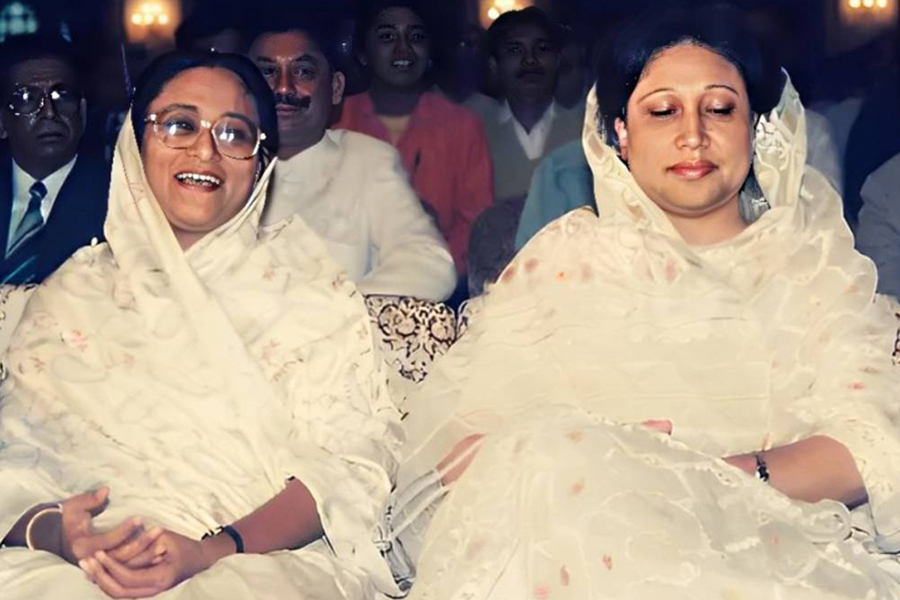
Khaleda and Hasina were the two most dominant figures in Bangladeshi politics for more than three decades, alternately leading the country and shaping a deeply polarised political landscape marked by fierce rivalry between their parties.
Khaleda died on Tuesday morning after a prolonged illness. She was 79.
In Bangladeshi politics, Khaleda and Hasina are known as the “two leaders”. The two of them combined have served as prime minister for more than 30 of Bangladesh’s 54-year history. At one time, their hostile relationship was portrayed in foreign media as the “Battle of the two Begums”.
Under the Awami League's rule, Khaleda was sentenced to prison in a corruption case in 2018. Two years later, Hasina conditionally suspended her sentence during the Covid-19 pandemic.
After that, Khaleda had to be hospitalised several times. Although her family and her party had wanted to take her abroad for treatment, Hasina's government did not allow it. On the contrary, Hasina even criticised Khaleda's hospital visits in a public press conference.
Awami League leaders blamed Khaleda's BNP government for the attempted assassination of Hasina in a 2004 grenade attack. The BNP, for its part, has also blamed Hasina for Khaleda's illness.
In August 2024, a student-led mass uprising ousted Hasina from power after 15 years. She then fled to India. Khaleda was subsequently released. After the political changeover, the courts also acquitted her in the corruption cases.
The International Crimes Tribunal (ICT) has since sentenced Hasina to death after finding her guilty in a case of crimes against humanity for her attempts to suppress the July Uprising. She has also been sentenced to prison in several other cases on charges of corruption involving plots of land.