

A ‘Yes’ Vote will open the door to a new Bangladesh, says CA in his message to nation
Published :
Updated :
 For all latest news, follow The Financial Express Google News channel.
Bangladesh’s Interim Government Chief Adviser, Professor Muhammad Yunus, has called on citizens to vote “Yes” in the national referendum scheduled for 12 February, describing the ballot as a historic opportunity to reshape the state and lock in democratic reforms born out of last year’s mass uprising.
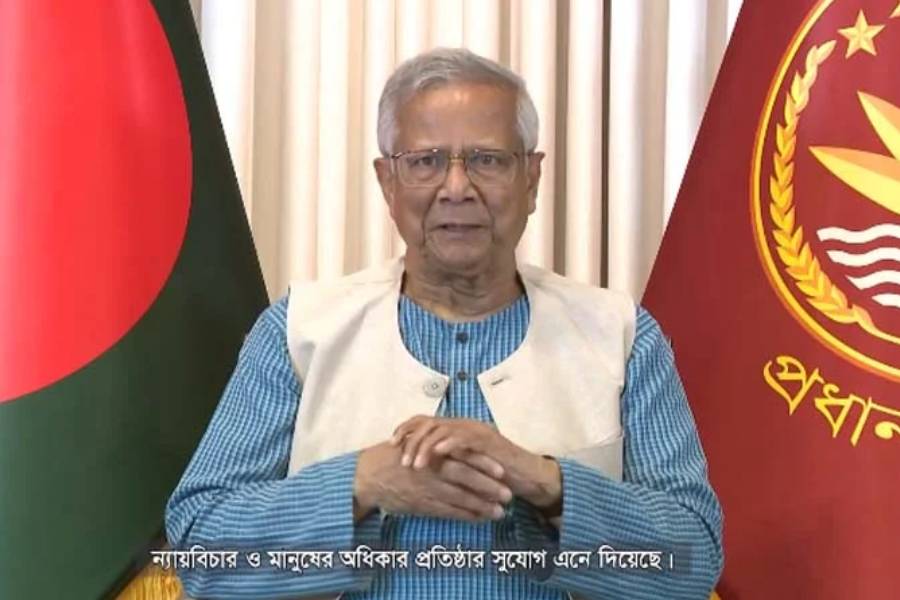
In a nationally televised video address broadcast on Monday, Yunus urged voters not only to support the referendum themselves but also to mobilise others to participate. “The key to building a new Bangladesh is now in your hands,” he said.
“If you stamp ‘Yes’, the door to a new Bangladesh will open. Cast your vote for ‘Yes’ yourself. Encourage everyone you know to do the same and bring them to the polling centres. Change the country. God willing, together we will seize this opportunity to rebuild our nation.”
The referendum will be held on the same day as the next general election, giving voters a dual choice: to elect a new parliament and to endorse what has been termed the “July Charter” — a package of constitutional and institutional reforms drafted in the aftermath of the July mass uprising.
Yunus described the July uprising as “an extraordinary achievement in the nation’s history”, saying it had unexpectedly created an opening to establish democracy, justice and fundamental rights. “We have already carried out several reforms towards this goal,” he said.
“For deeper and more far-reaching reforms, a consensus-based July Charter has been prepared with the agreement of all political parties. To implement this charter, your consent is required. That is why this referendum has been organised. Participate in it and give your approval to the charter.”
According to the Chief Adviser, a “Yes” vote would fundamentally alter the balance of power in Bangladesh’s political system and prevent a return to authoritarian rule. He said the reforms proposed in the charter would ensure that Bangladesh is freed from “discrimination, exploitation and repression”.
Among the key provisions outlined in his address are the restoration of a caretaker government system for overseeing elections, and a reconstituted Election Commission formed through cooperation between the government and opposition parties. “No government will be able to amend the constitution at will,” Yunus said, adding that major constitutional changes would require direct public consent.
The charter also proposes stronger institutional checks within parliament. Deputy speakers and the chairs of important parliamentary committees would be elected from opposition parties, while a bicameral legislature would be introduced through the creation of an upper house to help maintain a balance of power.
Executive authority would also face new limits. Under the proposed reforms, no individual would be allowed to serve as prime minister for more than 10 years, and presidential powers of pardon would be curtailed to prevent arbitrary use. “All power will not be concentrated in the hands of a single prime minister,” Yunus said.
Judicial independence is another central pillar of the referendum package. The Chief Adviser said the reforms would allow the judiciary to function independently, free from political interference, while ensuring stronger protection of citizens’ fundamental rights.
The charter also includes provisions aimed at social inclusion. Women’s representation in parliament would be increased, and alongside Bangla, the languages of other ethnic communities would receive constitutional recognition — a move Yunus described as essential to building a truly inclusive state.
Observers note that the referendum represents a rare attempt in Bangladesh’s history to directly involve voters in approving constitutional change. By tying the vote to the general election, the interim government appears to be seeking both legitimacy and broad participation at a moment of political transition following years of contested elections and democratic backsliding.
“Take part in the referendum at the upcoming election,” he urged citizens. “Stamp ‘Yes’ to build the state according to your aspirations.”
With less than a month to go before polling day, the referendum has emerged as a defining test of whether the momentum generated by the July uprising can be translated into lasting institutional reform — and whether voters will embrace the promise of a “new Bangladesh” offered by its architects.