

Published :
Updated :
 For all latest news, follow The Financial Express Google News channel.
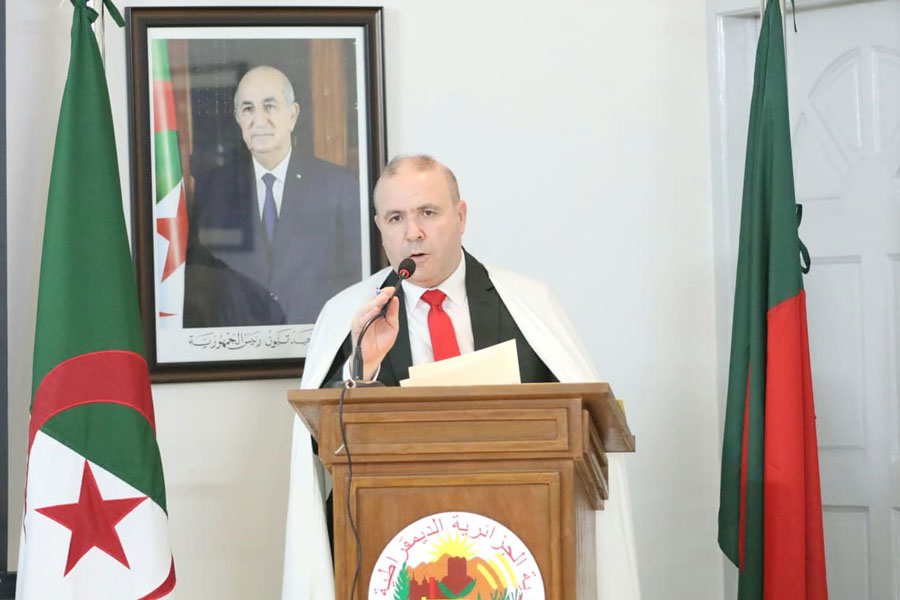
The Algerian Embassy in Dhaka on Thursday commemorated Algeria’s National Day of Remembrance, paying tribute to the victims of the May 8, 1945 massacres and drawing parallels between Algeria’s struggle for independence and Bangladesh’s Liberation War of 1971.
Speaking at the event, the Algerian ambassador said the massacres in Sétif, Guelma and Kherrata marked a turning point in Algeria’s history and exposed the harsh realities of French colonial rule.
The envoy said this year’s theme, “The Massacres of May 8, 1945: Dimensions, Visions, Impacts,” highlights both the historical significance of the events and their lasting impact on Algeria’s national identity.
Recalling the events of May 8, 1945, the ambassador said Algerians had marched peacefully demanding justice, dignity and freedom at a time when the world was celebrating the end of World War II. Many Algerians had expected political reforms and greater rights after supporting France during the war, but those hopes were shattered when promised recognition and reforms were denied.
The speech highlighted the killing of young demonstrator Bouzid Saal, who was shot after refusing to lower the Algerian flag during the demonstration. His death later became a symbol of Algeria’s struggle for freedom and self-determination, the envoy said.
According to the ambassador, the violence quickly spread across Sétif, Guelma and Kherrata as French authorities and settler militias launched a large-scale crackdown that lasted for weeks. Villages were destroyed, civilians were killed and thousands lost their lives. The speech noted that many historians estimate the death toll at around 45,000.
Despite the tragedy, the ambassador said the sacrifices of those who marched for freedom continue to inspire younger generations and remain a symbol of resilience, patriotism and dignity.
The envoy said the events of May 8, 1945 eventually led to the rise of organised resistance movements, including the Special Organization (OS), which later contributed to the formation of the National Liberation Front (FLN) that launched Algeria’s independence revolution on November 1, 1954.
The ambassador also noted that the massacres remain a sensitive issue in Algeria-France relations. While France described the events in 2005 as an “inexcusable tragedy,” Algeria continues to seek fuller recognition and accountability for what it considers crimes against humanity.
Highlighting Algeria’s independence achieved on July 5, 1962 after 132 years of colonial rule, the envoy said the country continues to draw strength from its history while working toward progress and opportunities for its youth.
The ambassador also drew similarities between the Algerian struggle and Bangladesh’s Liberation War, saying both nations experienced oppression and fought for the right to self-determination.
Calling for unity and cooperation, the envoy urged people to honour the sacrifices of freedom fighters and martyrs who gave their lives for their nations.
The programme ended with slogans celebrating Algeria, Bangladesh and the friendship between the two countries.