

Arbitrary pricing’ turns Barapukuria coal into ‘windfall’ for staff, ‘financial burden’ for PDB
Published :
Updated :
 For all latest news, follow The Financial Express Google News channel.
For nearly a year, a domestic coal pricing dispute between Bangladesh’s Power Division and Energy Division has created friction between the state-owned Bangladesh Power Development Board (PDB) and the Barapukuria Coal Mining Company Limited (BCMCL).
At the heart of the conflict lies the price of locally mined coal, which PDB says has cost the utility Tk 30 billion over the last three financial years, even as 181 BCMCL employees earned profits exceeding Tk 5.7 million each in the past four years.
Since January, PDB payments to BCMCL have been linked to global market prices, at times 77 percent cheaper than the company’s charges.
“We refuse to accept their price. It generates profits for them but results in losses for us,” said Rezaul Karim, PDB chairman.
The negotiation has already dragged on for a year since the PDB stopped paying the BCMCL its asking price. The companies are both under the Ministry of Power, Energy, and Mineral Resources.
Excluding VAT and taxes, BCMCL is asking $176 per ton for locally mined coal. On Jan 5, 2023, the then Awami League government arbitrarily announced this price with a one-year retrospective effect, without referring the matter to the Bangladesh Energy Regulatory Commission.
The Indonesian coal index offers the best quality of coal at $127.72 per ton. The Southeast Asian nation is a major source of Bangladesh’s coal, used in power plants alone.
Coal consumed in Bangladesh is available between $72.24 and $92.87, excluding transport and handling costs.
The BCMCL produces coal with 6,137 kcal/kg value, which is almost equal to the best quality coal bought from Indonesia. But power plants in the country use coal of lower value.
An internal PDB analysis revealed that the BCMCL spends $85 in lifting a ton of coal from underground, with the rest of the energy price ending up as the company’s profit.
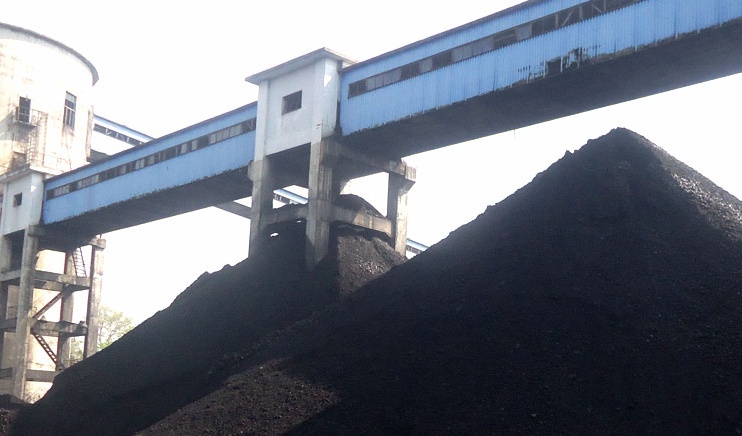
The PDB is the sole buyer of the coal and uses it for generating electricity at the Barapukuria Coal Power Plant, which only partially operates due to numerous technical problems.
PDB officials estimated that if Bangladesh had operated a similar power plant using imported coal, the cost would have been no more than $126 per ton.
The devaluation of the taka exacerbated the situation, since payments are tied to the dollar exchange rate at the beginning of each billing month. The devaluation of the taka increased the BCMCL earnings by more than 45 percent, the PDB says in an analysis.
WHAT MAKES THE LOCAL COAL PRICE SO DEAR?
The price hike was previously corroborated by the PDB as justified, documents showed.
The proposed price included $138 per ton for production and around $50 for land acquisition and future exploration. Energy experts and regulators later told journalists that costs for land acquisition and exploration should instead be covered from profits.
The proposed price also included 15 percent profits after paying VAT and the other taxes.
The finalised price was $176 a ton. The previous price was $130 per ton.
Energy experts attributed the high coal price to arbitrary regulations during the Awami League government, when the power and energy sector was rapidly expanded over 15 years from 2009 without proper competitive bidding.
BCMCL
BCMCL Managing Director Abu Taleb Farazi said the PDB owes them Tk 1.1 billion due to the partial payment of the energy bill.
“They are paying from $94 to $106 for a ton of coal, depending on the international market price,” he said.
He said they were following the Energy and Mineral Resources Division order in the energy pricing.
Explaining their consistent profit, particularly after the last energy price hike, he said part of the profit, Tk 1.1 billion, was meant to be used in the acquisition of 121 hectares of land.
The money, however, was never invested and shown as profit by the company.
Taleb also attributed part of the profit to increased production. The target annual production is 900,000 tonnes, though it reached a million this year, he said.
Taleb said the BCMCL shares 5 percent of the profit with staff.
The BCMCL has a workforce that mostly does not work inside the mine. The 1,100 mine workers are on the payroll of China National Machinery Import and Export Company, which supervises the entire mining operation.
After the coalfield was discovered in 1985, the BCMCL repeatedly extended its contract with the CMC to develop the mine and then extract coal through 2027.
The BCMCL started extracting coal in 2005, lifting 13.02 million tonnes by June 2022. Of the extracted coal, 9.54 million tonnes were used in the 525MW coal power plant, while 3.35 million tonnes were supplied to the local industry.
Coal sales to local buyers have remained suspended since 2018 after the discovery that over 143,000 tonnes of coal went missing between 2006 and 2018.
The BCMCL was supposed to develop mining capacity working with the CMC, eventually overtaking the full responsibility of the operation of the mine. But that has not happened in two decades since the extraction of coal began.