

As BNP returns to power, Tarique Rahman faces defining task of healing a divided Bangladesh
Published :
Updated :
 For all latest news, follow The Financial Express Google News channel.
After a long road marked by street movements, repression and prison sentences, the Bangladesh Nationalist Party (BNP) is poised to form a government again -- nearly two decades after it last held power.
The mandate is sweeping. Expectations are sky-high. The obstacles ahead are mountainous.
Beyond the immediate pressures of governance, the BNP inherits the political aftershocks of the 2024 mass uprising and the accumulated debris of a prolonged period of rule by its predecessor. Few believe the task of governing will be straightforward.
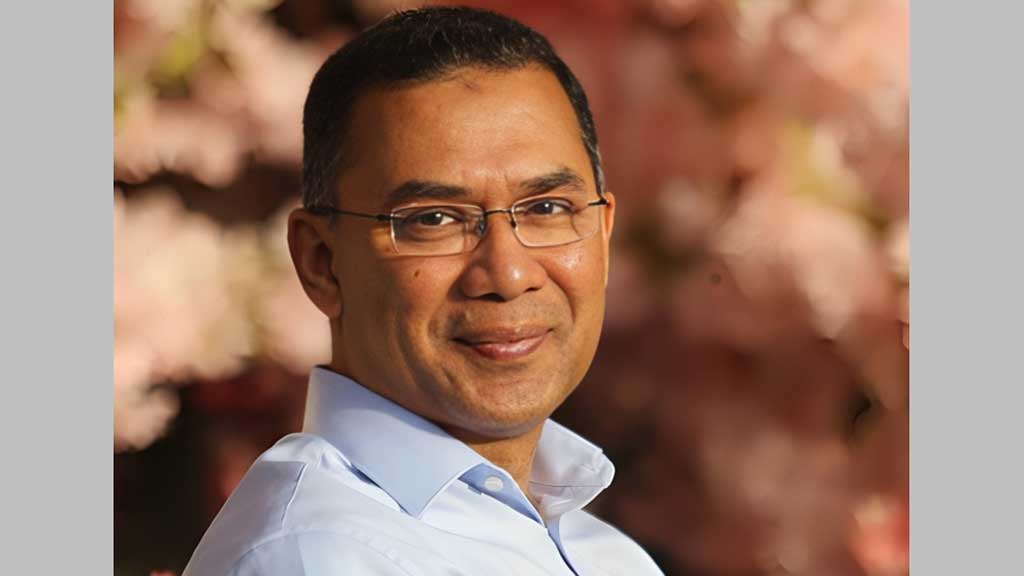
At the centre of this moment stands Tarique Rahman -- the party’s chairman and the leader entrusted with navigating Bangladesh out of division and towards stability.
From Exile To Authority
Though he held no formal government or party post during the BNP’s last stint in power in 2001, Tarique closely observed the mechanics of statecraft and wielded significant influence.
After the change of power, he spent more than a decade and a half in exile, largely away from the country -- but never detached from party strategy.
In difficult years, he acted as the party’s helmsman, keeping its base mobilised and sketching long-term plans for Bangladesh’s political future.
That vision was articulated publicly the very day he returned home, following the political upheaval of 2024. Now, through the ballot box, he has been entrusted with the responsibility of governing.
Shortly after returning to the country on Dec 25, Tarique outlined his priorities.
On Sunday, he is set to chair a meeting of the Standing Committee to finalise cabinet formation, assess the post-election landscape and determine the new government’s immediate agenda.
A Landslide — And A New Reality
The BNP’s victory in the election was emphatic: 209 seats, the largest tally in the party’s history. The Jamaat-e-Islami, its long-time ally, emerged as the principal opposition force with 68 seats.
Yet analysts caution that governing in this “new reality” will not be one-sided, despite the scale of the win.
The BNP inherits not only unfinished tasks left by the interim government over the past year and a half, but also the accumulated structural and political crises of nearly 15 years of Awami League rule.
Political analysts say the foremost challenge will be to dismantle the culture of one-sided governance and to replace it with stability and inclusion.
Equally pressing is the task of moving beyond entrenched hostility with the Awami League and addressing the politics of division that has long paralysed the country.
Some point to early signs of strain. Jamaat chief Shafiqur Rahman warned after the election that his party would take to the streets if “forced”.
That same night, former Dhaka University student union leaders staged protest marches.
What BNP Sees As Its Core Challenges
Speaking to bdnews24.com, BNP Secretary General Mirza Fakhrul Islam Alamgir acknowledged the scale of the task ahead.
“There are many challenges,” he said. “These must be tackled politically and economically. The BNP has experience, and that experience will help us overcome them.”
At a post-election press conference on Saturday, Tarique echoed the point before domestic and international journalists.
“The serious challenges,” he said, “are fixing the economy, ensuring people’s security, and establishing good governance.”
A Nation Divided
Professor Badiul Alam Majumdar, secretary of Shushashoner Jonno Nagorik (SHUJAN), describes Bangladesh as a deeply fragmented society.
“We are a divided nation,” he said. “Despite shared language and culture, we are marked by conflict, confrontation and violence. A divided nation cannot move forward.”
He argues that the BNP’s manifesto vision of a “rainbow nation” -- inclusive and plural -- will be difficult to realise, but essential.
Majumdar believes Jamaat’s early allegations of post-election irregularities constitute the first major test.
“The election was peaceful and people voted,” he said. “But questions arose over vote counting. The Election Commission could have investigated before publishing the gazette. Rushing the process created complications.”
He warned that unresolved disputes could spill onto the streets.
Old Ghosts, New Scrutiny
BNP’s previous terms in power -- particularly the 2001–06 period with Jamaat as an ally -- were marred by allegations of corruption and violence.
The “Hawa Bhaban”, nationwide bomb attacks, the Aug 21 grenade attack, and the seizure of 10 truckloads of arms remain embedded in public memory.
Majumdar warned that unless the BNP decisively uproots extortion, land grabbing and patronage politics among its own ranks, it risks repeating past mistakes.
“Corrupt bureaucrats, politicians and big businesses working in collusion must be confronted,” he said.
At the press conference, Tarique responded directly to this concern.
“Everyone will do business according to merit,” he said. “No special group will be favoured.”
Political Pressure From All Sides
Khalidur Rahman, a professor at the Shahjalal University of Science and Technology, noted that despite holding more than two-thirds of parliamentary seats, the BNP faces formidable political pressure.
Jamaat, he said, has reached a historic high through this election. Its student wing, Islami Chhatra Shibir, maintains a strong organisational presence on campuses, which could translate into street-level pressure if Jamaat adopts an oppositional strategy.
He also warned that the BNP may face domestic and international pressure over how it handles accountability for the Awami League, reconciliation, and the possible reopening of political space for a party currently under restrictions.
“Bangladesh’s political history shows that strategic or moral missteps often accelerate the resurgence of defeated rivals,” he said.
Truth, Justice — And Limits
The BNP manifesto proposes a “Truth and Healing Commission”, widely interpreted as offering a pathway back into politics for Awami League leaders willing to acknowledge wrongdoing.
When asked about reconciliation on Saturday, Tarique was blunt: “The law will decide.”
Economic Pressure Points
Political stability alone will not suffice. Reviving the economy and restoring business confidence are equally daunting tasks.
Business leaders are urging swift action to stabilise energy supply, particularly gas, reduce interest rates, curb inflation, and lower the cost of doing business.
BGMEA President Mahmud Hasan Khan Babu said investors and ordinary citizens alike wanted a political government because accountability strengthens confidence.
He stressed the urgency of ensuring energy security and cutting business costs -- while preventing corruption.
Petrobangla data shows daily gas production from domestic fields fell from 1.90 billion cubic feet in Dec 2024 to 1.65 billion cubic feet a year later. LNG imports have failed to fully bridge the gap.
During the interim government’s tenure, industrial gas shortages were muted as many Awami League–owned factories remained shut and investment stagnated. Analysts warn that renewed investment could quickly expose supply constraints.
Inflation, Jobs And Expectations
Former World Bank Dhaka chief economist Zahid Hussain identified inflation control and job creation as the government’s primary economic challenges.
He warned that the BNP’s manifesto promises have raised expectations that cannot be fulfilled overnight.
“The immediate challenge,” he said, “is to bring expectations closer to reality.”
He urged the government to clearly outline what it intends to do immediately and what can realistically be delivered in the next budget -- to avoid public disillusionment.
Zahid also pointed to structural bottlenecks: fragile banks, gas shortages, port inefficiencies and persistent problems at the National Board of Revenue.
Inflation, he argued, is driven largely by supply-side distortions -- including manipulation by powerful traders and extortion across transport and supply chains.
“To control inflation,” he said, “law and order must be established in the market -- wholesale, retail, transport and logistics.”
Security, Trust And New Mindset
BNP Vice-Chairman Shamsuzzaman Dudu identified restoring law and order as the government’s “first challenge”, followed by repairing political stability, reversing economic damage, stopping bank looting, curbing corruption, rebuilding foreign relations on national interest, and restoring public trust.
Former police chief Abdul Qayyum, now a member of the BNP chairman’s advisory council, said the country’s mindset has changed.
“People want real democracy,” he said. “They want freedom of expression, dignity, and their rightful share.”
He warned that Bangladesh cannot be governed with old attitudes in a new era shaped by mass uprisings.
The Burden Of Unity
Tarique inherits not just power, but a nation weary of confrontation.
The scale of the BNP’s victory offers constitutional strength -- but not immunity from political, social or economic strain.
Whether his government can transform electoral triumph into national reconciliation may define not only his leadership, but Bangladesh’s political future for years to come.