

Published :
Updated :
 For all latest news, follow The Financial Express Google News channel.
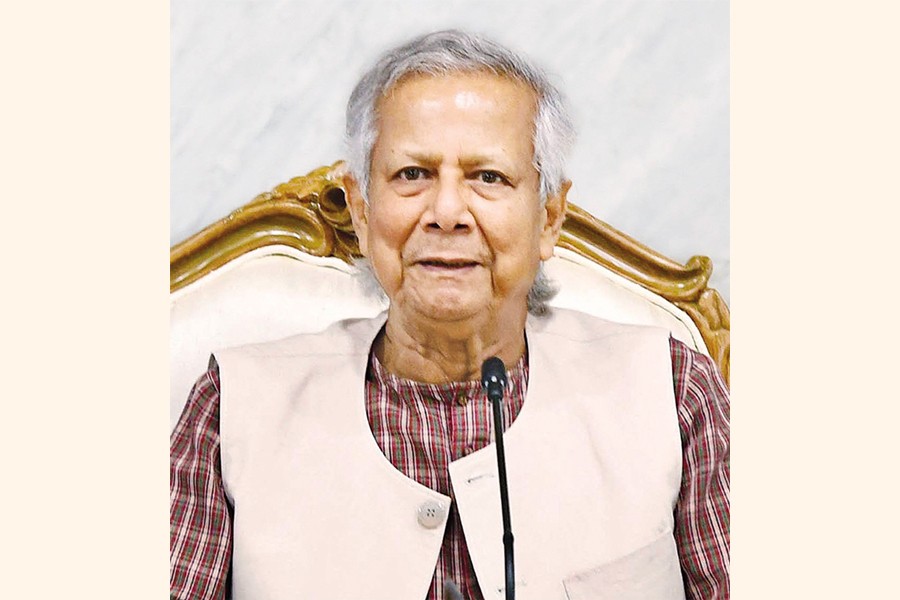
Chief Adviser Prof Muhammad Yunus has expressed deep concern over the rising levels of toxic substances in food, calling for urgent and coordinated action to curb contamination and protect public health.
Speaking at a high-level meeting at the State Guest House Jamuna on Sunday, Prof Yunus urged ministries, regulatory bodies and health experts to work collectively, saying the growing presence of harmful chemicals in food posed a threat "to every family in the country."
"We are aware of the contamination, but we must now decide how to confront it," he told officials. "Our children, parents and loved ones are all affected. In our own interest we must work together. Some actions must begin immediately."
Senior advisers from the agriculture, home, food, health, fisheries and livestock ministries attended the meeting, along with the National Security Adviser, the Chief Adviser's principal secretary, secretaries from relevant ministries, and heads of major food-safety regulatory bodies, including BSTI, the Directorate of National Consumer Rights Protection, the Bangladesh Food Safety Authority (BFSA), and the Bangladesh Atomic Energy Commission.
Experts from the Food Safety Authority presented stark data. Citing World Health Organization findings, they reported that globally one in 10 children suffers from foodborne illness at least once a year, and one-third of those cases result in death.
Bangladesh alone records about 30 million child infections annually, the meeting was told.
Laboratory tests found excessive lead or lead chromate in multiple samples: among 180 tested, 22 contained dangerous lead levels. Last fiscal year, 1,713 samples were tested, while 814 samples have been analysed so far this year.
A joint study by Sher-e-Bangla Agricultural University, Bangladesh Agricultural University and UMEA University in Sweden detected 300 pharmaceutical chemicals, 200 pesticide compounds and 16 types of PFAS in water and fish samples collected from several regions.
The BFSA also referenced UNICEF data estimating that 35 million Bangladeshi children are exposed to lead contamination. BFSA Chair Zakaria warned, "Lead accumulates in the brain, liver, kidneys, bones and teeth. In children, soft bones allow it to reach the brain directly, damaging cognitive development.
Lead traces have also been detected in around 5.0 per cent of pregnant women, prompting a 10-year mitigation programme under the Environment Ministry.
Food and agriculture officials warned that antibiotics widely used in poultry farms can remain in chickens for seven to 28 days, yet many birds are sold long before the chemicals dissipate -- allowing antibiotic residue to enter the human body.
Large commercial producers follow safety practices, the meeting heard, but "clandestine operators" continue to evade regulation, posing a significant public-health risk.
Officials also discussed illegal pesticide use and measures to expand monitoring of poultry farms, improve inspection protocols and tighten enforcement.
Prof Yunus instructed all agencies to submit written proposals within seven days outlining actionable steps to combat food contamination, with priority recommendations to be implemented immediately.
Special Assistant to the Chief Adviser for the Ministry of Health and Family Welfare Prof Dr Md Sayedur Rahman said every public university in Bangladesh has laboratory capacity to conduct contamination testing, suggesting that a coordinated national research effort could be mobilised rapidly.
Food Adviser Ali Imam Majumder noted that the race for higher production often overshadows safety concerns.
"Ensuring enough food sometimes means we forget whether what we eat is safe. Media awareness is crucial, and food safety should be included in school textbooks," he added.
mirmostafiz@yahoo.com