

Citizens urge Election Commission to tackle ‘mob violence’ threats
Published :
Updated :
 For all latest news, follow The Financial Express Google News channel.
Representatives from civil society urged the Election Commission to be vigilant against the threat of “mob violence” ahead of the parliamentary polls.
On Sunday, civil society leaders expressed concern over the “serious situation” in which the current EC has taken charge, emphasising that any deviation from traditional election methods could exacerbate tensions.
They warned that the likelihood of “mob” formation remains high, and the commission must be prepared to address this growing risk.
The representatives also flagged several challenges, including the postal voting system, the spread of misinformation, and the influence of artificial intelligence (AI) on the electoral process, encouraging the EC to adopt “proactive measures” to mitigate these risks.
The civil society representatives also recommended that the EC refrain from moving to a proportional representation (PR) system without “thorough testing”, advising against adopting any electoral reform measures that could disrupt the election's integrity without comprehensive analysis.
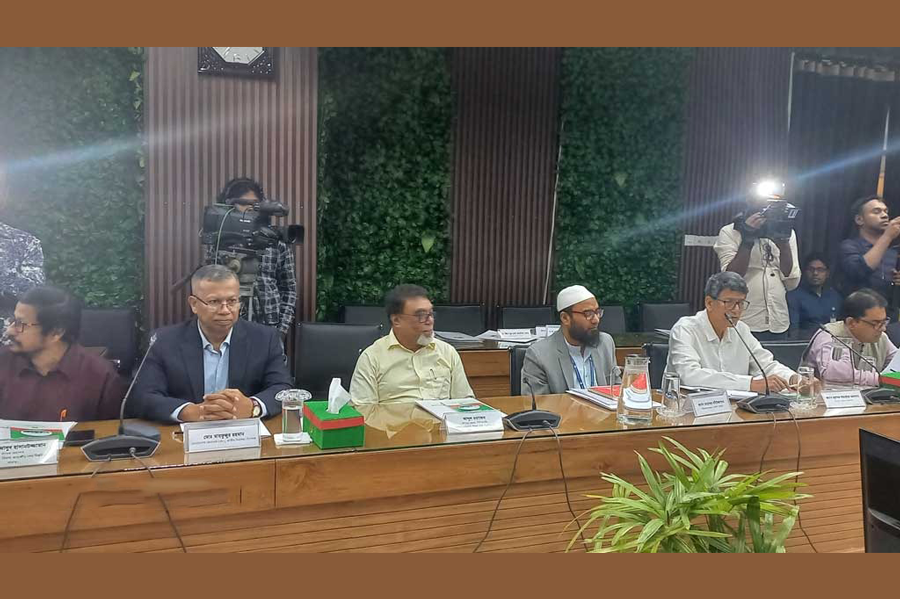
The Election Commission, led by Chief Election Commissioner (CEC) AMM Nasir Uddin, held its first round of dialogues with stakeholders on Sunday, aiming to gather input for the upcoming election process.
The dialogue was an opportunity for the civil society representatives to voice their concerns, which the CEC acknowledged as essential for the development of a credible election framework.
In his welcoming address, Nasir thanked the participants, saying, “I hope this dialogue will play a significant role in ensuring a fair and credible election.
“We are committed to delivering an election that is both trustworthy and transparent. Your feedback will play a crucial role in guiding our work.”
Nasir emphasised the progress made by the commission, including the updating of voter lists and legal reforms to streamline the election process.
He also highlighted the introduction of “IT-supported postal voting” for expatriates and the development of provisions for over 1 million workers involved in election processes within the country.
He assured that government employees and those in legal custody would also have the opportunity to vote, marking a milestone in Bangladesh's electoral history.
During the discussion, educationist and social activist Rasheda K Chowdhury stressed the need for ensuring safety, particularly for women and children, before, during, and after the elections.
“Past instances of abuse towards women and children, particularly when the opposition failed to win, should not be forgotten,” she said.
She also underscored the importance of addressing the public's concerns regarding gender representation in the elections, pointing out that while women make up 51 per cent of the population, their representation in parliament is shockingly low at 5-7 per cent.